
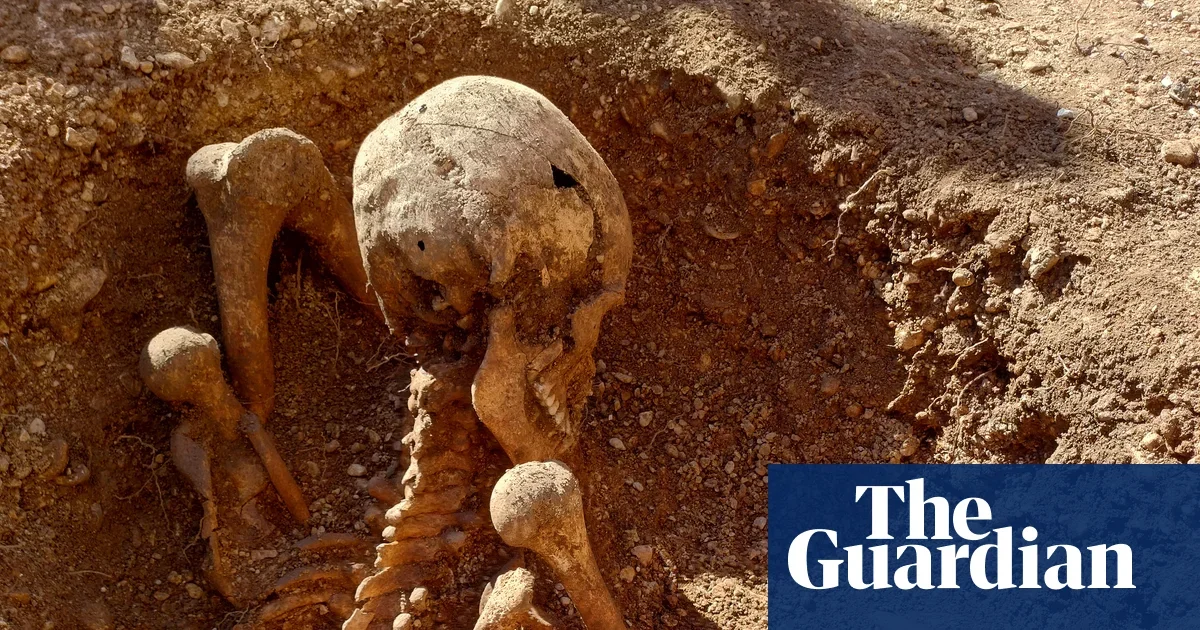
Dijon’s upright Gaul skeletons raise questions about ancient burial rites
Archaeologists in Dijon, France, are studying a well-preserved Gaul skeleton buried upright in a circular pit, part of five similar seated burials facing west. Dated to about 300–200 BC, the remains—mostly men with one child—suggest a significant Gallic settlement, but the purpose of the seated posture remains unknown as artefacts are scarce and researchers continue digging to understand burial practices.