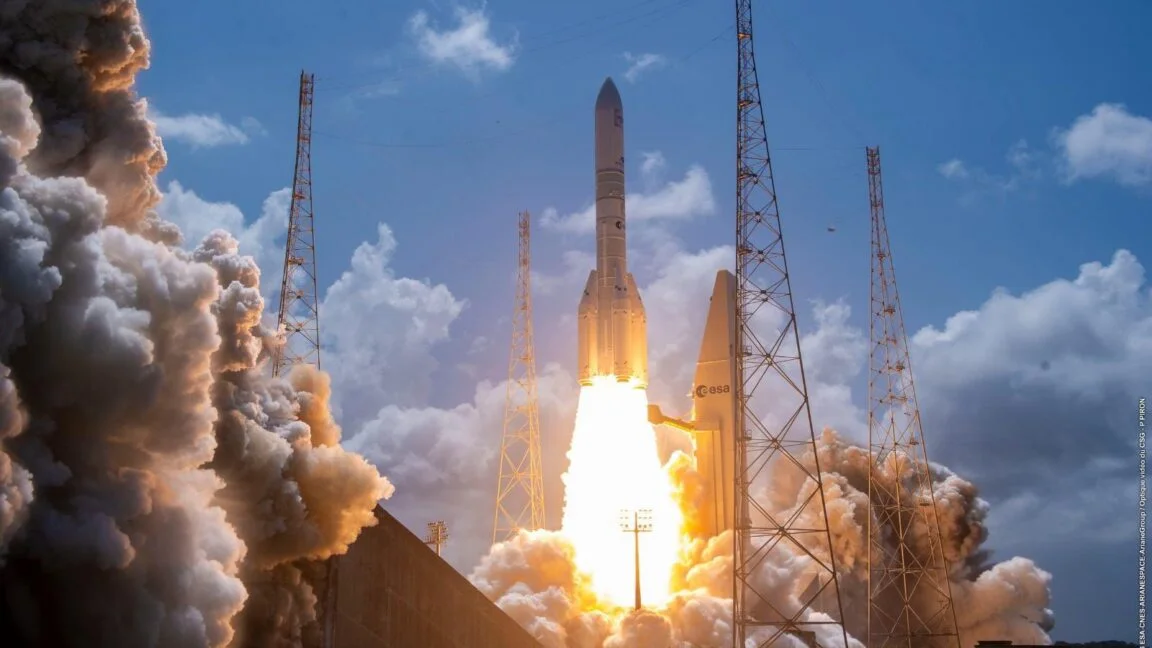
Europe's heavy-lift Ariane 64 launched from Kourou, delivering 32 Amazon Leo satellites to a ~465 km orbit, marking a milestone for Europe’s launch capabilities and accelerating Amazon's plan to deploy a ~3,200-satellite constellation to compete with SpaceX's Starlink.
A study posted to arXiv analyzed about 2,000 observations of Amazon's Leo internet satellites and found they are bright enough to interfere with astronomical research, though not visible to the naked eye on average (avg magnitude ~6.28). About a quarter of observations showed brightness that could be seen without a telescope, exceeding the International Astronomical Union's recommended brightness limit for coexistence with astronomy. The satellites orbit ~630 km up, with future Amazon Leo deployments planned around 590 km, which could increase brightness. The research highlights potential impacts on ground- and space-based observatories and notes that Amazon has been engaging with astronomers to reduce brightness (e.g., reflective undersides, orientation). SpaceX's Starlink is discussed as another, brighter network, but similar mitigation efforts are underway.