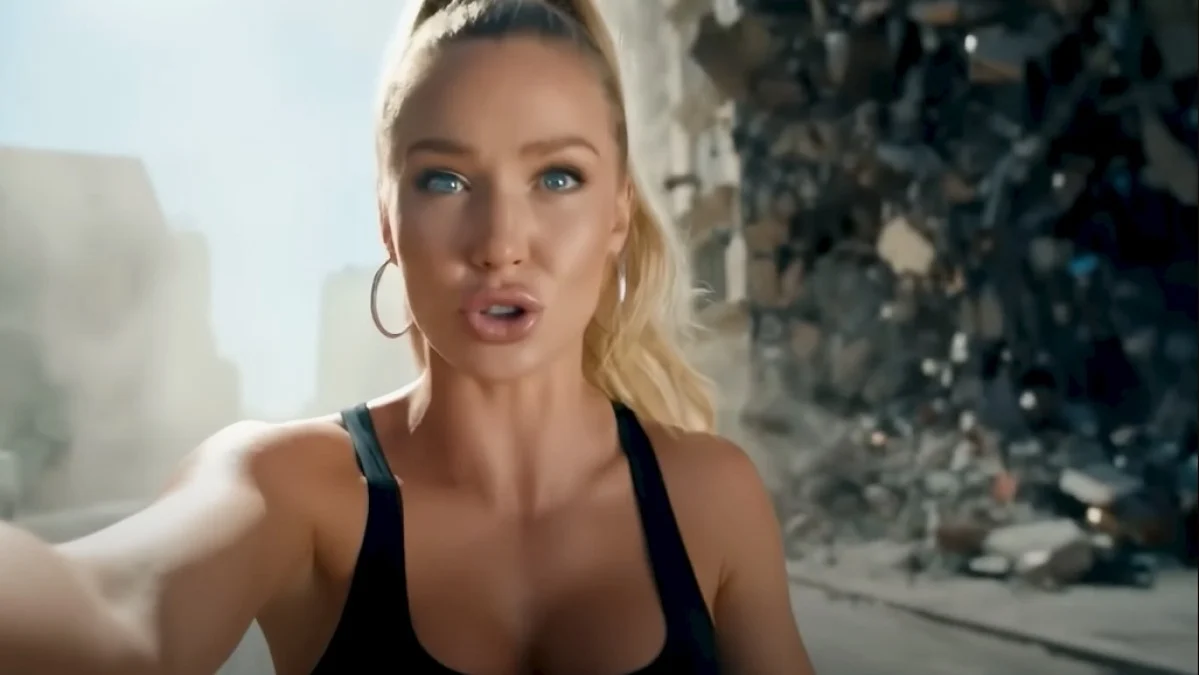
The article provides tips and tricks for creating high-quality videos using Sora 2, an AI video generation tool by OpenAI, emphasizing the importance of detailed prompts, cinematic tags, reference imagery, camera motion, and separate sound instructions to achieve the best results.
Google's AI video generator, Flow, is improving with more realistic editing features, including shadow and lighting adjustments, and new audio and scene extension capabilities, making AI-created videos more seamless and customizable.
OpenAI's new AI video app Sora 2, launched with a social feed, quickly became controversial as it generated violent, racist, and copyrighted content, highlighting concerns about the effectiveness of safeguards and the potential for misinformation and misuse in AI-generated media.
A comparison of AI video generation tools using the same prompt revealed that Google Gemini's Veo 3 produced the most realistic and high-quality video, followed by Grok which was free but slightly glitchy, while Sora, despite its high quality, failed to follow the prompt accurately.
Google Vids introduces pre-made AI avatars and new features for workplace video creation, enabling quick, cost-effective videos and potentially disrupting traditional video production jobs, while emphasizing that human creativity remains essential.
Google's Gemini AI app now allows paying users to create eight-second videos from still images by describing the scene and sound effects, using the Veo 3 video generator, enabling applications like animating old photos and creating short narratives.
Midjourney has launched its first AI video-generation tool, allowing users to create short videos from images, despite being sued by Disney and NBCUniversal for copyright infringement. The new tool offers affordable pricing and features like image animation and scene interaction, with the company's long-term goal of real-time 3D AI imagery. The lawsuit alleges Midjourney profits from copyrighted characters and images, but the company emphasizes responsible use and innovation in AI technology.
Midjourney has launched its first AI video generator, allowing users to create short videos from images or text prompts, with plans for more features. The tool is currently available on the web and Discord for a subscription fee, but faces legal challenges from Disney and Universal over copyright concerns. The company views this as a stepping stone toward more advanced AI simulations.
YouTube is integrating its Veo 3 AI video generation model into Shorts later this summer, promising improved video quality and audio capabilities, although details on costs and specific features are still unclear.
Microsoft has launched Bing Video Creator, a free tool that uses OpenAI's Sora AI model to generate short videos from text prompts, accessible via the Bing app on mobile and soon on PC, aiming to democratize AI video creation.
Google announced Veo 3, an advanced AI video generator capable of creating highly realistic 8-second videos with synchronized audio and dialogue, raising concerns about misinformation and the need for safeguards like digital watermarks. While it offers creative opportunities, its realistic outputs could be exploited for fake news and deepfakes, prompting calls for increased vigilance and responsible use.
OpenAI has made its AI video generator, Sora, publicly available in the US, allowing users to create video clips from text prompts. Initially accessible only to select testers, Sora's release faced heavy traffic, limiting new sign-ups. While praised for its creative potential, the tool has been criticized for visual defects and potential misuse in disinformation and deepfakes. OpenAI is addressing compliance issues in the UK and EU and has implemented content restrictions to prevent abuse. Sora is available to OpenAI subscribers in the US and most countries, excluding the UK and Europe due to copyright concerns.
OpenAI has launched Sora Turbo, an AI video generator that allows users to create videos from text or assets, as part of its '12 days of OpenAI' event. Available to ChatGPT Plus and Pro users, Sora offers different usage limits and resolutions based on subscription plans. The Plus plan costs $20/month for up to 50 videos at 480p, while the Pro plan at $200/month offers higher usage and quality. Access is currently limited, with plans to expand availability and introduce tailored pricing next year.
OpenAI has launched its AI video generator, Sora, to the public, allowing users to create realistic videos from text prompts. Access to Sora requires a ChatGPT Plus or Pro subscription, with varying features such as video resolution and duration. The Sora Turbo model offers faster video generation, and users can customize videos with their own assets. OpenAI acknowledges current limitations, such as unrealistic physics, and emphasizes responsible use with safeguards like C2PA metadata. The rollout aims to explore the technology's potential and develop norms for its use.
OpenAI has unveiled Sora, a text-to-video AI model capable of generating 60-second photorealistic HD videos from written descriptions, raising concerns about the potential for widespread dissemination of entirely fake videos. The model, which currently lacks audio synthesis, represents a significant advancement in AI video synthesis and utilizes a diffusion model to transform noise into coherent video frames based on written prompts. With the ability to achieve temporal consistency and understand and simulate the real world, Sora marks a significant milestone in the development of artificial general intelligence (AGI). The use of synthetic and real video data in training the model has sparked speculation, but OpenAI has not disclosed the specifics of its dataset.