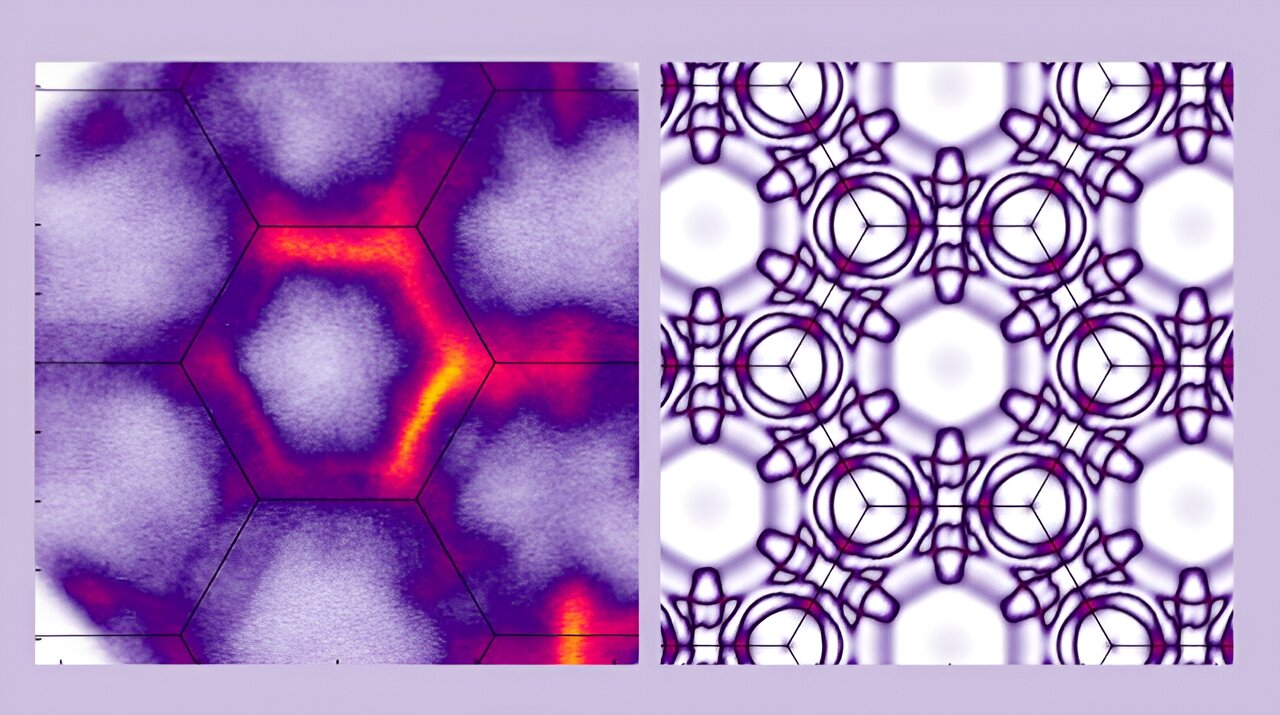
Researchers at Rice University have demonstrated a record-breaking quantum interference effect between phonons in a 2D metal-silicon carbide system, opening new possibilities for phonon-based technologies such as high-sensitivity sensors and quantum devices.
Scientists from the Quantum Systems Accelerator (QSA) have conducted experiments with a new type of layered 2D metal, NiTa4Se8, and discovered connections in electronic behavior that could be useful for fabricating complex superconducting quantum processors. The researchers observed both itinerant magnetism and superconductivity in NiTa4Se8, which is an emerging class of intercalated transition metal dichalcogenide (TMD). This finding challenges the conventional understanding that materials are either superconductors or magnets, but not both. The study highlights the potential of 2D materials for next-generation quantum devices and the importance of interdisciplinary collaboration and advanced tools in materials research.