
Unveiling the Sun's Secrets: Parker Solar Probe's Historic Encounters
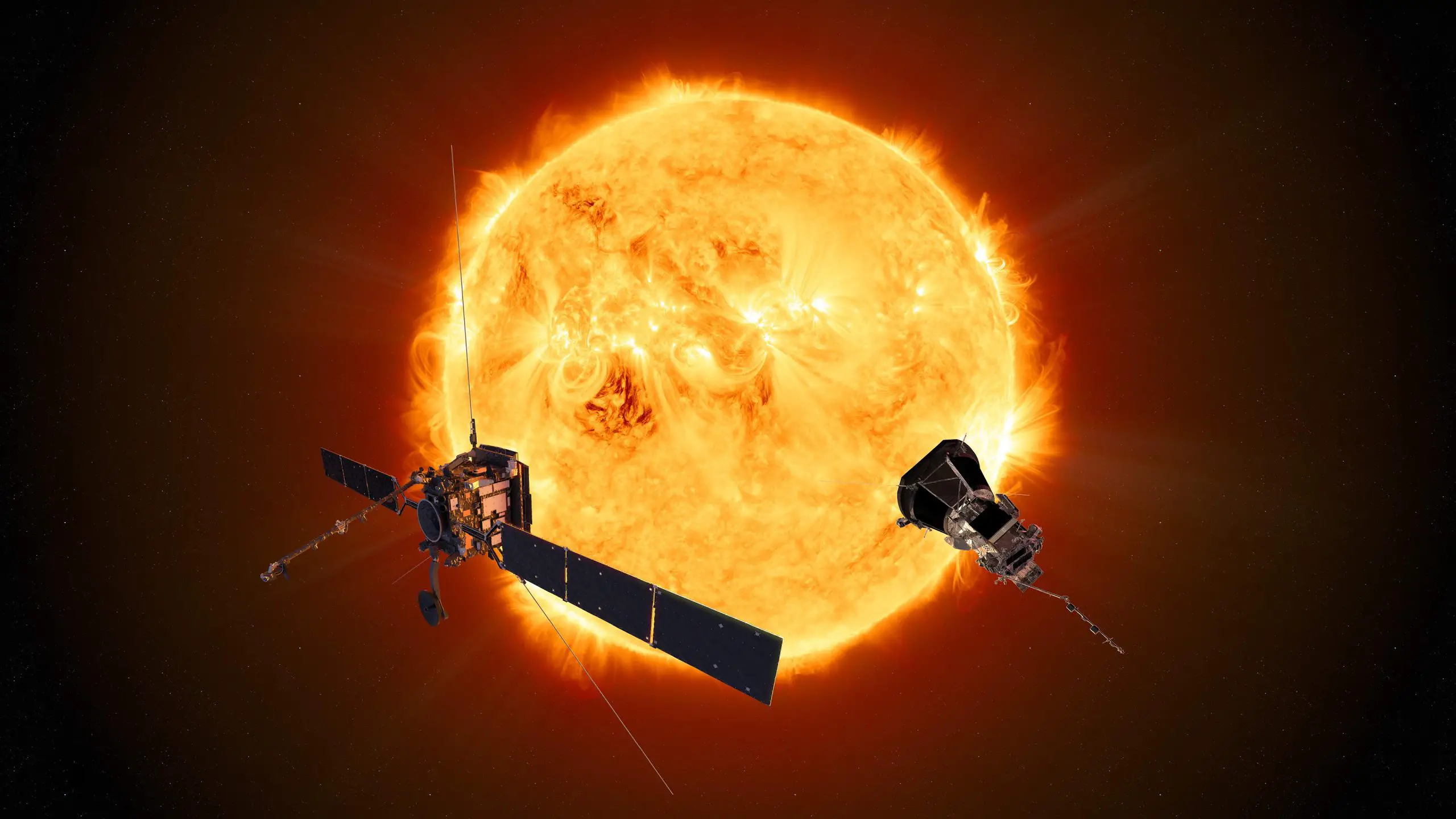
The Solar Orbiter spacecraft, in collaboration with NASA's Parker Solar Probe, has made groundbreaking measurements that shed light on the 65-year-old mystery of why the Sun's atmosphere, known as the corona, is hotter than its surface. By combining remote sensing and in-situ measurements, the two spacecraft provided the first-ever simultaneous observations of the large-scale configuration of the corona and the microphysical properties of the plasma. The data suggests that turbulence in the solar atmosphere plays a significant role in heating the corona, transferring energy from larger to smaller scales and ultimately converting it into heat. While more research is needed, this represents a significant step forward in understanding the coronal heating problem.
- Solar Orbiter Closes in on Sun's Biggest Secret: Solving a 65-Year-Old Cosmic Mystery SciTechDaily
- Parker Solar Probe safely traverses CME event, touches Sun Interesting Engineering
- Watch NASA's Parker Solar Probe Plow Through a Solar Tsunami, Validating Twenty-Year Theory on Space Weather The Debrief
- NASA's Parker Solar Probe Survives Historic Encounter with Massive Solar Eruption Transcontinental Times
- Parker Solar Probe flies through intense solar eruption and captures everything on camera ZME Science
Reading Insights
0
2
5 min
vs 6 min read
90%
1,155 → 112 words
Want the full story? Read the original article
Read on SciTechDaily