
Kaiser Permanente Workers Demand Recognition and Change in Historic Strike
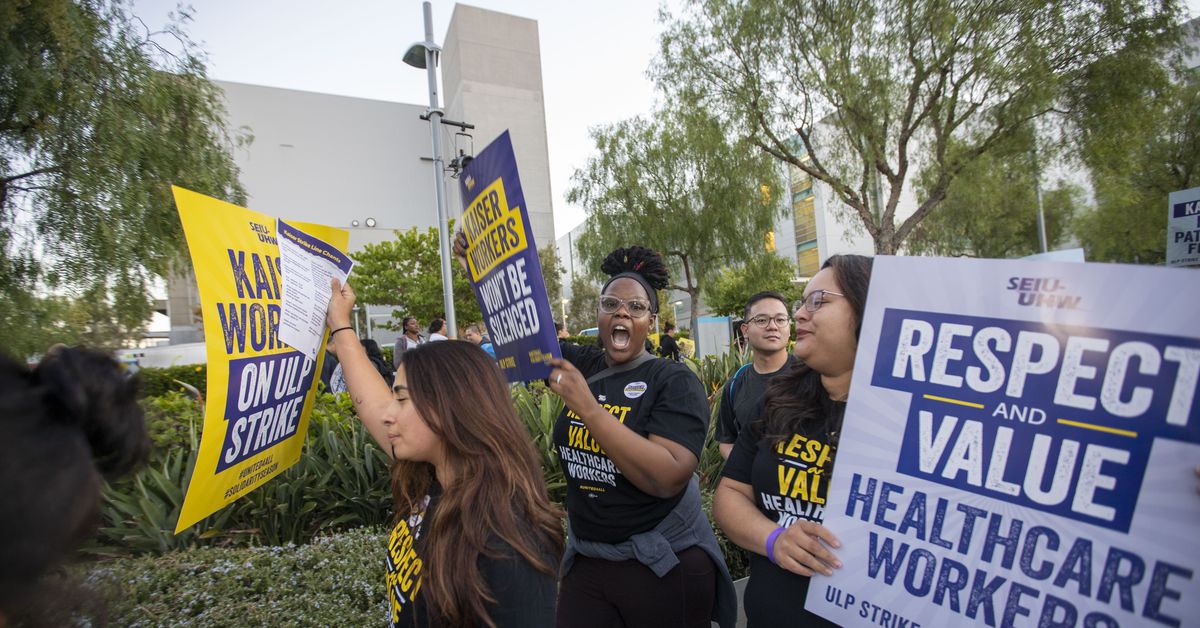
Over 75,000 Kaiser Permanente workers have gone on strike, highlighting the strained relationship between healthcare workers and the health systems that employ them. The strike, which is expected to last three days, is driven by concerns of overwork, low pay, and intolerable work conditions. The unions have requested a minimum wage of $25 per hour and annual raises of 7 percent, while the company has countered with a lower base wage and slower wage increases. The strike may lead to delays in patient care as nursing assistants and lab techs play crucial roles in supporting doctors and nurses. The issue of undervalued healthcare workers is a systemic problem in the US healthcare system, where hospitals rely on a fee-for-service model that does not bill for the labor provided by support staff. This strike at Kaiser Permanente may signal wider discontent among low-paid healthcare workers across the country.
- Why are Kaiser Permanente workers on strike? The US health care system doesn’t value them. Vox.com
- Kaiser Permanente workers go on strike in largest health care walkout in U.S. history KTLA 5
- KCRA Today: Kaiser strike begins, Speaker McCarthy ousted in historic vote, CapRadio board member calls for resignations KCRA Sacramento
- Opinion | The Kaiser Strike Is Only Part of What's Ailing U.S. Health Care The New York Times
- No bargaining sessions scheduled as day 1 of Kaiser strike closes CBS 8 San Diego
Reading Insights
0
3
5 min
vs 6 min read
87%
1,112 → 147 words
Want the full story? Read the original article
Read on Vox.com