
"Hubble Tracks Transformations in Exoplanet Atmosphere Across Three Years"
TL;DR Summary
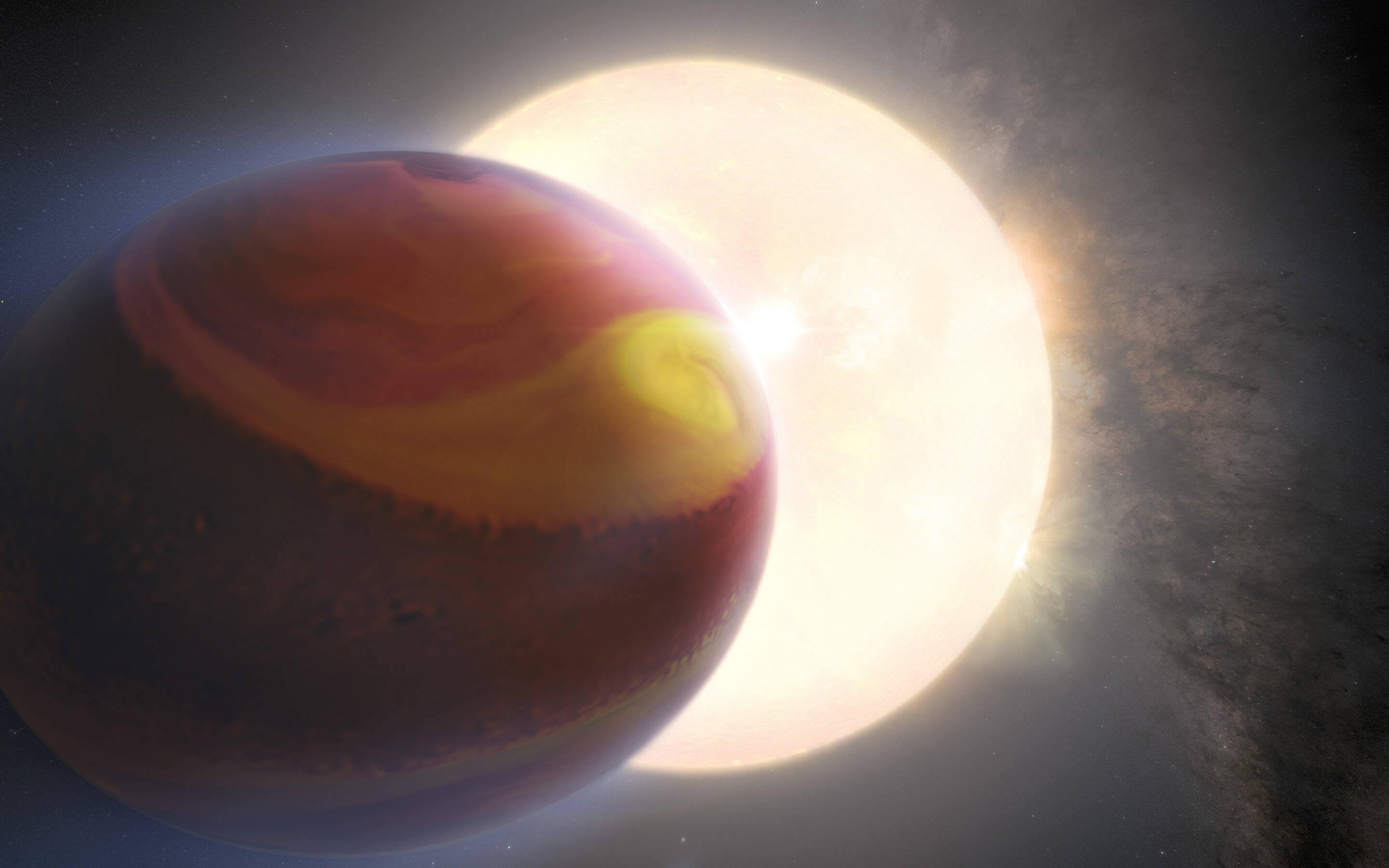
NASA's Hubble Space Telescope has provided astronomers with a unique data set by observing the exoplanet WASP-121 b, also known as Tylos, over the years 2016, 2018, and 2019. These observations revealed that the exoplanet's atmosphere changes over time, with evidence of dynamic weather patterns such as massive cyclones. The close proximity of WASP-121 b to its host star results in extreme temperatures and phenomena like iron rain on the night side. The study, which combines observational data with computational modeling, marks a significant step in understanding weather on exoplanets and could aid in the search for habitable worlds.
Topics:science##astronomy#atmosphericscience#exoplanet#hubbletelescope#science-and-technology#wasp-121b
Reading Insights
Total Reads
0
Unique Readers
9
Time Saved
7 min
vs 8 min read
Condensed
93%
1,436 → 99 words
Want the full story? Read the original article
Read on Phys.org