
"Disgruntled Scientist Discovers Radioactive Tracers, Wins Nobel Prize"
TL;DR Summary
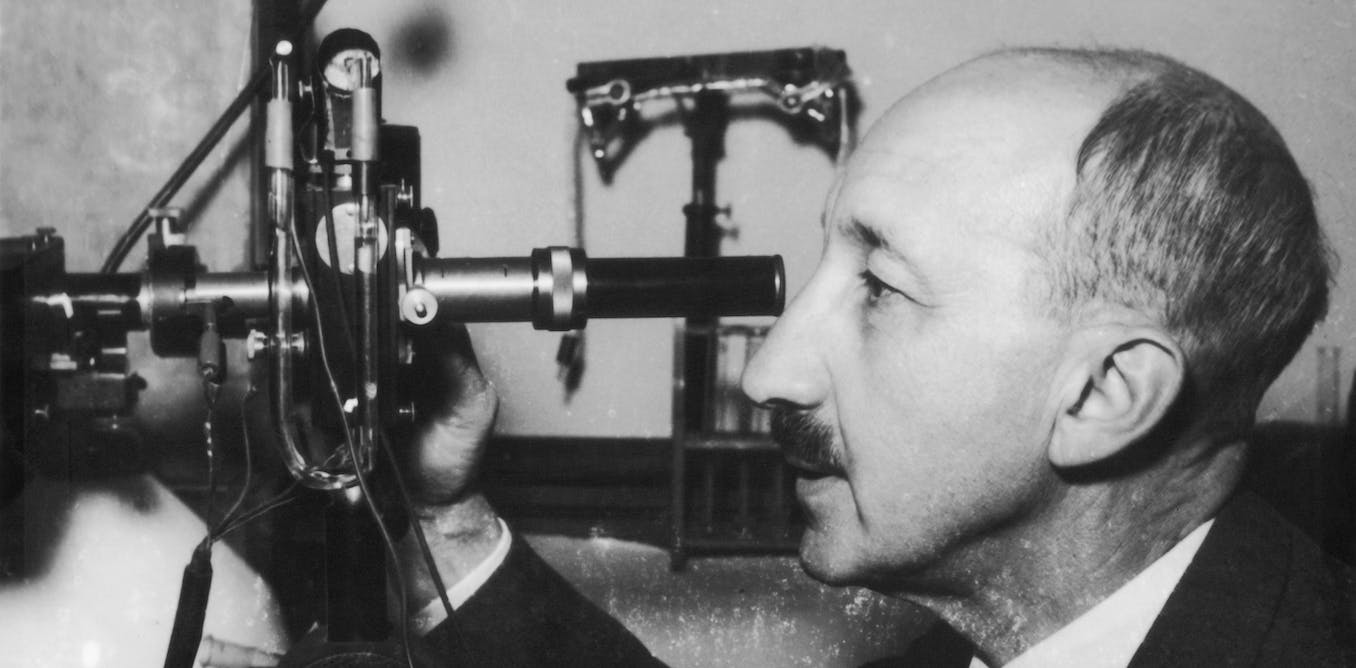
Hungarian chemist George de Hevesy, who won the Nobel Prize in Chemistry in 1943, discovered radioactive tracers by accident while trying to prove that his food was being recycled at a boarding house cafeteria in 1911. He later used radioactive isotopes as tracers to study chemical processes, leading to significant advancements in various fields such as medicine, materials science, and biology. Today, radioactive tracers are routinely used to monitor disease progression, track nutrient uptake, measure water flow, and study wear and corrosion. Scientists continue to develop new isotopes and innovative applications for radioactive tracers.
Topics:science#george-de-hevesy#isotopes#nobel-prize#radioactive-tracers#science-and-technology#scientific-discoveries
- How a disgruntled scientist looking to prove his food wasn't fresh discovered radioactive tracers and won a Nobel Prize 80 years ago The Conversation
- How a disgruntled scientist looking to prove his food wasn't fresh discovered radioactive tracers and won a Nobel Prize Phys.org
- How a disgruntled scientist looking to prove his food wasn't fresh discovered radioactive tracers and won a Nobel Prize 80 years ago Yahoo News
- How a disgruntled scientist looking to prove his food wasn't fresh discovered radioactive tracers and won a Nobel Prize Samachar Central
- View Full Coverage on Google News
Reading Insights
Total Reads
0
Unique Readers
1
Time Saved
5 min
vs 6 min read
Condensed
92%
1,162 → 94 words
Want the full story? Read the original article
Read on The Conversation