
"Uncovering Pre-Columbian Syphilis Origins in Brazil's Ancient Genomes"
TL;DR Summary
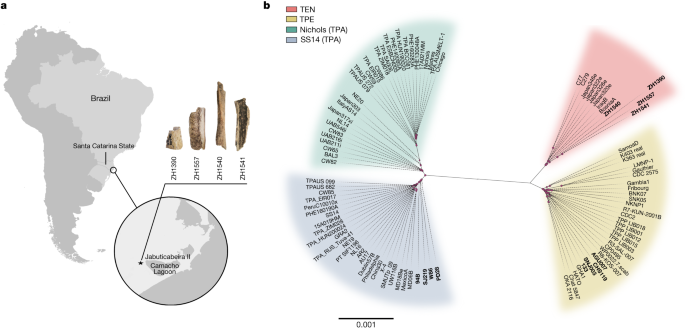
A study presents evidence of pre-Columbian treponemal disease in the New World from a nearly 2,000-year-old Brazilian burial site, revealing reconstructed genomes of T. pallidum basal to the modern diversity of the bejel-causing subspecies, T. pallidum endemicum. The findings challenge previous hypotheses and shed light on the evolutionary history and geographical adaptability of treponemal infections, providing valuable insights into the origins and spread of syphilis and other treponematoses.
Topics:health#ancient-dna#archaeology-genetics#bejel#brazil#evolutionary-history#treponemal-infections
- Redefining the treponemal history through pre-Columbian genomes from Brazil Nature.com
- Syphilis-like diseases were already widespread in America before the arrival of Columbus, new study finds Phys.org
- Oldest DNA evidence of syphilis relative discovered in 2000-year-old skeletons in Brazil Livescience.com
- Syphilis microbe's family has plagued humans for millennia Nature.com
- 2000-Year-Old Bones In Brazil Shed Light On The Family Tree Of Syphilis IFLScience
Reading Insights
Total Reads
0
Unique Readers
1
Time Saved
74 min
vs 75 min read
Condensed
100%
14,919 → 68 words
Want the full story? Read the original article
Read on Nature.com