
Tag

Replication Study

All articles tagged with #replication study

"The Decline of CASA Theory in Desktop Computing"
technology2 years ago

"The Decline of CASA Theory in Desktop Computing"

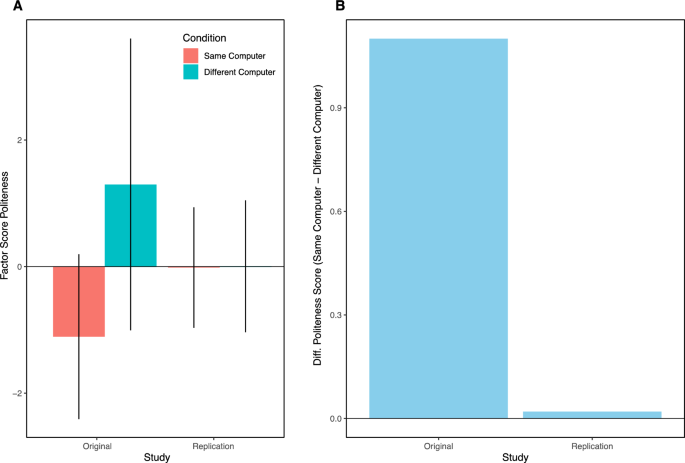
A recent replication study has found that the Computers Are Social Actors (CASA) theory, which suggests that humans respond to computers as if they have awareness, may no longer apply to desktop computers. The original CASA theory was based on the assumption that our brains have not evolved to differentiate between social cues from humans and computers. However, the study found no significant difference in participants' evaluations of a desktop computer when interacting with it directly or via an identical computer in another room. This challenges the notion that older technology, like desktop computers, is still viewed as social actors. The findings have implications for the development and integration of social technology in various fields.


Questioning the existence of magnetic sensing in fruit flies
science2 years ago

Questioning the existence of magnetic sensing in fruit flies

A replication study has cast doubt on the long-held belief that the fruit fly Drosophila melanogaster can detect Earth's magnetic field. The study, which examined around 110,000 flies, failed to replicate the results of previous studies that suggested the existence of a magnetic sense in the species. This challenges the idea that Drosophila could be an ideal system for studying this enigmatic sense due to its small and experimentally accessible nervous system.

The Ethics of Wealth: Examining the Link Between Riches and Morality.
social-science3 years ago

The Ethics of Wealth: Examining the Link Between Riches and Morality.

A new replication study has called into question the idea that wealthier people are more likely to act unethically. The study aimed to replicate a 2012 study by Paul Piff, which found that wealthier people were less likely to act generously and more likely to act selfishly and unethically. However, the new study found no relationship between the make of a car and unethical behavior, contradicting Piff's findings. While Piff still believes there are differences in how people from different backgrounds behave, the new study suggests that the stereotype that the wealthy act badly when given the chance is not completely supported by research.