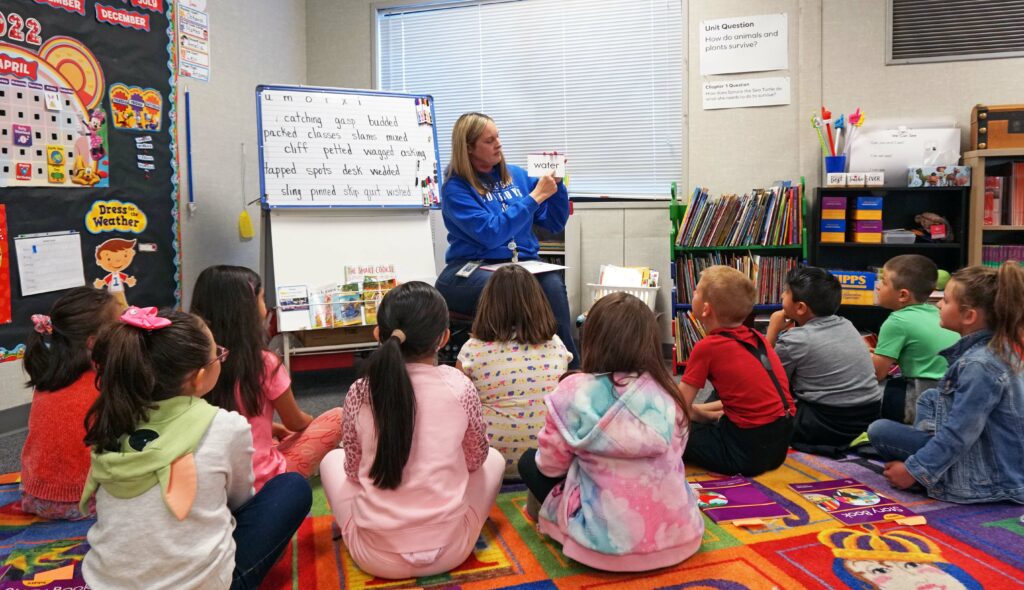
California has passed Assembly Bill 1454, a comprehensive literacy law focusing on evidence-based reading instruction, including phonics, with teacher training and new textbooks, aiming to improve literacy rates among students, especially in early grades, supported by significant funding and ongoing implementation efforts.
A lawsuit filed by the Reading Recovery Council of North America, a nonprofit supporting balanced literacy, challenges Ohio's new law mandating the "science of reading" approach, which emphasizes systematic phonics instruction. The lawsuit claims that the change in reading policy was pushed through in a budget bill, violating state law. The debate over how to teach reading has intensified as research supports the effectiveness of phonics instruction. The Reading Recovery program, which has faced scrutiny, has seen a decline in membership and revenue due to the shift towards the science of reading. Critics argue that balanced literacy provides flexibility and promotes a love of reading, while proponents of the science of reading believe it offers a more effective approach.
Columbia University's Teachers College has announced the dissolution of the Teachers College Reading and Writing Project, led by renowned literacy professor Lucy Calkins. Calkins' curriculum, which emphasized a looser approach to reading instruction, had garnered both praise and criticism. Critics argued that her methods downplayed phonics and disregarded scientific research on reading. The decision to dissolve the organization comes as schools of education face pressure to align teacher training with research-backed reading strategies. Calkins has formed a new company, the Mossflower Reading and Writing Project, to continue her work consulting with schools. Teachers College plans to hire faculty with expertise in the cognitive science of reading and launch new training programs for teachers.