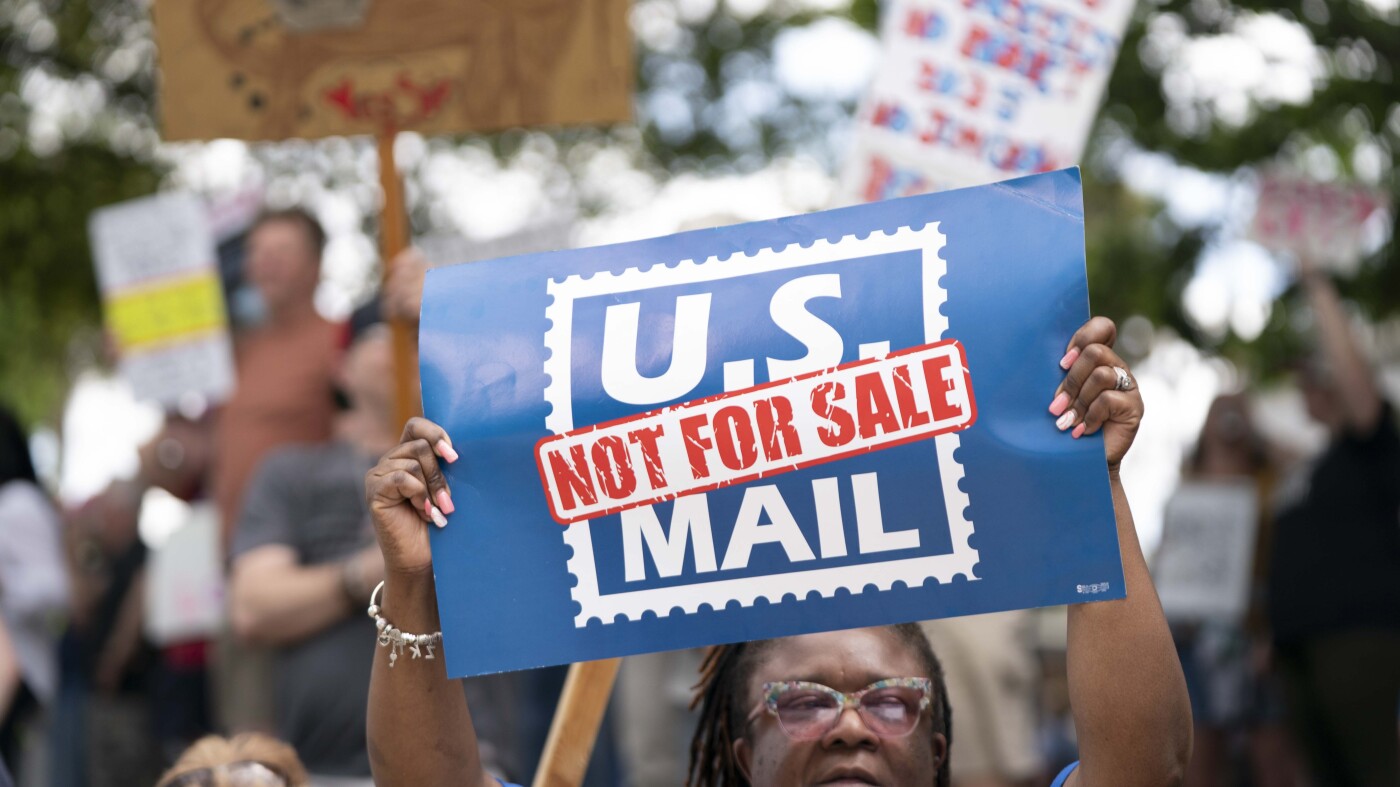
The new USPS Postmaster General, David Steiner, has stated he opposes privatizing the postal service and supports maintaining its current independent, self-financing structure, despite ongoing political and union concerns about potential privatization efforts.
The new postmaster general, Steiner, downplays concerns about privatizing the USPS amid Trump's suggestions of a government takeover, emphasizing his commitment to the agency's role in democracy and the economy, despite criticism from postal unions and concerns over privatization risks.
Postmaster General Louis DeJoy will testify before the U.S. Senate committee on Homeland Security and Governmental Affairs following scathing inspection reports revealing significant volumes of undelivered mail at processing centers. The reports highlight failures in Richmond, Va., Houston, Texas, and potentially Atlanta, Ga. DeJoy's reorganization plan, which includes consolidating mail processing into mega centers, has been criticized for causing mail delays and increasing costs. The Senate committee will also question other USPS officials, and President Biden has the authority to remove DeJoy from his position if there is good cause.
The U.S. Postal Service reported a loss of $1.7 billion in the second quarter of this year, with revenue dropping by 1% and operating costs increasing by 10%. Postmaster General Louis DeJoy acknowledged the agency's financial challenges and pledged to accelerate reforms, including reducing work hours by closing facilities and eliminating inefficiencies. DeJoy attributed the losses to factors such as reduced advertising spending, inflation costs, and overpayment into the pension fund. He also mentioned plans to cut costs further, increase revenue through initiatives like higher mail rates, and invest in existing facilities and new electric vehicles. Despite setbacks, the Postal Service has eliminated $90 billion from projected 10-year losses through the passage of the Postal Service Reform Act.