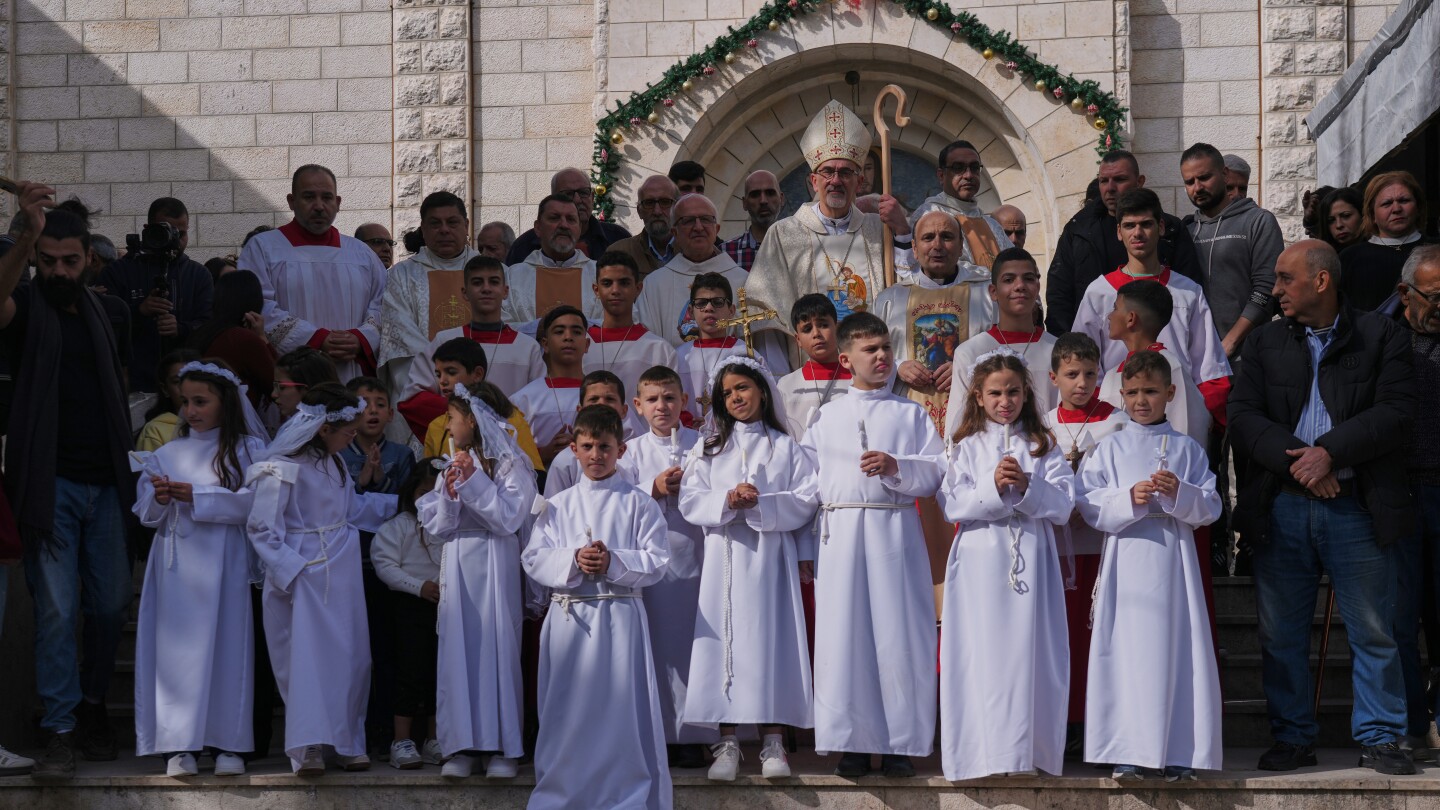
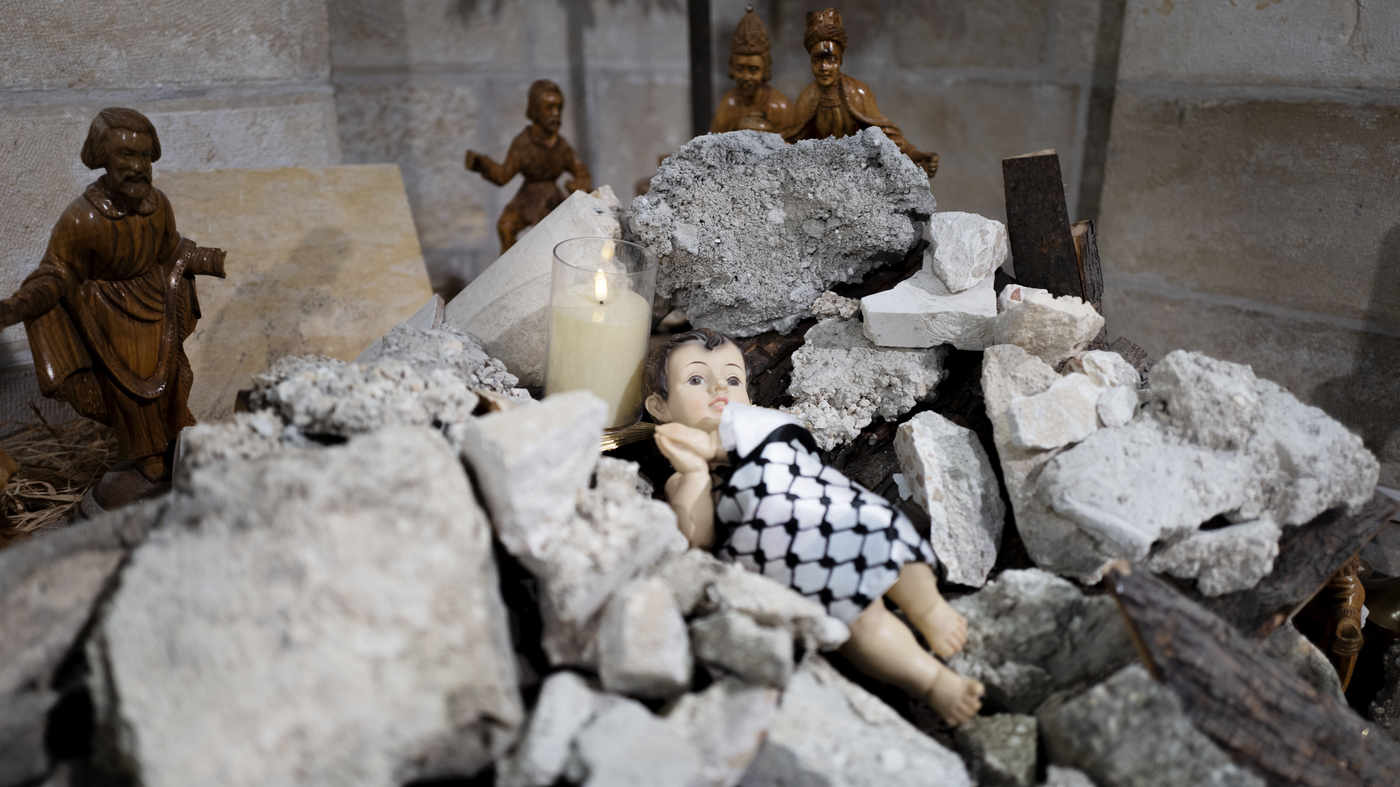
Despite ongoing conflict and destruction in Gaza, Palestinian Christians are celebrating Christmas with hope and faith, although many feel the pain of loss and displacement, and some are contemplating leaving due to the difficult circumstances.
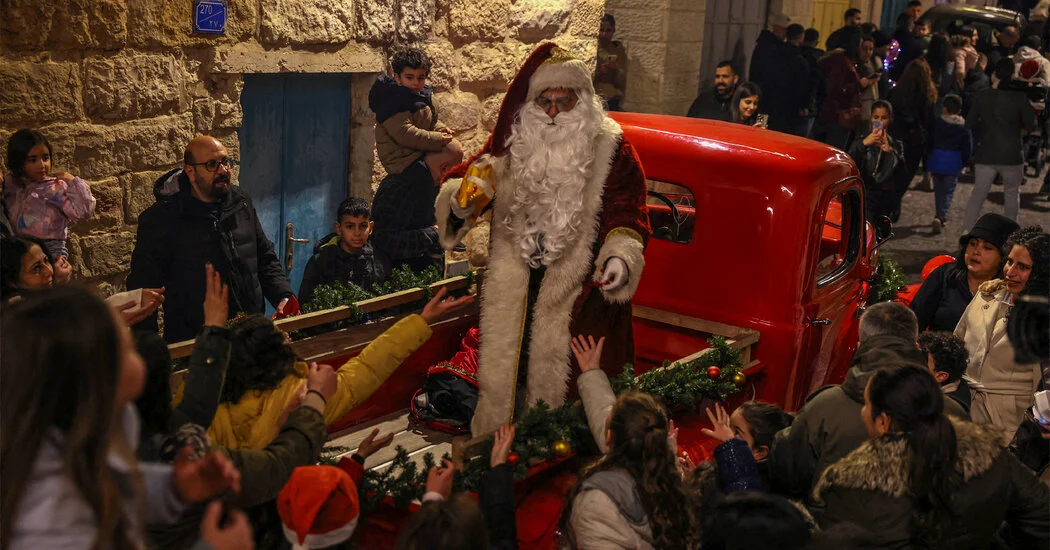
Palestinian Christians in the West Bank are cautiously celebrating Christmas with modest festivities after two years of subdued celebrations due to regional conflict and violence, amid ongoing tensions, settler attacks, and political struggles, highlighting both resilience and hope for peace.
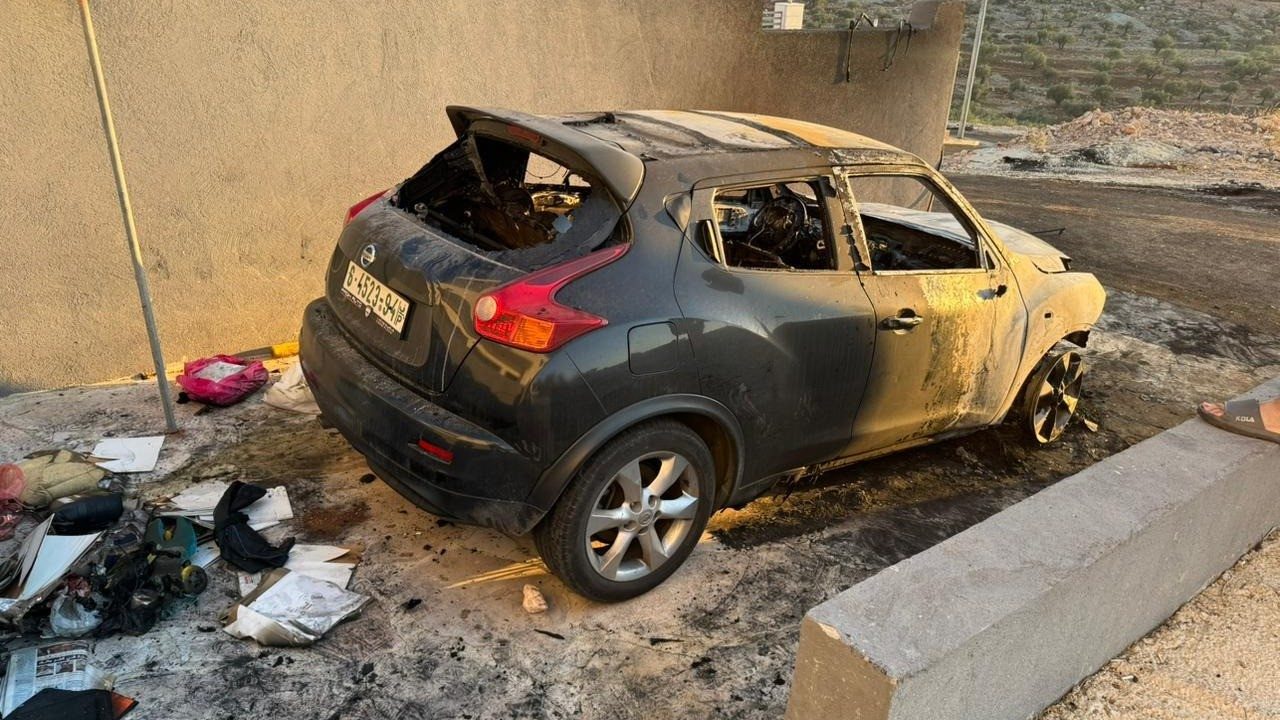
The Christian village of Taibeh in the West Bank was attacked again by extremist Israeli settlers, with violence escalating from property damage to direct threats against people, amid calls for impartial investigations and concerns over ongoing displacement efforts and inadequate official responses.
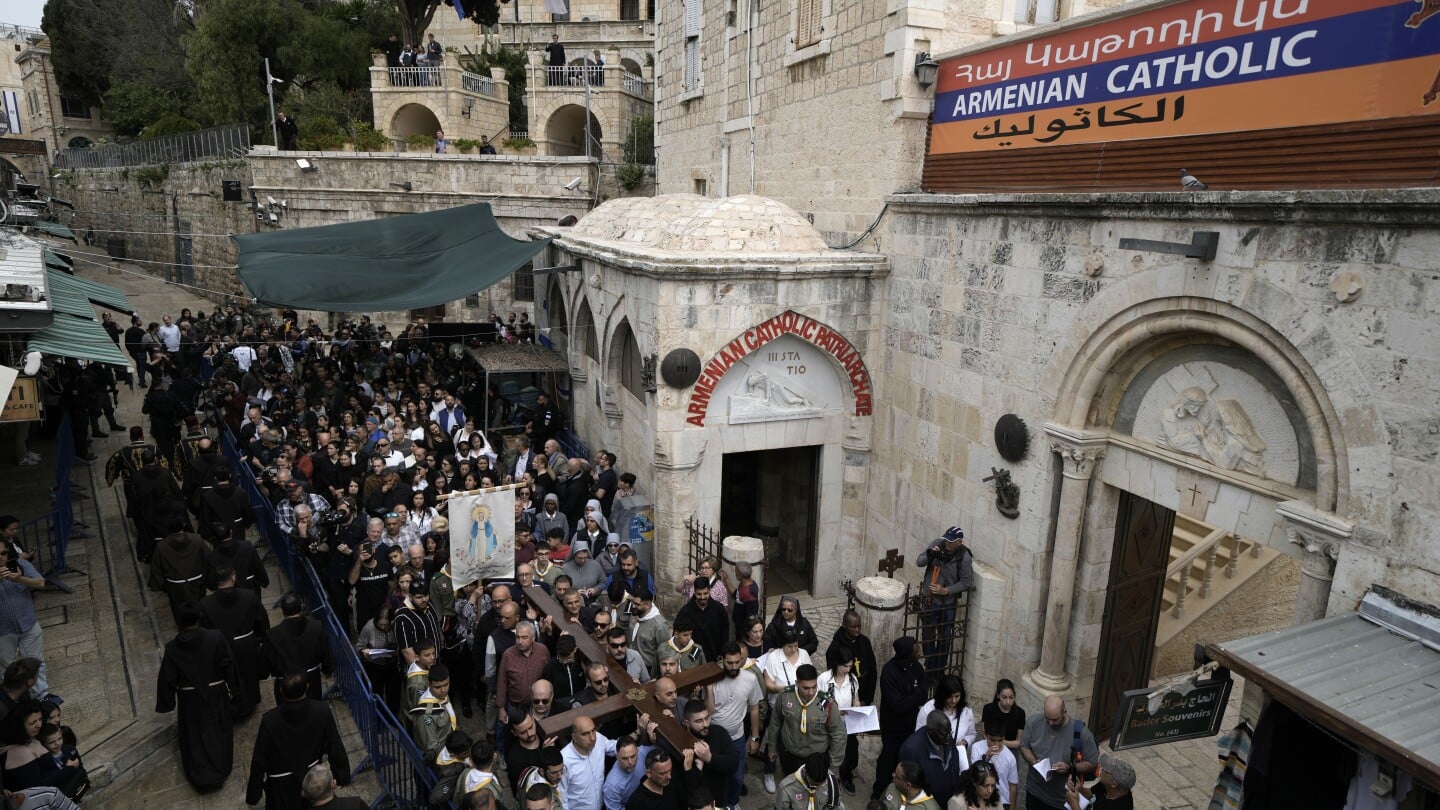
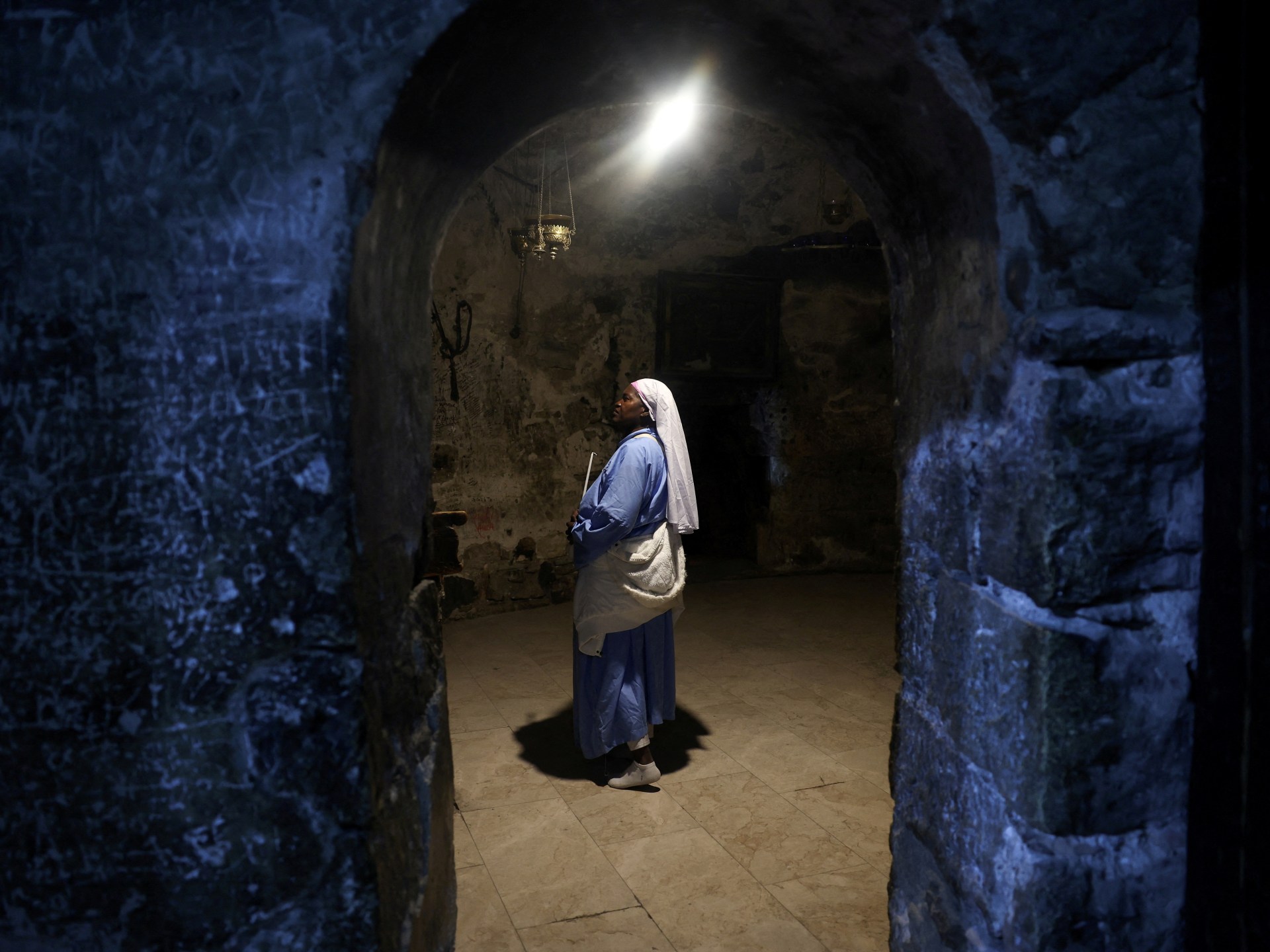
In Jerusalem, Palestinian Christians observed a scaled-down Good Friday with thinner crowds due to the ongoing Israel-Hamas war, as hundreds participated in the traditional procession through the Old City's limestone walls. The procession, usually drawing thousands of foreign visitors, was mainly attended by local Palestinian Christians and a few tourists, with noticeably fewer Palestinian Christians from the West Bank due to restricted access. The impact of the war was evident at the Church of the Holy Sepulcher, where entrance was easier than usual. Despite the subdued atmosphere, some tourists and pilgrims braved the day, while worshippers also flocked to the Al-Aqsa mosque for Ramadan prayers, with hopes for peace in the region.
Palestinian Christians are facing unprecedented restrictions on entering Jerusalem's Old City to celebrate Easter, with usual crowds of international worshippers absent and at least 200 leaders from the occupied West Bank given permits to enter the area, but their congregations not allowed access. The Old City is unusually empty due to the war in Gaza, and Palestinian Christians are desperate to visit their places of worship, but are being denied access. The restrictions have increased this year, making it very difficult for Palestinian Christians to access Jerusalem, and the war has added to their pain. Israeli settlers have made the Old City an almost no-go zone, attacking churches, Christian cemeteries, priests, nuns, and pilgrims, while Palestinian Christians have been deprived of walking the Via Dolorosa this year.
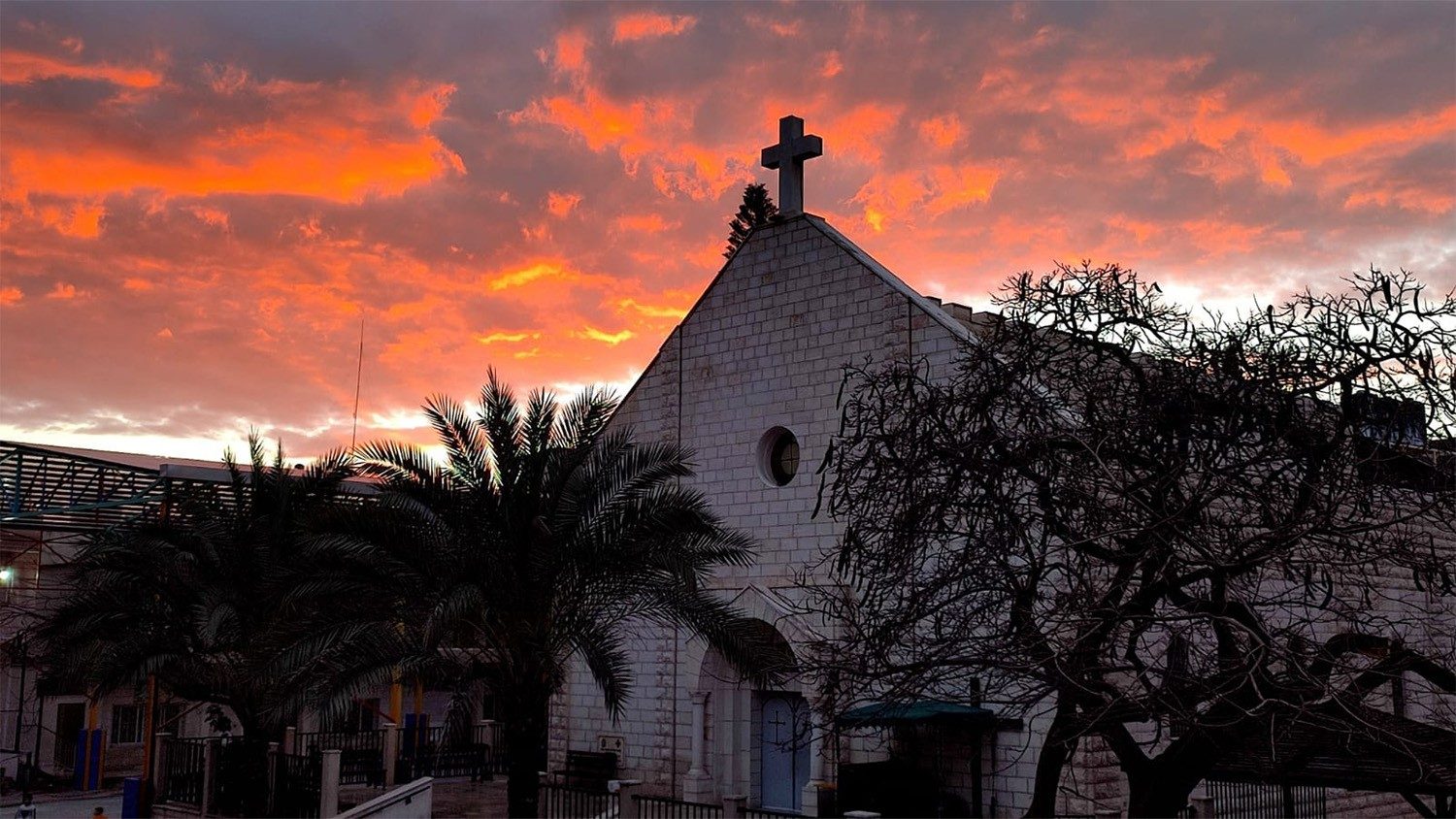
Pope Francis condemned the killing of two Palestinian Christian women by an Israeli sniper at a Catholic church in Gaza City, calling it terrorism. The shooting took place at the Holy Family Latin Parish, where Palestinian Christians have been trapped with little food or water. British MP Layla Moran also denounced Israel's attacks on the church, highlighting the dire conditions faced by the civilians sheltering there. The small Palestinian Christian community in Gaza has been under siege, with their numbers dwindling due to the harsh conditions imposed by Israel.
Two women, believed to be a mother and daughter, were killed in an Israeli attack on Holy Family Catholic Parish in Gaza. The attack, which is still ongoing, has resulted in dozens of deaths and continued shooting by Israeli snipers. The Israeli military justified the attack by claiming the presence of a missile launcher in the parish. Israeli soldiers have entered the parish compound and are firing towards civilians sheltering in the building.
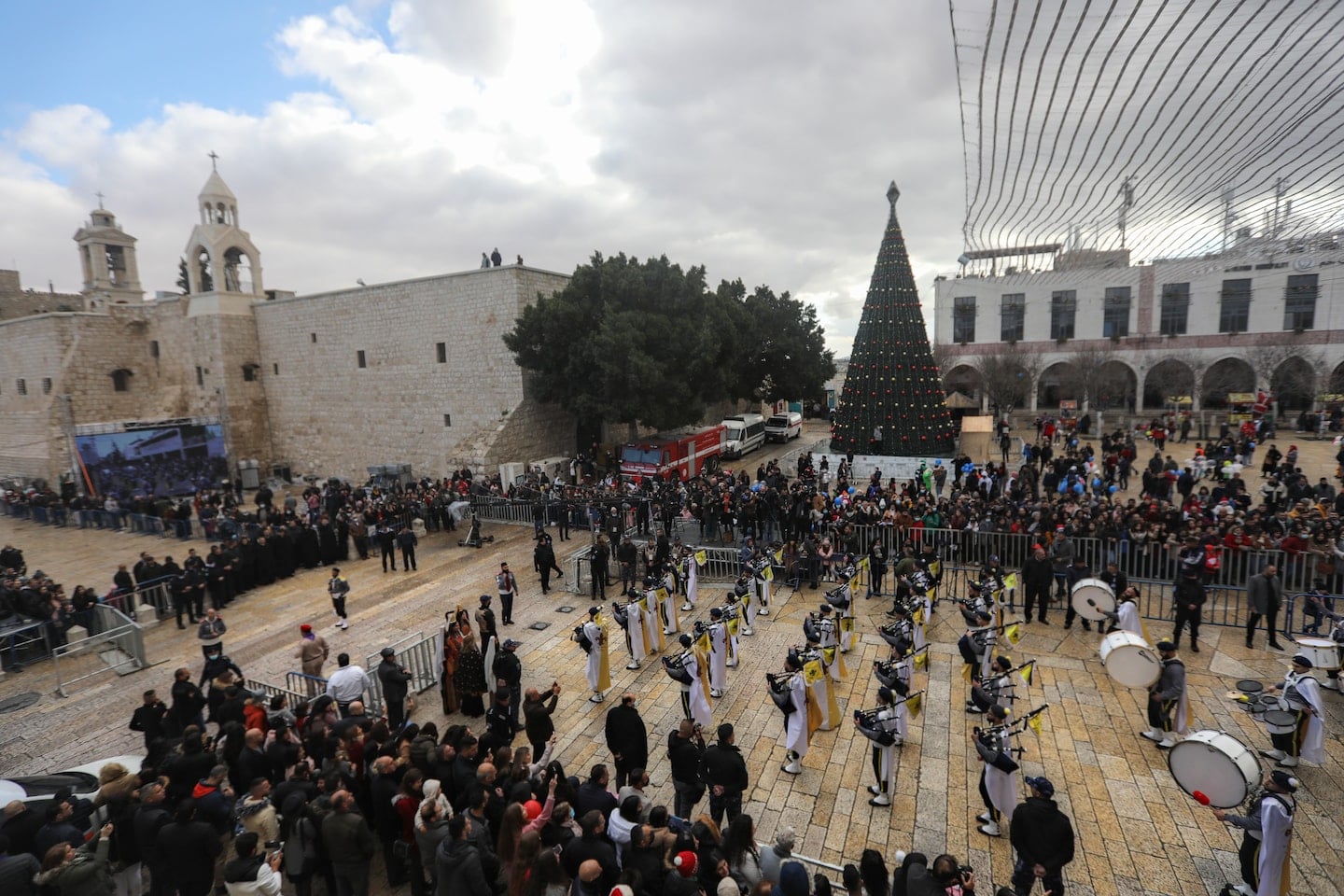
Due to the devastating war in Gaza, Palestinian leaders of Christian denominations in Bethlehem have unanimously decided to cancel public Christmas celebrations this year. The city, synonymous with the birth of Jesus, lacks the usual festive decorations, parades, and tourists. Local businesses, such as Christmas House, which sells hand-crafted olive-wood Nativity scenes, are struggling. Despite the somber atmosphere, some visitors, like Linda Nocera from Florida, believe the decision to forego celebrations is appropriate given the ongoing conflict and hope for a peaceful resolution.
Palestinian Christian leaders in Bethlehem have decided to cancel Christmas festivities this year as a show of solidarity with their brethren in Gaza, who are facing Israeli bombardments and a humanitarian crisis. A small delegation of Palestinian Christians visited Washington to lobby the Biden administration and U.S. lawmakers for a full-scale cease-fire. The Christian community in Gaza has been severely affected, with most of their homes destroyed or damaged, prompting some to leave the territory. The delegation also highlighted the growing hostility towards Palestinian Christians in the West Bank and Jerusalem. They called for justice, peace, and accountability, emphasizing the need for a two-state solution to resolve the Israeli-Palestinian conflict.
The historic Church of Saint Porphyrius in Gaza was bombed, killing several Christians and Muslims who were seeking shelter inside. Palestinian Christians have a long history in the region, dating back to the early days of Christianity. They have faced displacement and complex political and theological conflicts over the centuries. Today, Palestinian Christians belong to various denominations, including Eastern Orthodox, miaphysite, and Roman Catholic churches. The bombing highlights the longstanding coexistence of Christian and Muslim communities in the region and the need for a nuanced understanding of the Middle East's complex history.
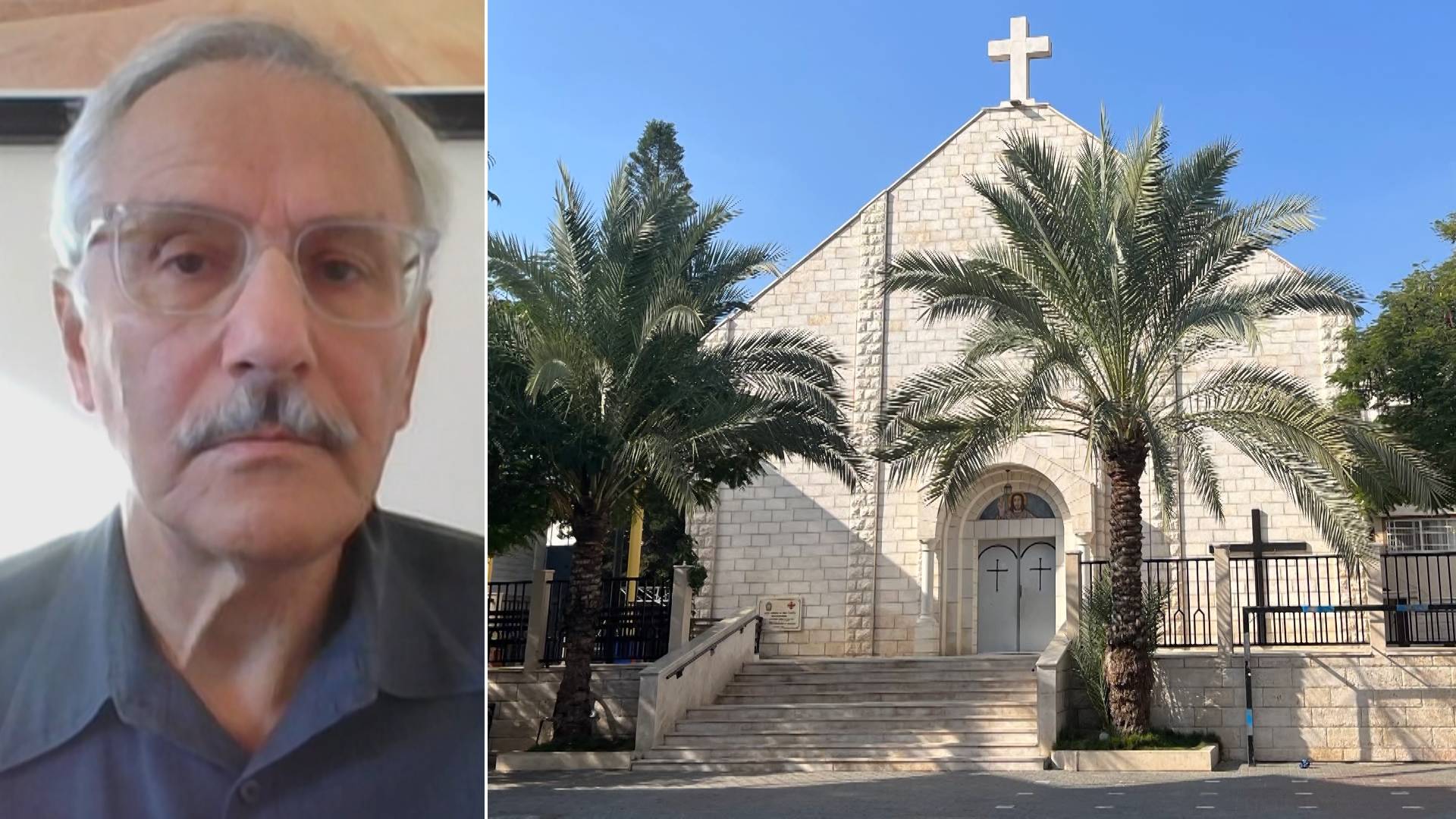
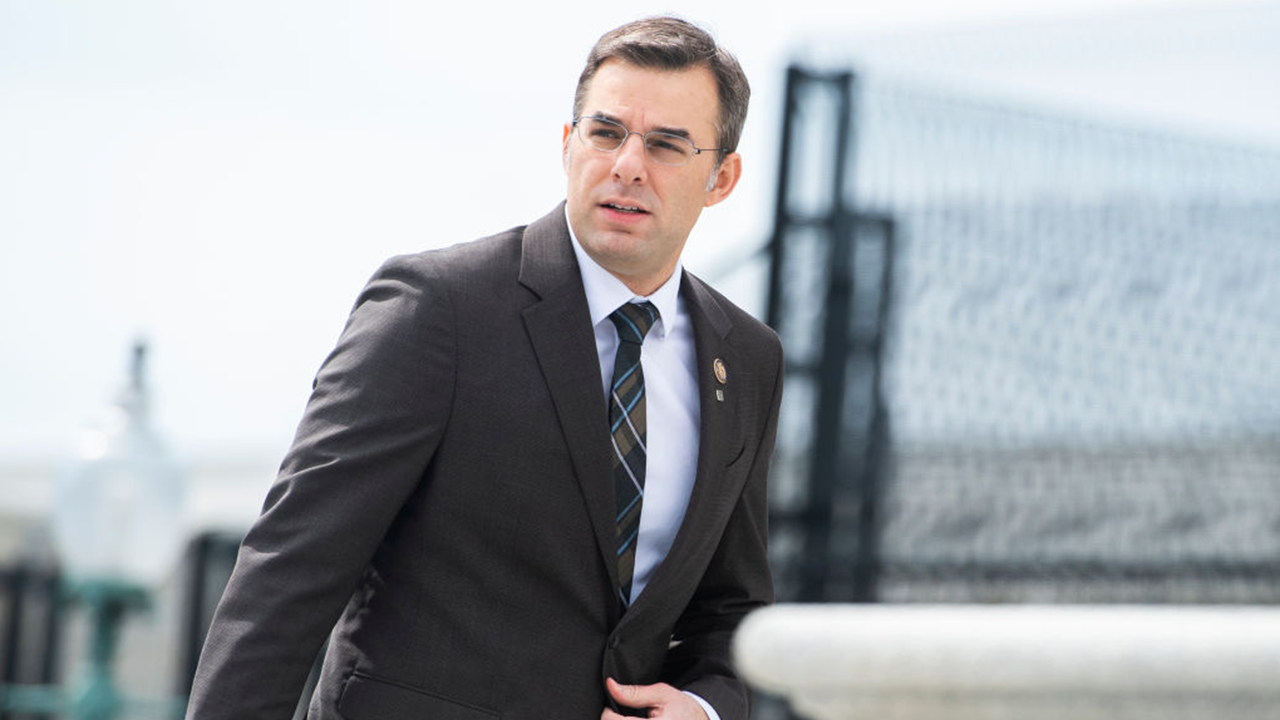
Former U.S. Representative Justin Amash, who has Palestinian roots, revealed that "several" of his relatives, including Viola and Yara, were killed in an Israeli airstrike on a Greek Orthodox church in Gaza. Amash expressed his condolences and called for peace, highlighting the suffering of innocent civilians, particularly children, in the ongoing conflict between Israel and Gaza.
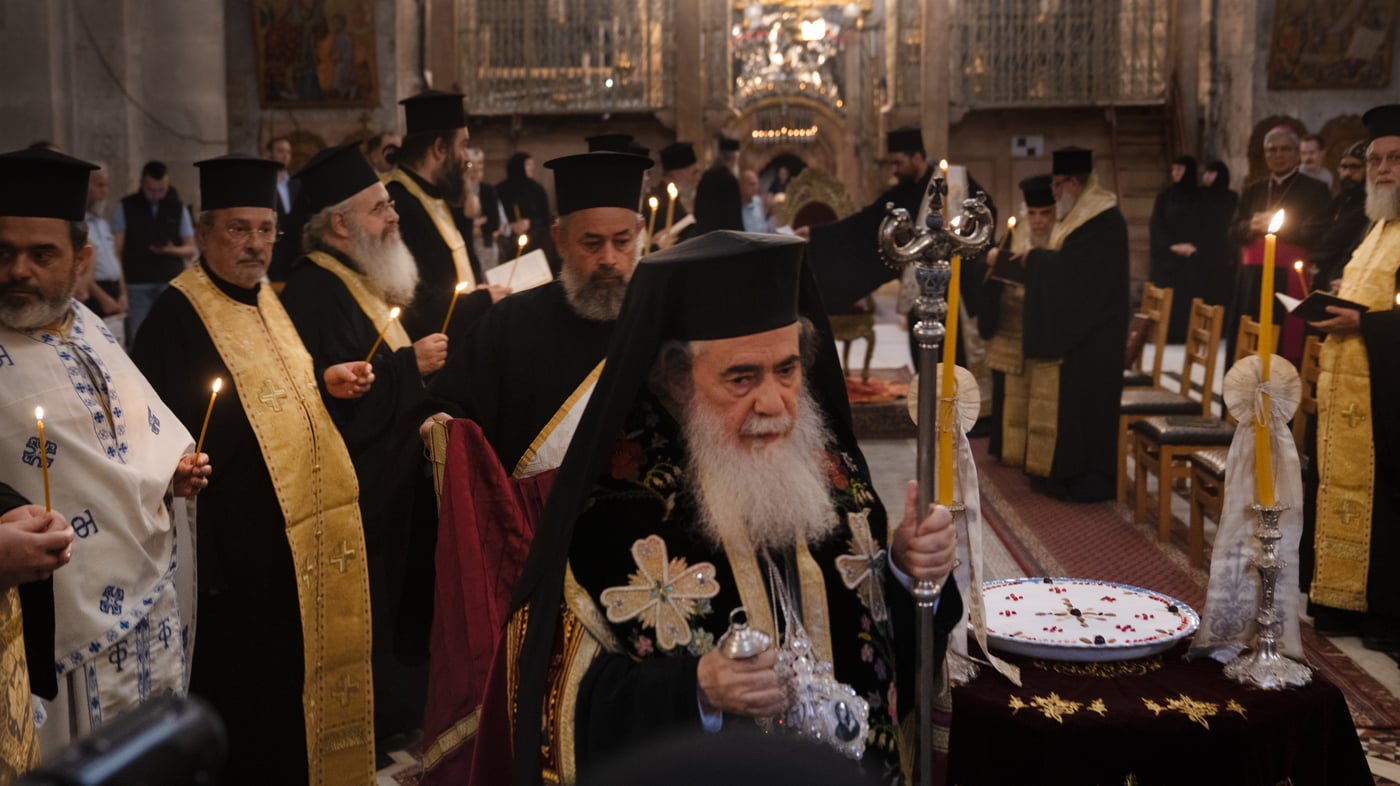
Christian churches across the Holy Land dedicated services to mourn the victims of an Israeli airstrike that killed over a dozen people seeking shelter at a Greek Orthodox church in Gaza. The Church of St. Porphyrius in Gaza City had become a refuge during conflicts between Israel and Gaza militants, with hundreds of Palestinians, mostly from the Christian minority, seeking safety there. Palestinian officials reported that 18 people, all but one Christian, were killed in the airstrike. Despite the attack, many continue to seek shelter at the church, as they feel they have nowhere else to go. Churches in the region, including the Church of the Holy Sepulchre in Jerusalem, held memorial services for the victims.
Former US congressman Justin Amash expressed grief after confirming that several of his relatives, including Viola and Yara, were killed in an Israeli airstrike on the Saint Porphyrius Orthodox Church in Gaza, where they had sought shelter. Amash, the first Palestinian American to serve in Congress, called for prayers for all Christians in Gaza and expressed solidarity with Israelis and Palestinians suffering in the ongoing conflict. The church, located near a Hamas command center, was hit by a missile, resulting in the deaths of at least 16 people, including women and children. Israel denied deliberately targeting the church, while the Orthodox Patriarchate of Jerusalem accused Israel of targeting churches.
Former Michigan Rep. Justin Amash, a Palestinian-American, confirmed that several of his relatives were killed in a Greek Orthodox church in Gaza that was damaged by an Israeli airstrike. The church had been sheltering displaced Muslims and Christians, and at least 16 people were killed. The Israeli military stated that the church was not the intended target and that the incident is under investigation. Amash expressed his condolences and called for the protection of Christians in Gaza, emphasizing the suffering endured by the Palestinian Christian community. The Orthodox Patriarchate of Jerusalem condemned the Israeli airstrike. The conflict between Israel and Hamas has resulted in thousands of casualties and widespread destruction.
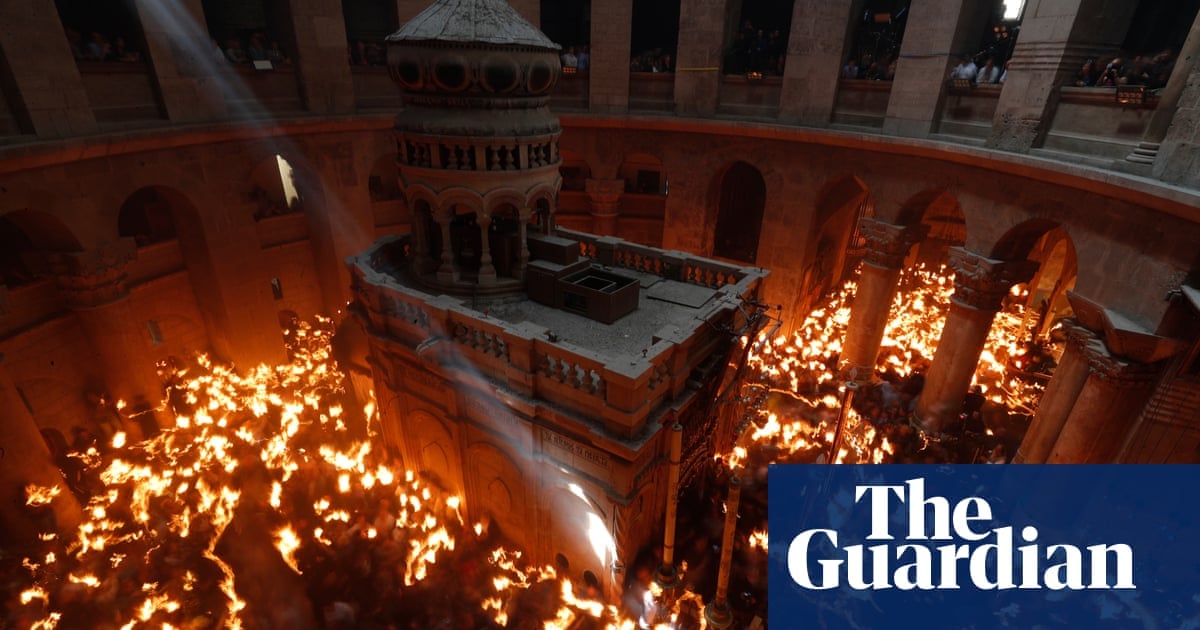
Israeli police limited attendance inside the Church of the Holy Sepulchre in Jerusalem to 1,800 people for the traditional Holy Fire rite ahead of Orthodox Easter due to security concerns, while thousands of Palestinian worshippers and foreign pilgrims gathered outside. The ceremony sees a flame brought from the tomb and passed via candles among worshippers, marking the most important event in the Orthodox calendar. The restrictions have been criticized by many Palestinian Christians as proof of discrimination against them, while Israeli media reported tens of thousands of people turned out for a 15th consecutive week of protests against a controversial government judicial overhaul.