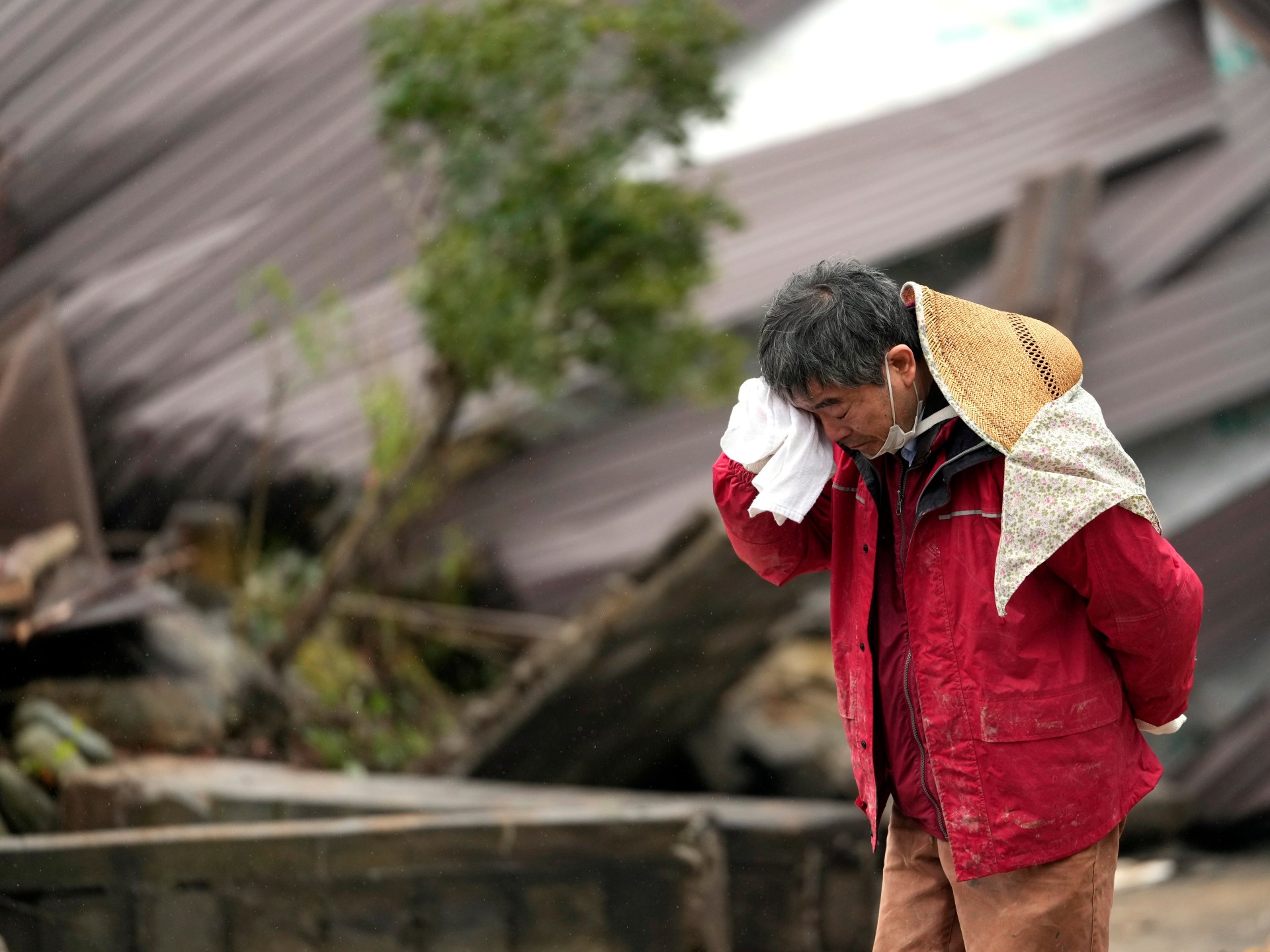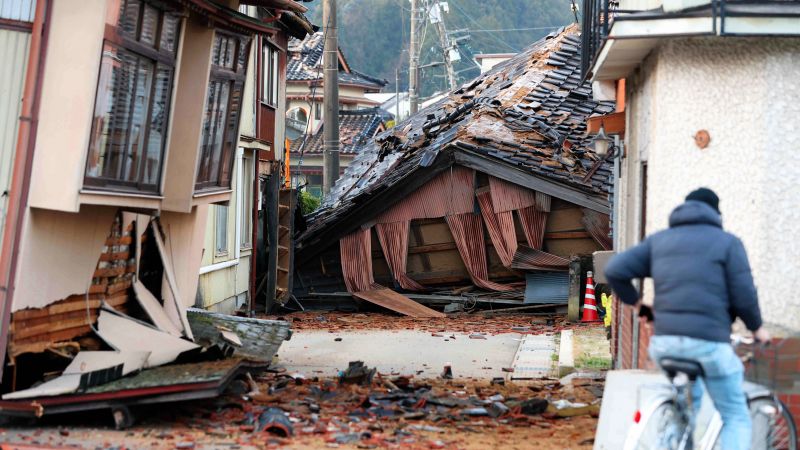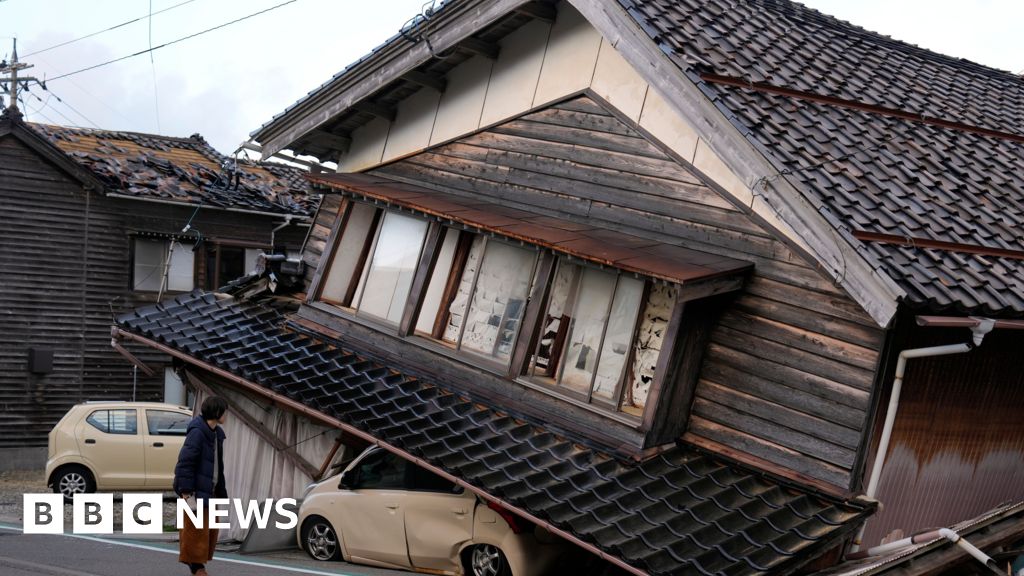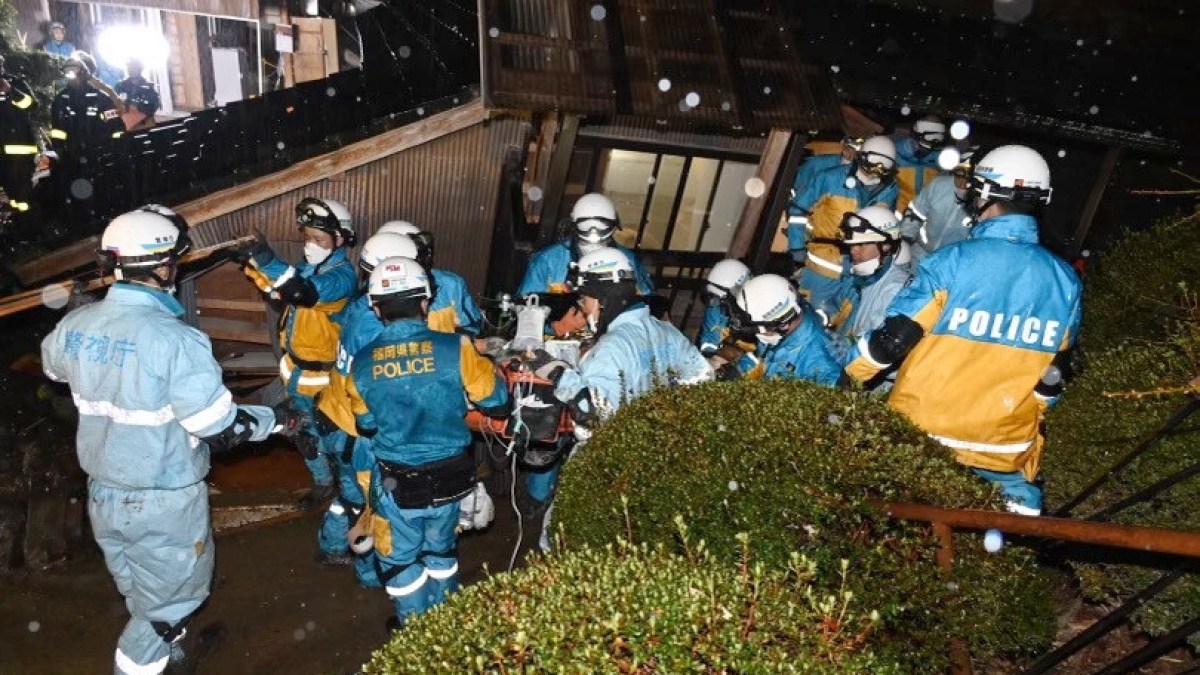
A nonagenarian woman was rescued from the debris of her home in Suzu, Japan, 124 hours after a 7.6 magnitude earthquake struck the Noto Peninsula on New Year's Day, killing at least 126 people. Despite the diminishing odds of survival past 72 hours, she was found alive among widespread destruction, with ongoing rescue efforts facing challenges from aftershocks, weather conditions, and blocked roads. The earthquake and subsequent tsunami have devastated communities, leaving thousands in need of aid and basic necessities.
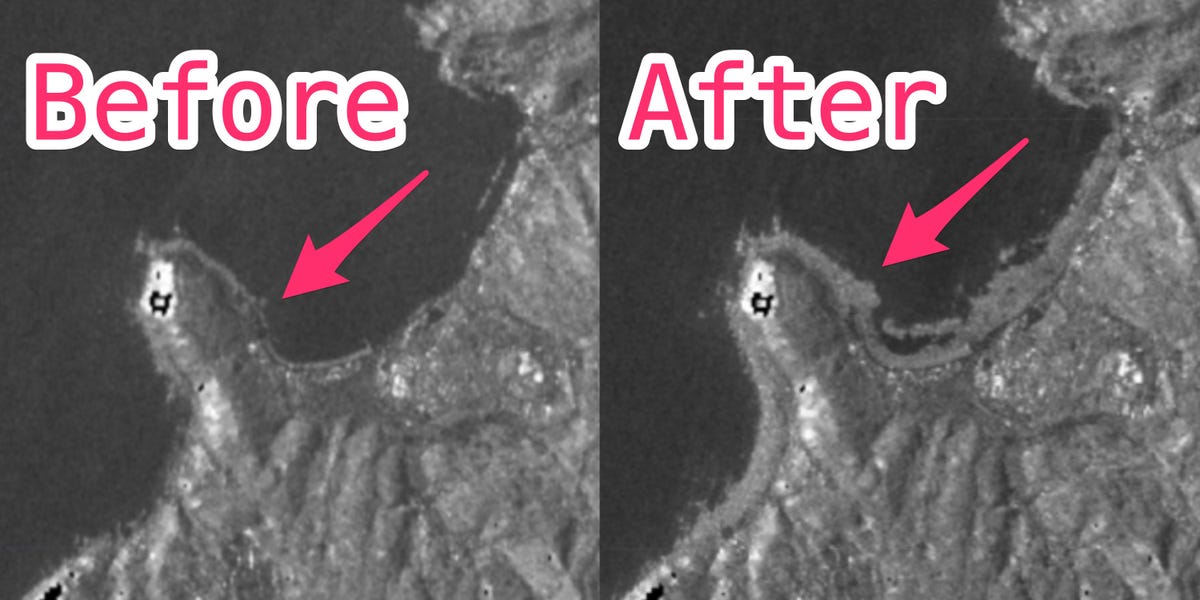
A 7.6-magnitude earthquake on January 1 caused significant uplift along Japan's Noto Peninsula, extending the coastline by up to 820 feet in some areas and creating new beaches. Satellite imagery and on-the-ground surveys confirmed the dramatic changes, with the Earthquake Research Institute at the University of Tokyo and the Geospatial Information Authority of Japan documenting the coastal expansion. The phenomenon was so intense that local fishermen witnessed the coastline rising during the quake. The university's research into the changes is ongoing.
Japanese rescuers are working against time and challenging conditions to find survivors after a magnitude 7.6 earthquake hit the Noto Peninsula, with the death toll currently at 78 and over 50 people missing. Poor weather, damaged infrastructure, and the critical 72-hour survival window are adding to the urgency. Prime Minister Fumio Kishida has increased the number of troops to aid in the rescue operations, while thousands of residents face water and power outages. The region is prone to earthquakes due to its location where four tectonic plates meet, and this incident marks the deadliest quake in Japan since 2016.
Japan is grappling with the aftermath of a 7.5 magnitude earthquake that struck the Noto Peninsula, causing widespread destruction, fires, and a tsunami that affected areas as far as eastern Russia. The death toll has risen to at least 57, with ongoing rescue efforts to find survivors amidst the rubble. Tsunami warnings have been lifted, but the region continues to experience aftershocks. The Japanese government is mobilizing all available resources to aid the affected areas, with Prime Minister Fumio Kishida emphasizing the urgency of rescue operations. Power outages and transportation disruptions persist as the country works to recover from the natural disaster.
Japan is grappling with the aftermath of a deadly 7.6 magnitude earthquake that struck the Noto peninsula on New Year's Day, killing 55 people. The quake caused extensive damage, with fires breaking out, buildings collapsing, and roads being destroyed, complicating rescue operations. The Japanese Prime Minister has described the situation as a "race against time" with 3,000 rescuers deployed. Despite major tsunami warnings initially, advisories have been lifted, and no further tsunami risk is reported. The country is on high alert for potential aftershocks, and the government has evacuated over 57,000 people, providing them with essential supplies. An unrelated incident at Tokyo's Haneda airport resulted in a fire and collision between a Japan Airlines plane and a coastguard aircraft, leading to five fatalities.
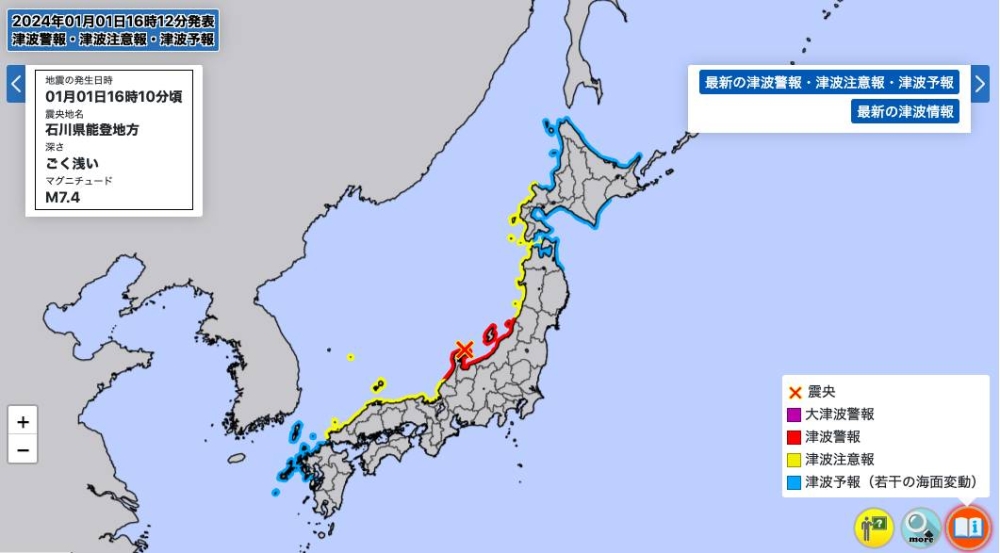
A powerful earthquake hit central Japan, leading to a tsunami warning for the western coast, with potential waves up to 5 meters high expected in the Noto Peninsula. The quake, the strongest on the Japanese scale, was felt as far as Tokyo and prompted urgent evacuation advisories for several prefectures.