
Tag

Nanoimprint Lithography

All articles tagged with #nanoimprint lithography

technology2 years ago

Canon Challenges ASML with New Chip Machines

Canon has started selling its nanoimprint semiconductor manufacturing systems, positioning them as a simpler and more accessible alternative to ASML's leading-edge tools. While Canon's machines can currently produce circuits equivalent to 5-nanometer scale using extreme ultraviolet lithography (EUV), the company aims to reach next-generation 2nm production with further advancements. This move may also impact the US-China trade war, as Canon's technique of nanoimprint lithography could potentially bypass existing trade sanctions on the import of EUV machines into China.

technology2 years ago

Canon's Nanoimprint Lithography System Challenges ASML in Semiconductor Manufacturing

Canon has launched the FPA-1200NZ2C nanoimprint semiconductor manufacturing equipment, expanding its lineup to meet the needs of various users. This equipment uses nanoimprint lithography (NIL) technology to transfer circuit patterns by pressing a mask onto the wafer, allowing for faithful reproduction of fine circuit patterns. It enables patterning with a minimum linewidth of 14 nm, equivalent to the 5-nm-node required for advanced logic semiconductors. The new product also features environment control technology to suppress contamination and reduce defects, contributing to the manufacture of cutting-edge semiconductor devices. Additionally, it reduces power consumption and can be used for applications such as metalenses for XR technology.

science-and-technology2 years ago

"Revolutionary Technique: Scientists 'Tattoo' Living Cells with Gold"

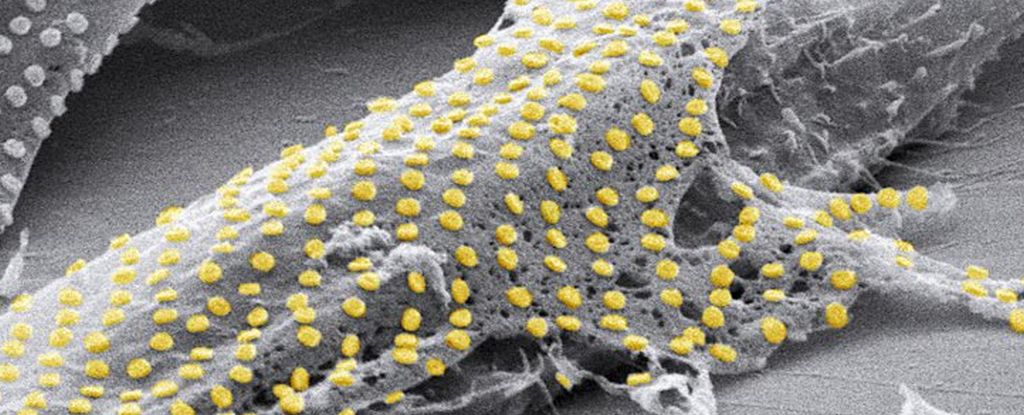
Scientists have developed a technique to "tattoo" living cells with gold nanodots and nanowires using nanoimprint lithography, a low-cost and simple fabrication technique. This breakthrough could pave the way for integrating human cells with electronic devices, enabling the remote monitoring and control of individual cells in real time. The technique has potential health applications, such as early disease diagnosis and treatment. It overcomes the challenge of incompatibility between living tissue and traditional electronics manufacturing methods, offering opportunities for the development of more complex electronics integrated with living tissues and soft materials.