
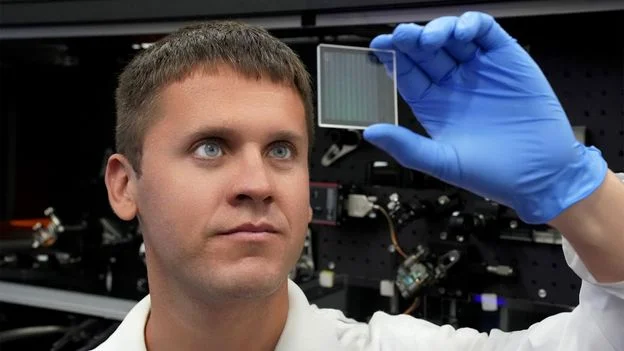
Memory crystals: glass storage poised to cut data-centre emissions
Scientists have created memory crystals by laser writing nanostructures inside fused silica glass, enabling five-dimensional data storage that could pack hundreds of terabytes on a 5-inch platter and last essentially forever. The read-out uses an optical microscope, with current write/read speeds around 30 MB/s (targeting 500 MB/s in 3–5 years). If scalable, this could dramatically cut data-centre energy use since data centres consume about 1.5% of global electricity and rising, replacing energy-hungry disks and tapes. DNA storage and borosilicate glass are other long-term contenders, but widespread adoption faces compatibility and cost hurdles; in the near term, improving hardware efficiency and smarter data management remain essential.