The Cambridge Dictionary has added over 6,000 new words this year, including slang and internet culture terms like 'skibidi,' 'tradwife,' and 'delulu,' reflecting the evolving nature of the English language influenced by social media and current events.
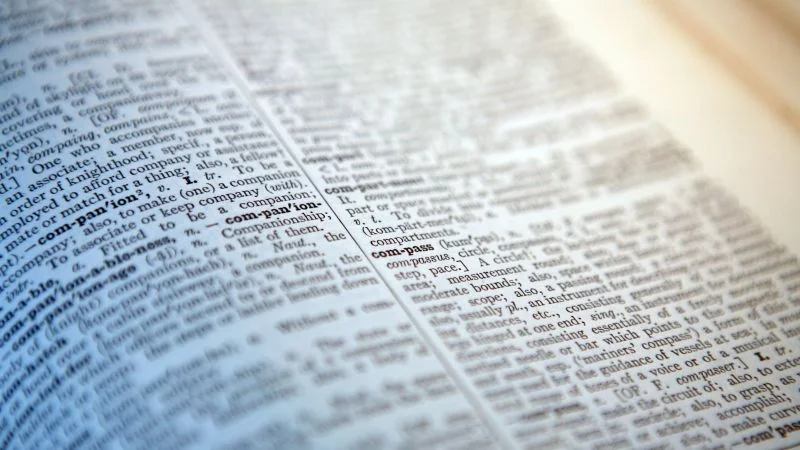
Cambridge Dictionary has added 6,000 new words influenced by social media and internet culture, including 'skibidi,' 'delulu,' and 'tradwife,' reflecting how online trends are shaping language. These terms range from humorous to descriptive, illustrating the evolving nature of English driven by digital communication.
A study reveals that ChatGPT is not only changing how we write but also influencing our everyday speech, with increased use of AI-style vocabulary in conversations. While AI helps improve clarity and confidence, especially for learners, it also risks diminishing personal voice and linguistic diversity, prompting a need for awareness in how we incorporate AI into our communication.
A study from the Max Planck Institute suggests that since ChatGPT's release, humans are increasingly adopting 'GPT words' in their speech and writing, indicating that AI is influencing human language and culture, creating a feedback loop where AI and human communication mutually shape each other.
Researchers from Lancaster University have found that the pronunciation of the "r" sound at the end of words is disappearing in England, except in Blackburn where it remains. The study, which focused on rhoticity, the pronunciation of the consonant "r," found that young speakers in Blackburn pronounce the "r" weakly and less frequently than older speakers. The research raises concerns about whether future generations will even hear these weak "r" sounds and if the distinction will eventually fade away. The study also found that rhoticity was stronger in males and that formal speech styles increased rhoticity. The disappearance of traditional dialects and linguistic homogenization in England is a growing concern.