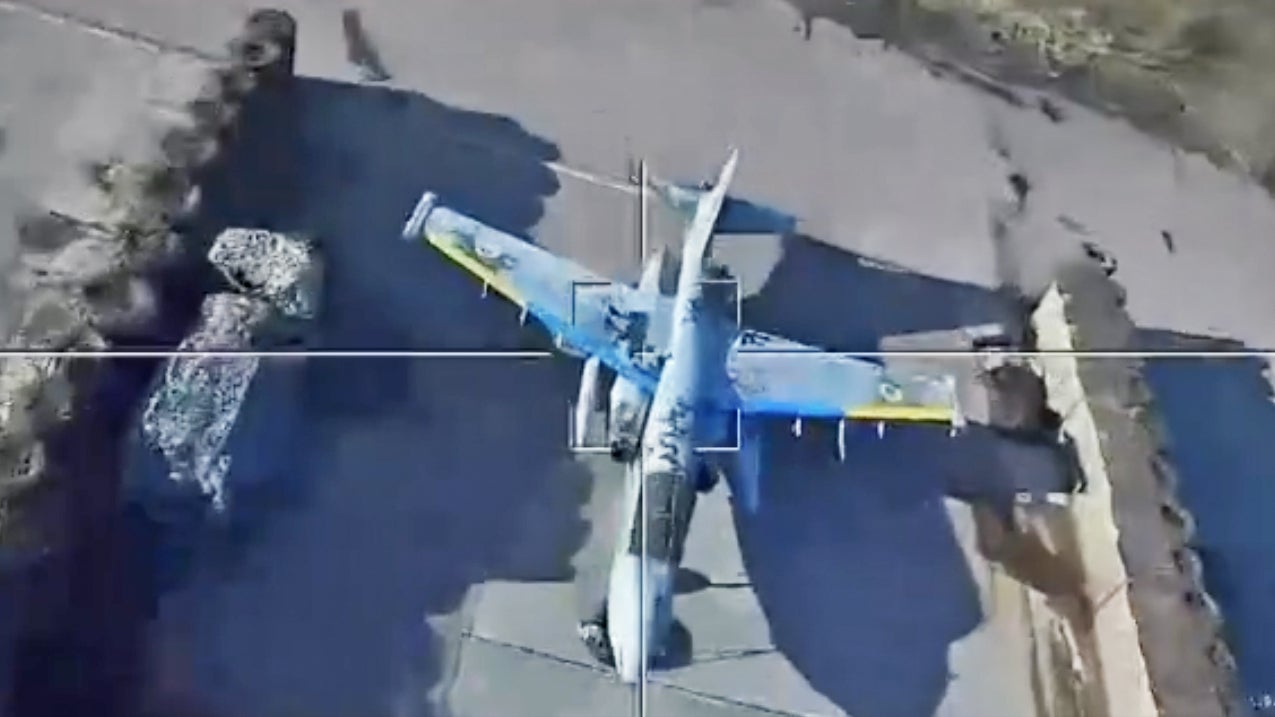
A video showing a Russian Lancet drone striking a Ukrainian Su-25 ground-attack aircraft has been revealed to be an attack on an elaborate decoy. The decoy, designed to resemble the Su-25, was remarkably accurate and fooled initial reports of a successful attack. The incident highlights the vulnerability of Ukrainian aircraft, both in the air and at their bases, as they face the ongoing conflict with Russia. The use of decoys by both sides underscores the need for electronic warfare equipment and ground-based air defense systems. The longer-range capabilities of the Lancet drone pose a growing threat to the Ukrainian Air Force, necessitating the development of more effective countermeasures.
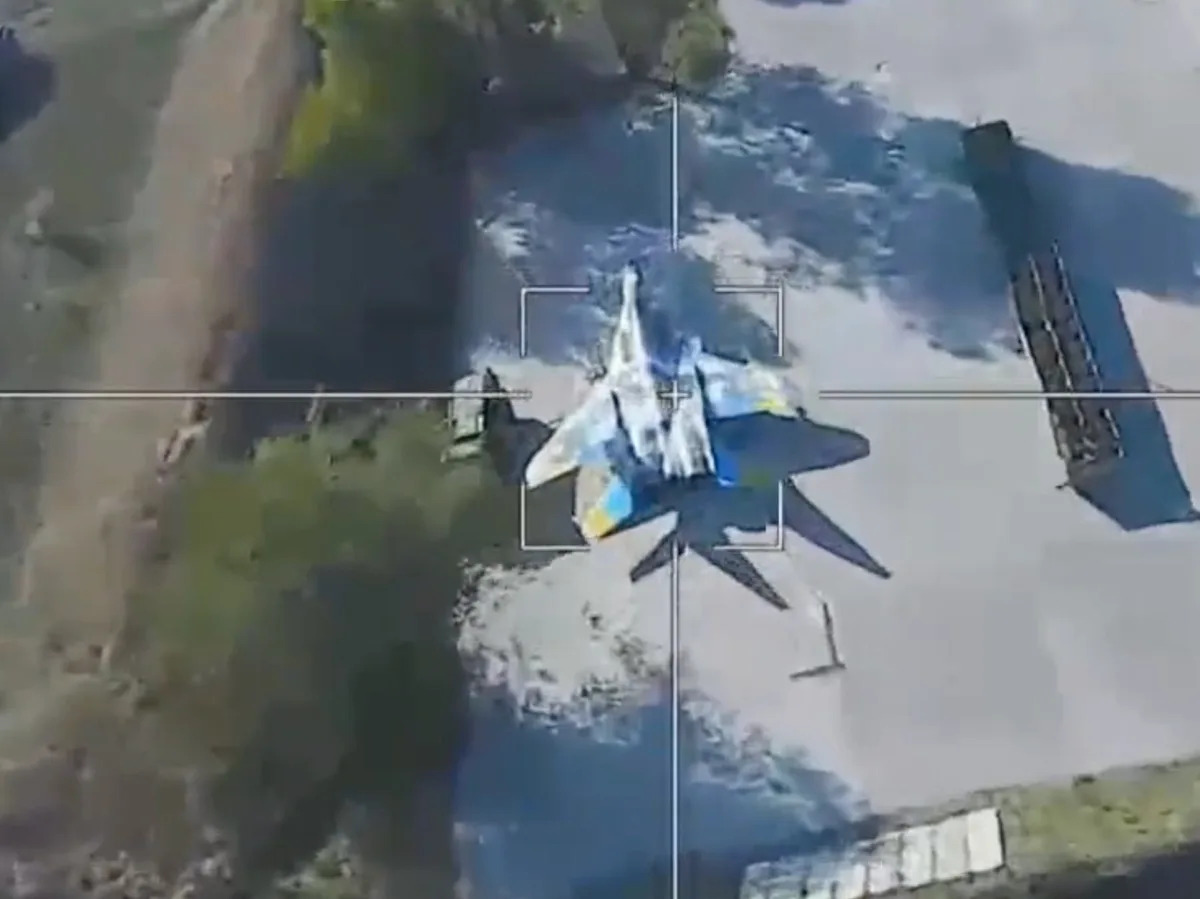
A video circulating online appears to show a Russian Lancet drone striking a Ukrainian MiG-29 fighter at an air base, suggesting that these small attack drones now have the ability to hit targets much further away. Previously, Lancet drones had a range of around 25 miles, but this incident indicates that they can now reach up to 50 miles. The drones, which are cheap and difficult to intercept, have been increasingly used by Russia in the ongoing conflict with Ukraine.
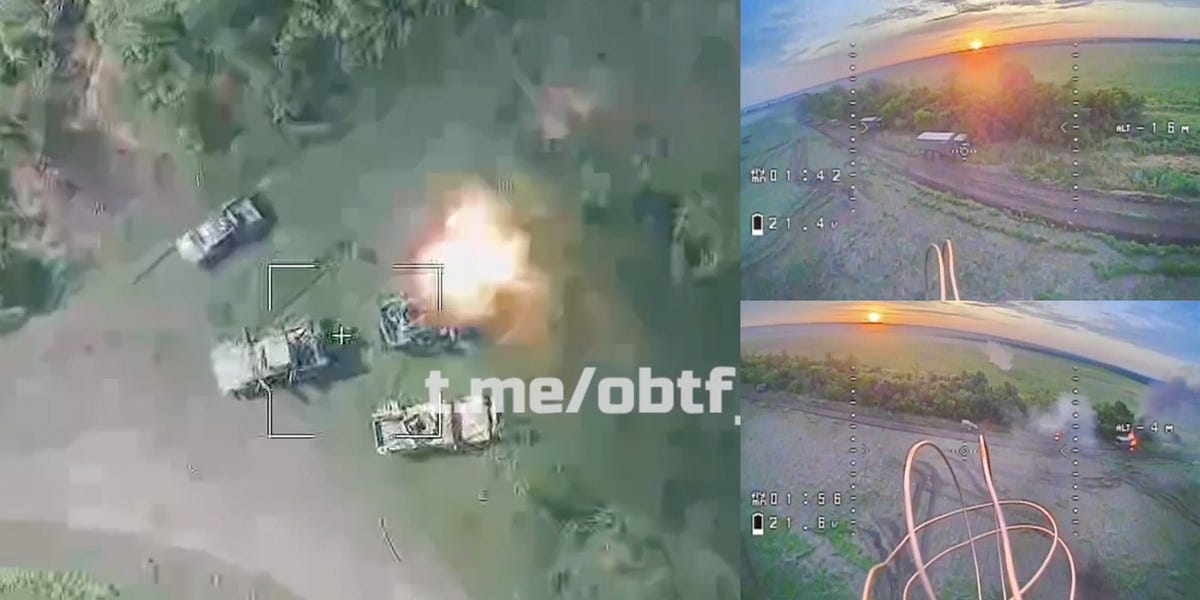
Ukraine's counteroffensive against Russia is being hampered by the Lancet drone, a loitering munition made by Russia's Kalashnikov arms manufacturer. The drone is most effective against artillery systems, lighter armored vehicles, and older tanks. As Ukraine advances, it is stretching its ability to deal with drone attacks. Russian officials have shared videos of destroyed Ukrainian vehicles, often attributed to the Lancet drone. The drone has also exposed Ukraine's poor air defenses, as seen in a video showing a Lancet damaging part of a prized IRIS-T air-defense system provided to Ukraine by Germany.