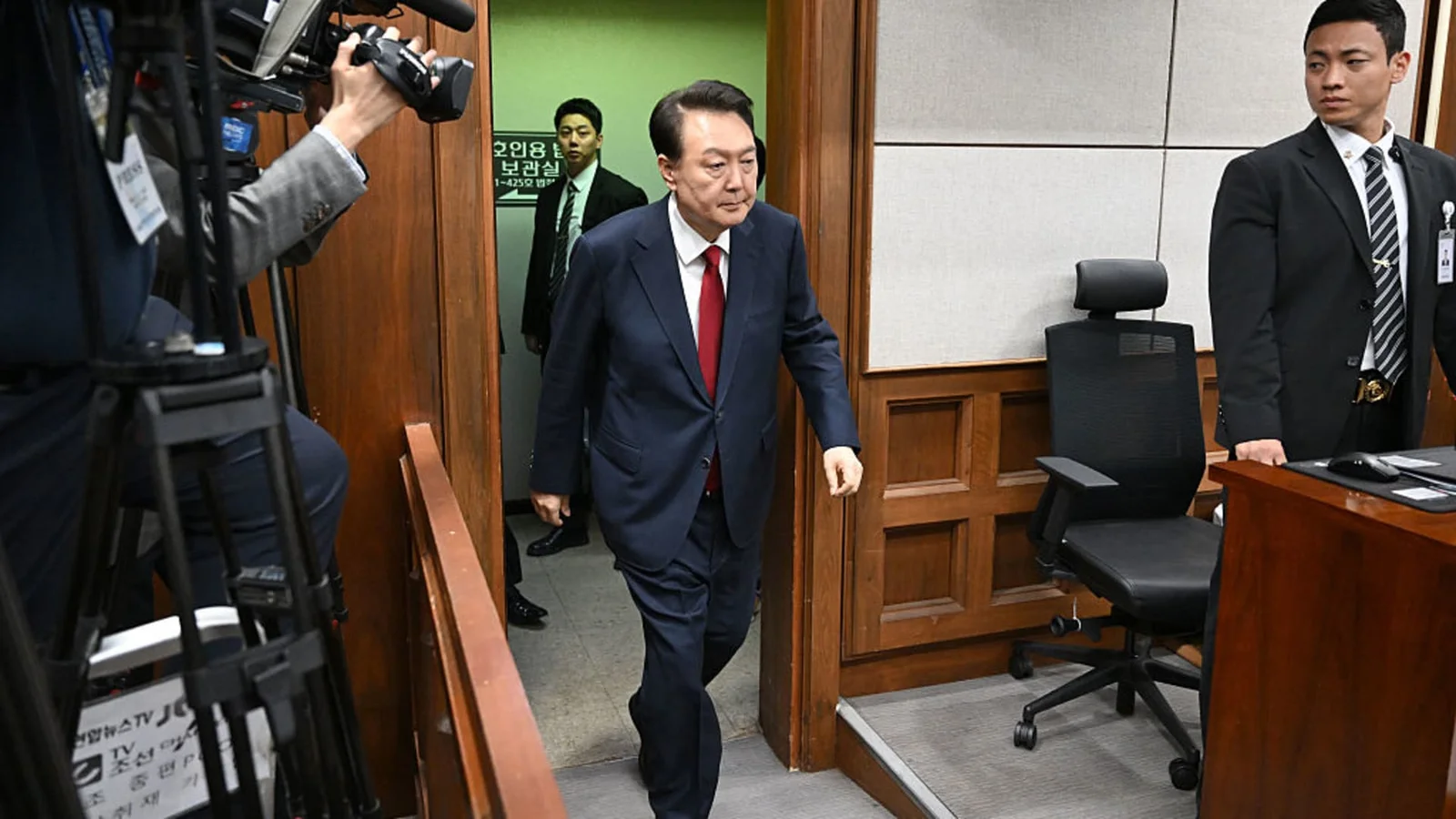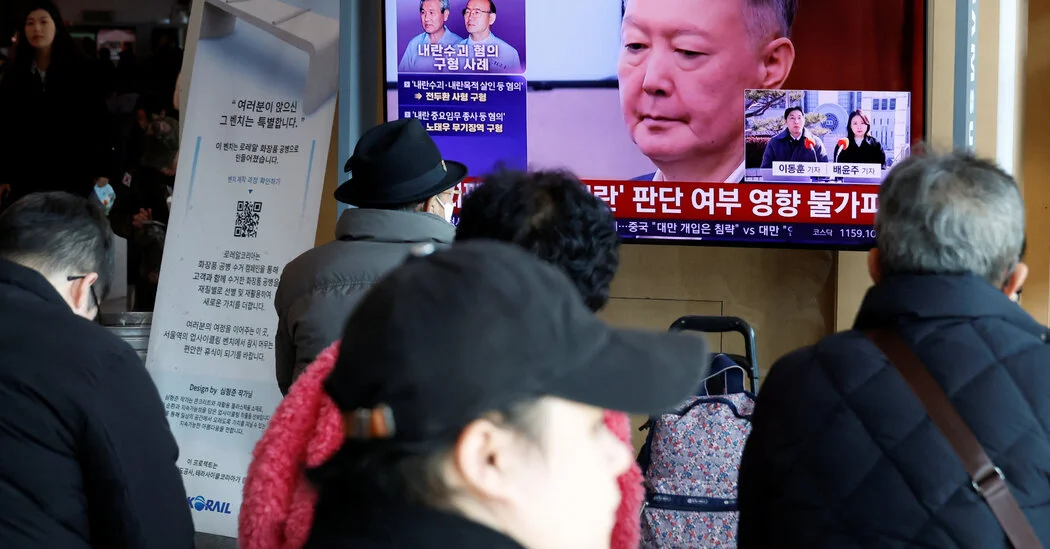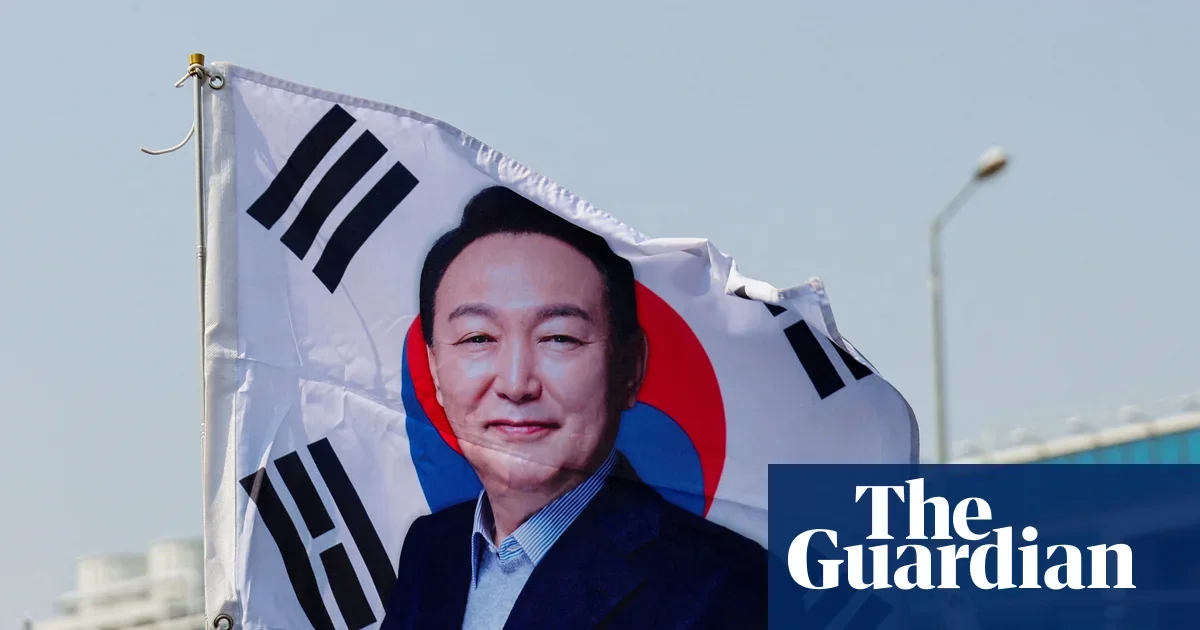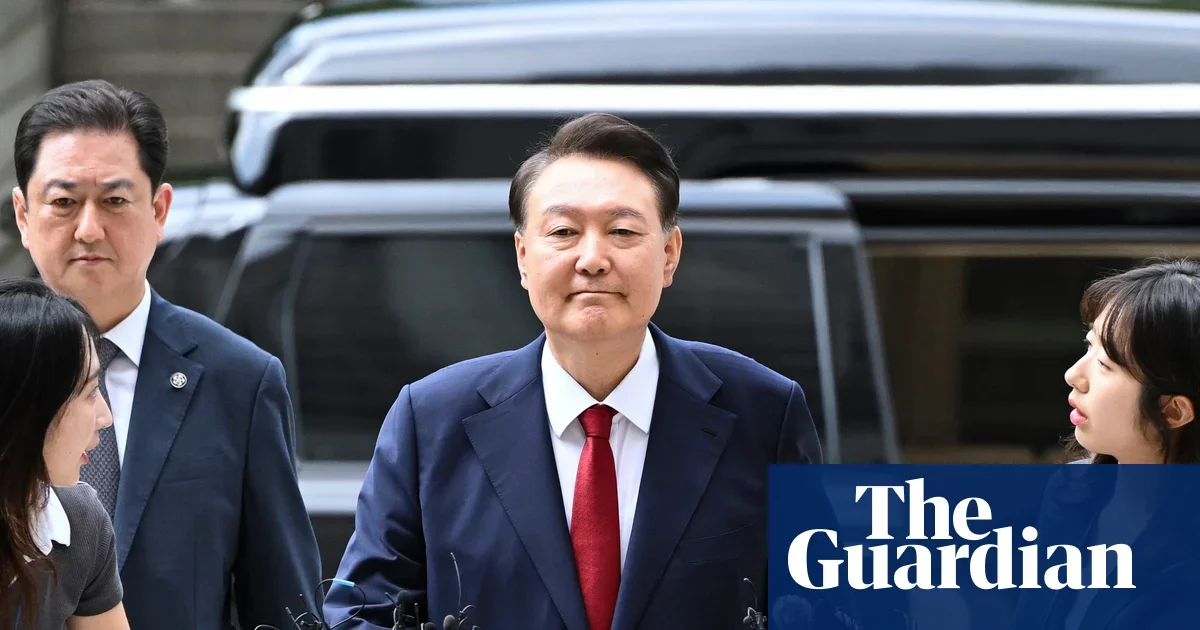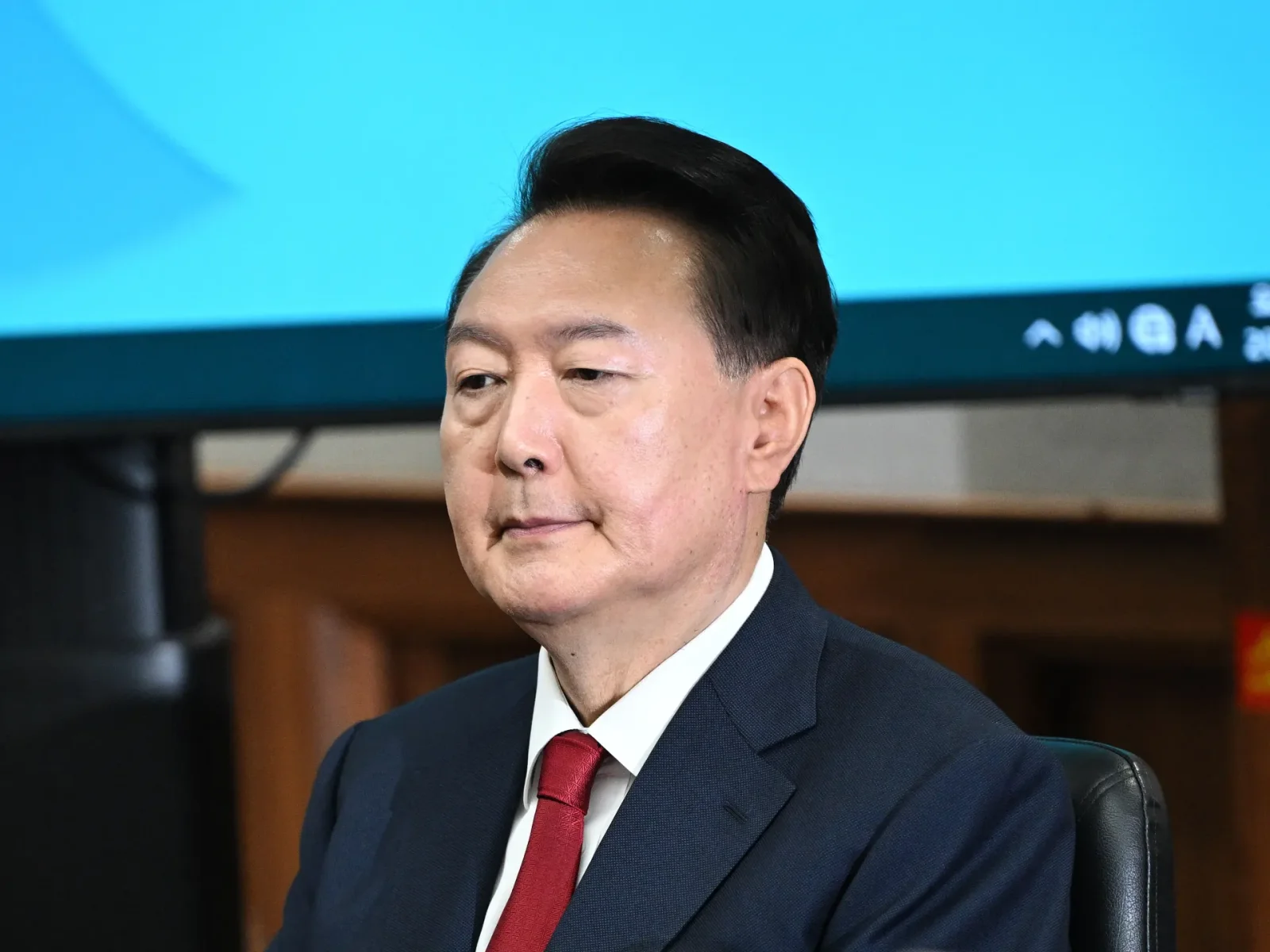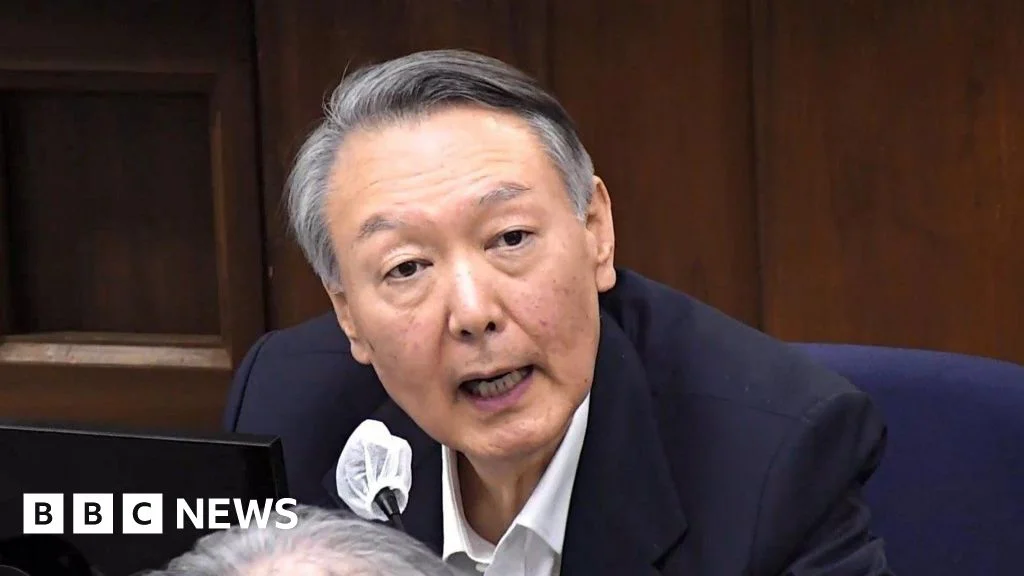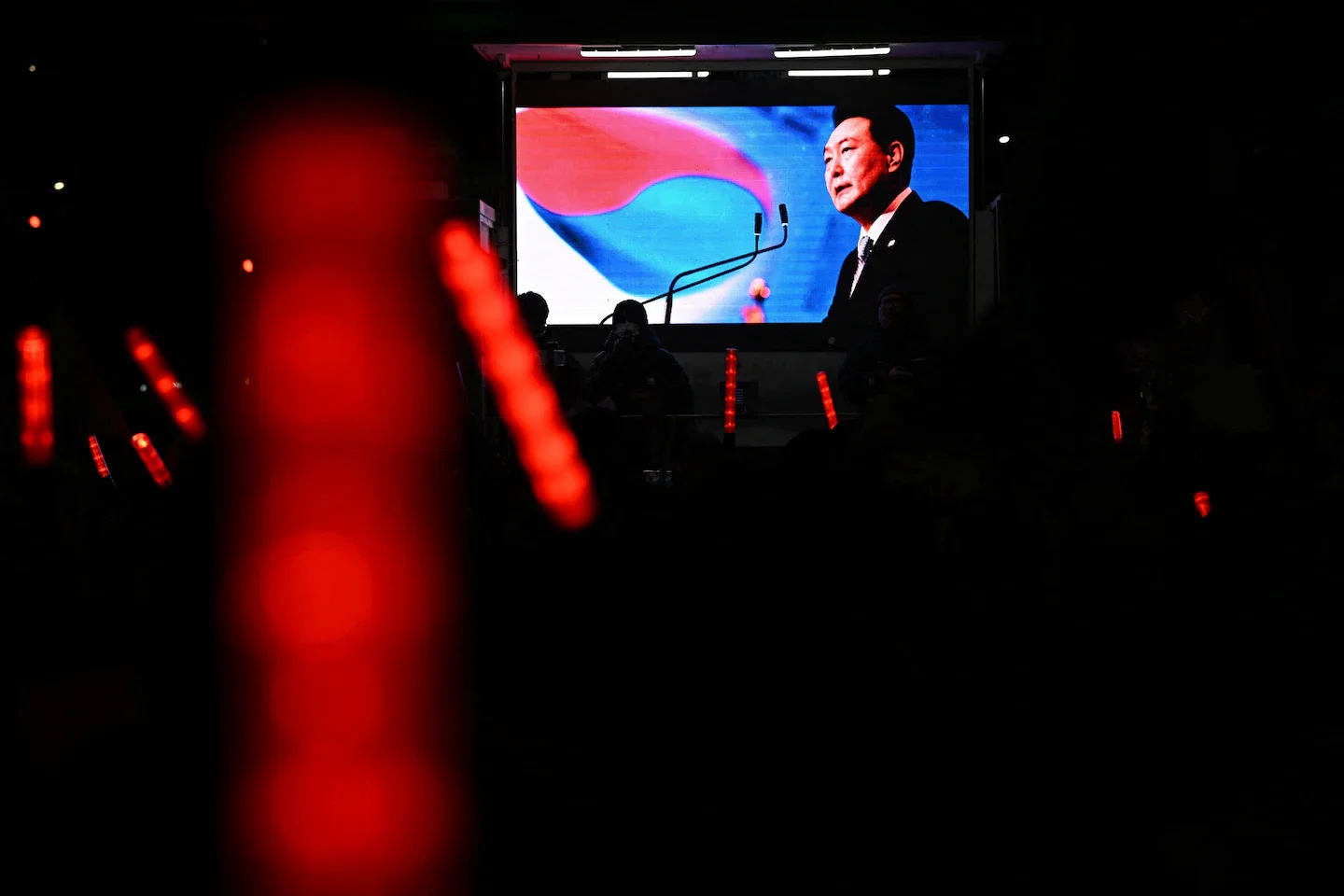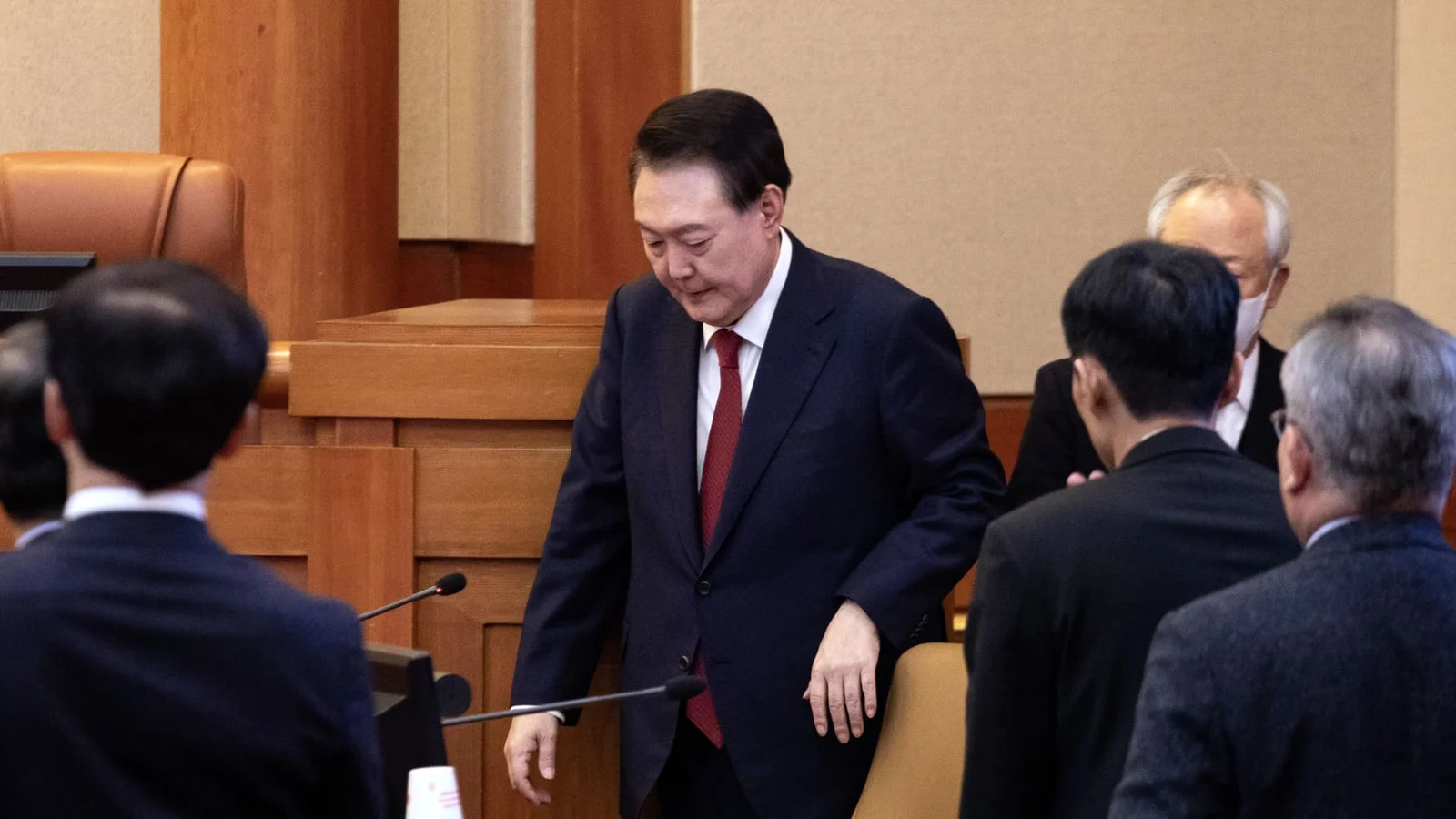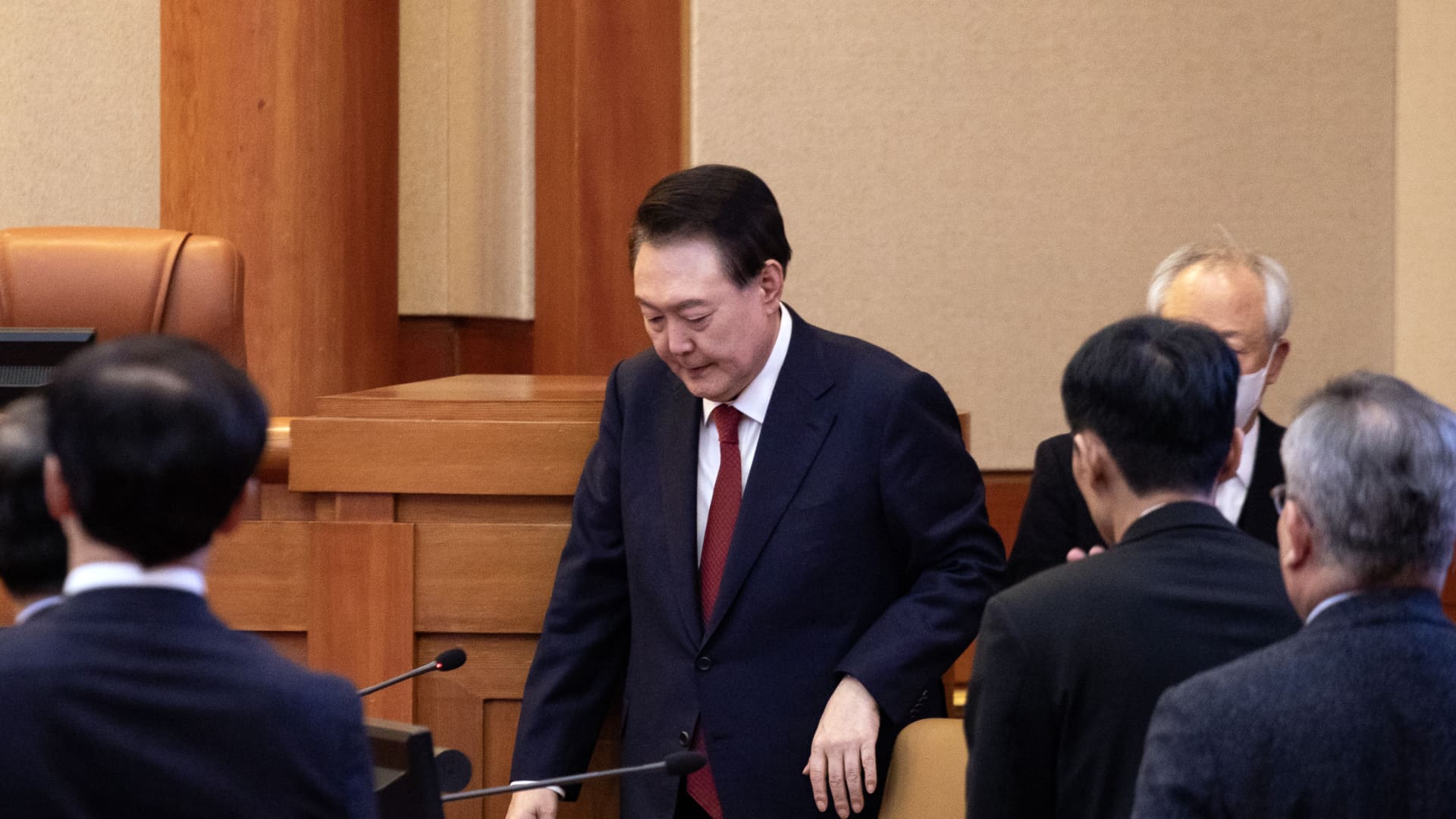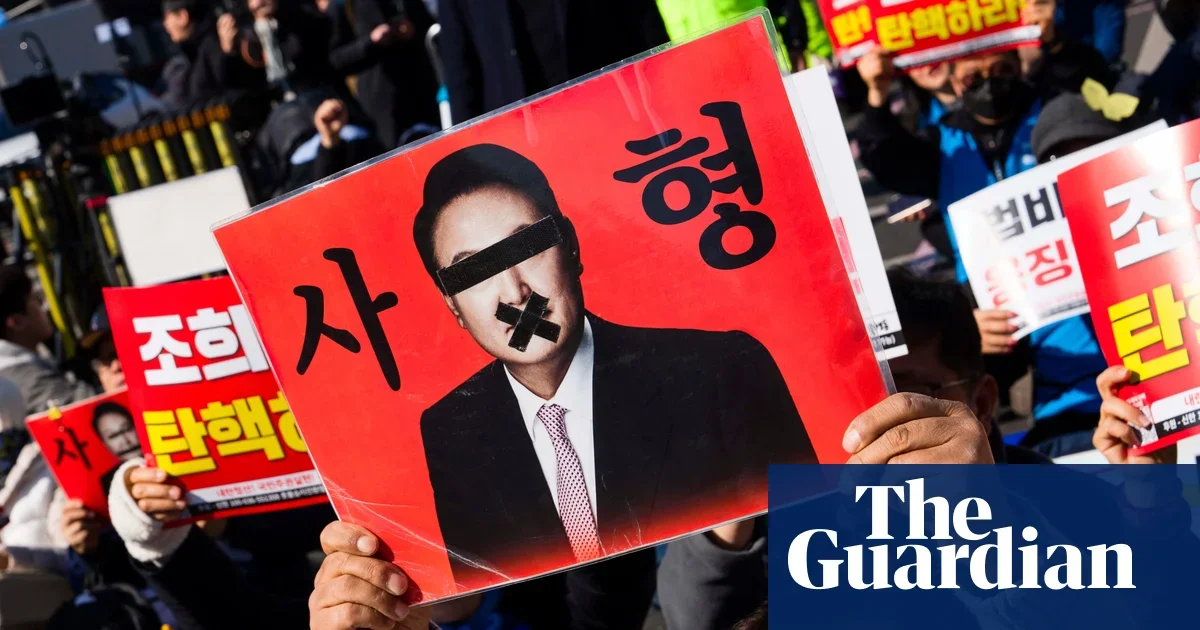
South Korean prosecutors allege that former President Yoon Suk Yeol attempted to provoke North Korea into military action to justify martial law, leading to charges of insurrection and his subsequent impeachment after a failed attempt to impose martial law in 2024.
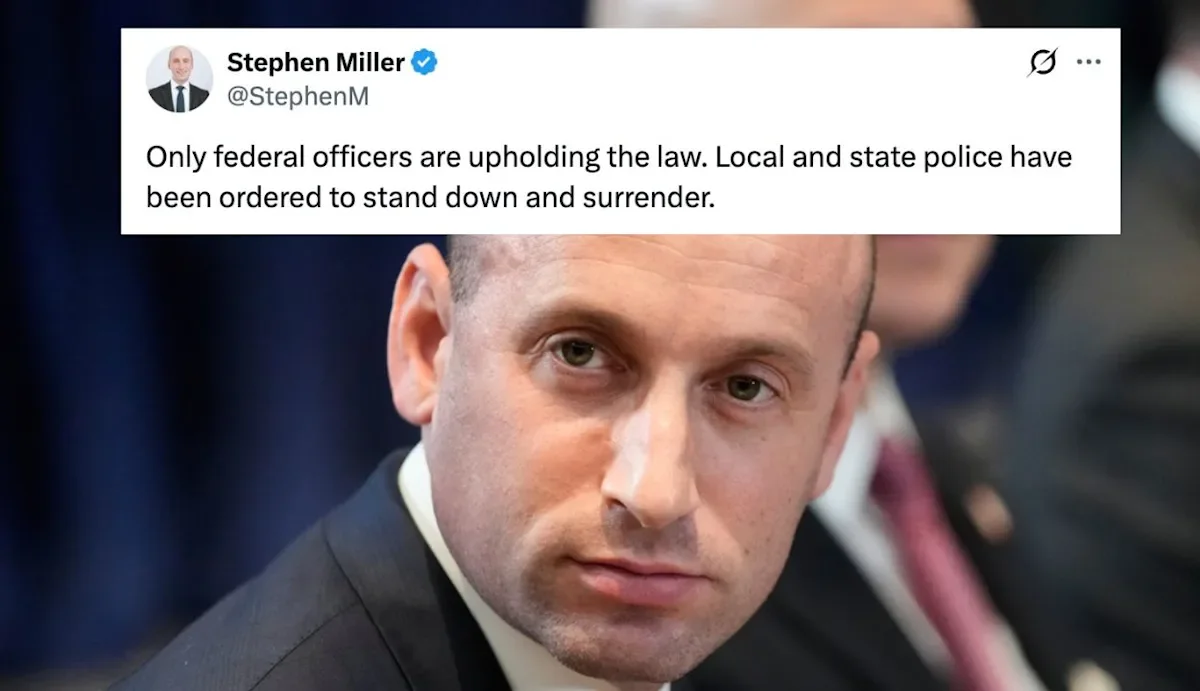
The article criticizes President Trump's recent actions and rhetoric, including a high-level military meeting at Quantico, which signals a potential move towards deploying military force against domestic protests and unrest, raising concerns about the violation of civil-military boundaries and the threat to American democracy.
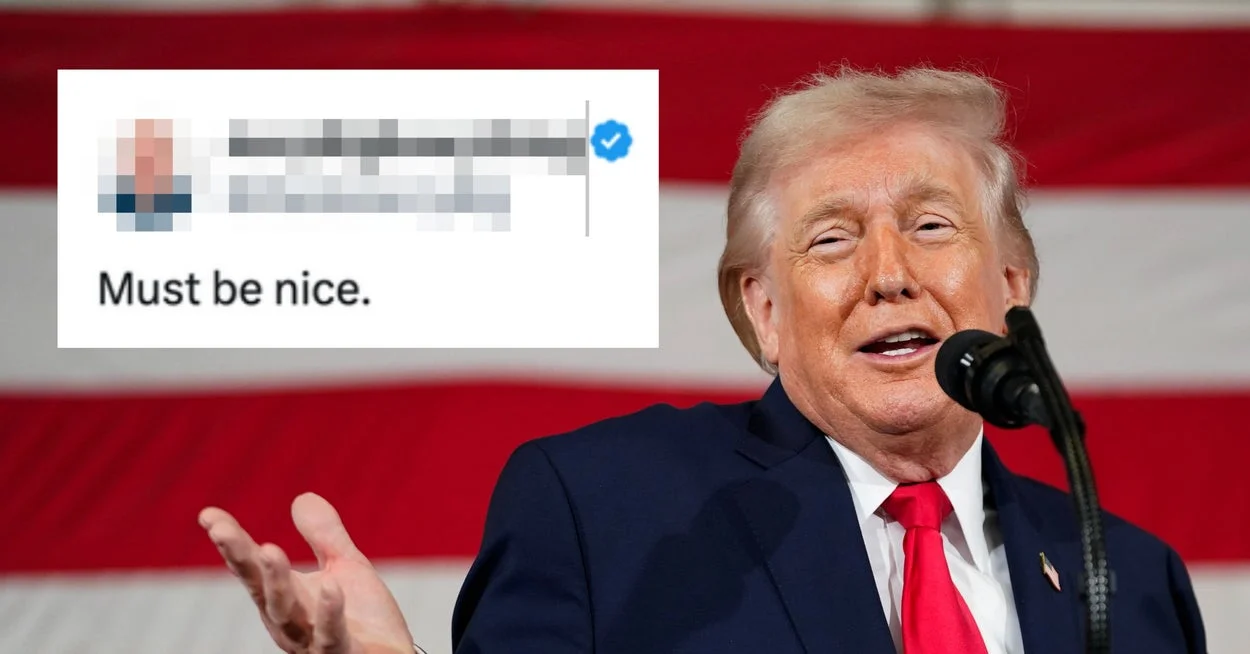
President Trump falsely claimed that FBI agents acted as agitators and insurrectionists during the January 6 Capitol protests, despite an official investigation finding no evidence of undercover FBI agents among the crowds.
Former South Korean President Yoon Suk Yeol has been re-arrested amid an investigation into his declaration of martial law last year, which led to a constitutional crisis and multiple criminal charges including abuse of power and obstruction of justice. The investigation alleges he attempted to bypass political gridlock by deploying troops and ordering actions against lawmakers, with his lawyers denying the charges as politically motivated.
Edward Kelley, a Tennessee man previously convicted for his role in the January 6 Capitol attack, has been found guilty of plotting to kill FBI agents who investigated him. Kelley, who had created a 'kill list' and planned to attack an FBI office, faces up to life in prison. This verdict follows his earlier conviction for assaulting a police officer and other charges related to the insurrection. Kelley and a co-conspirator, Austin Carter, were charged with conspiracy and retaliation against federal officials, with Carter pleading guilty in November 2023.
New reporting has intensified the controversy surrounding Supreme Court Justice Samuel Alito, who is embroiled in a scandal involving an insurrectionist flag. The incident has further damaged the credibility of the Supreme Court, raising questions about its legitimacy.
Christopher Joseph Quaglin, a New Jersey electrician, was sentenced to 12 years in prison for repeatedly attacking police officers during the January 6 Capitol riot. Quaglin insulted the judge, U.S. District Judge Trevor McFadden, before and after the sentencing, and pushed conspiracy theories about the event. Prosecutors described Quaglin as one of the most violent rioters, noting his assaults on multiple officers and his intent to disrupt Congress' certification of the 2020 election.
Pam Hemphill, a former Capitol rioter, claims that Supreme Court Justice Samuel Alito was signaling to far-right groups by displaying certain flags outside his homes, including an "Appeal to Heaven" flag and an inverted American flag. Hemphill, who has since distanced herself from the far-right, argues that these symbols are used for communication among extremists. Alito, who is involved in key Supreme Court cases related to the Jan. 6 insurrection, has not commented on the flags' significance.
The article criticizes the lack of action from all three branches of the U.S. government regarding the ethical issues surrounding Supreme Court Justices, particularly Justice Samuel Alito. It highlights Alito's display of insurrectionist symbols and the acceptance of undisclosed luxury benefits by Justices Alito and Clarence Thomas. The author calls for the Department of Justice to take a stronger stance and investigate these ethical breaches to restore the legitimacy of the Supreme Court.
New Hampshire Gov. Chris Sununu attempted to justify his reversal in supporting former President Donald Trump during an ABC interview, citing the importance of a Republican administration and policies. When pressed on his previous criticisms of Trump, including over the insurrection and federal indictments, Sununu admitted that his support was more about politics than personal favoritism. Despite his prior condemnations, Sununu affirmed his backing for Trump's potential presidential run, emphasizing that his stance aligns with the views of a majority of Americans.
New Hampshire Governor Chris Sununu stated that former President Donald Trump "absolutely contributed" to the insurrection and criticized his efforts to overturn the 2020 election, but emphasized that he would still support Trump due to priorities such as the economy, border security, and "culture change." Sununu's shift from Trump critic to loyal supporter reflects a recurring trend within the Republican Party, with Sununu highlighting concerns about President Biden's leadership and suggesting that public opinion prioritizes other issues over worries about democracy or felony convictions.
The Supreme Court's recent actions have paved the way for state and local officials to be disqualified from office for life for engaging in insurrection or aiding enemies of the Constitution, based on the 14th Amendment. This new legal landscape could target officials linked to the Jan. 6 Capitol attack, with liberal groups planning to use Section 3 of the 14th Amendment to hold low-level officials accountable. The ruling in the Trump disqualification case explicitly allows the provision to be used against state and local officials, creating urgency to take action before they run for federal office. However, concerns have been raised about potential misuse and the need for clarity on what constitutes an insurrection under Section 3.
The Supreme Court declined to hear an appeal by former New Mexico county commissioner Couy Griffin, who was removed from office due to his participation in the Jan. 6 attack on the U.S. Capitol. The decision solidifies the lower court's ruling that Griffin was disqualified under the 14th Amendment's insurrection clause. Griffin's attempt to appeal employed legal arguments similar to those used by Donald Trump, but the justices made it clear that different rules apply to state and local candidates than to those seeking federal office. The case could affect efforts by other states and local governments to oust individuals who participated in the attack.
The US Supreme Court declined to hear an appeal from former New Mexico county commissioner Couy Griffin, who was removed from office for his role in the January 6 attack, upholding a decision that enforces a constitutional ban on insurrectionists holding office. This decision comes after the court ruled that states cannot use the 14th amendment to disqualify people from federal office, but can disqualify individuals from state office. Griffin, a Trump supporter and co-founder of Cowboys for Trump, was removed from office after being convicted of trespassing on Capitol grounds and was one of the first officials to be removed for involvement in the January 6 insurrection.
The Supreme Court unanimously ruled that states cannot prevent candidates for federal office from running based on claims that they are insurrectionists, but in doing so, unleashed new questions about the enforcement of Section 3 of the 14th Amendment. The decision raises uncertainty about whether Congress could refuse to count electoral votes for Trump and what would happen next, leaving open the possibility of a confusing post-election season. While some legal scholars see value in the decision, others believe it could lead to extraordinary chaos and prompt more litigation.