
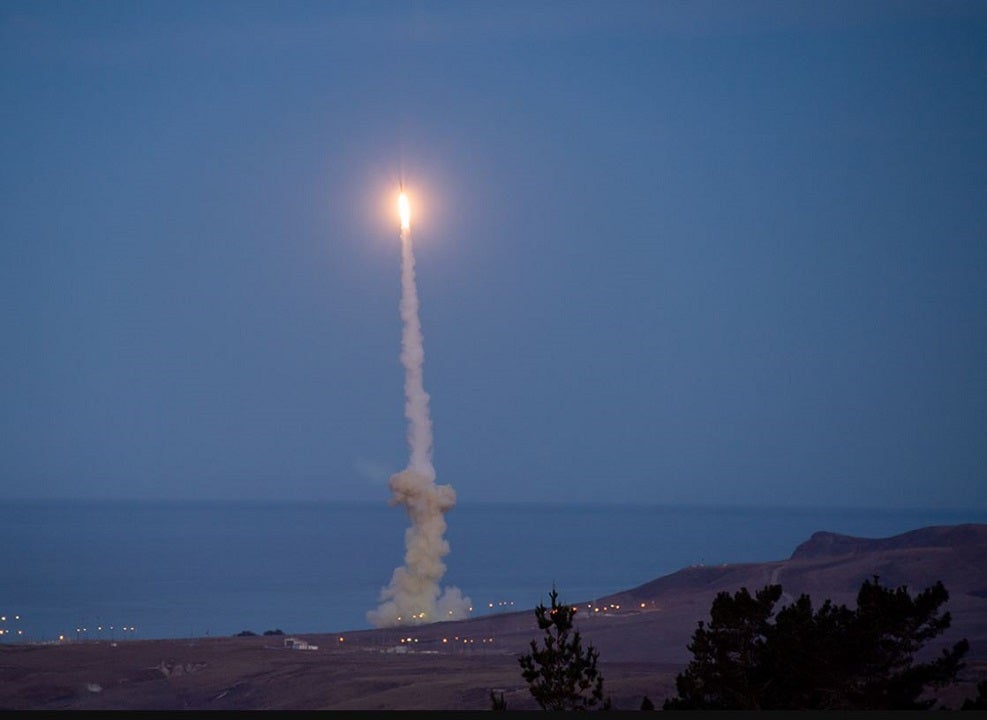
The U.S. Missile Defense Agency successfully conducted a test of the upgraded Ground-Based Interceptor (GBI) for the homeland missile defense system, intercepting an Intermediate Range Ballistic Missile (IRBM). The test, which took place at Vandenberg Space Force Base in California, demonstrated the GBI's enhanced capabilities and its ability to engage and destroy intermediate and long-range ballistic missile threats to the U.S. homeland. The GBI is part of the Ground-Based Midcourse Defense (GMD) system, designed to defend against threats from rogue nations.
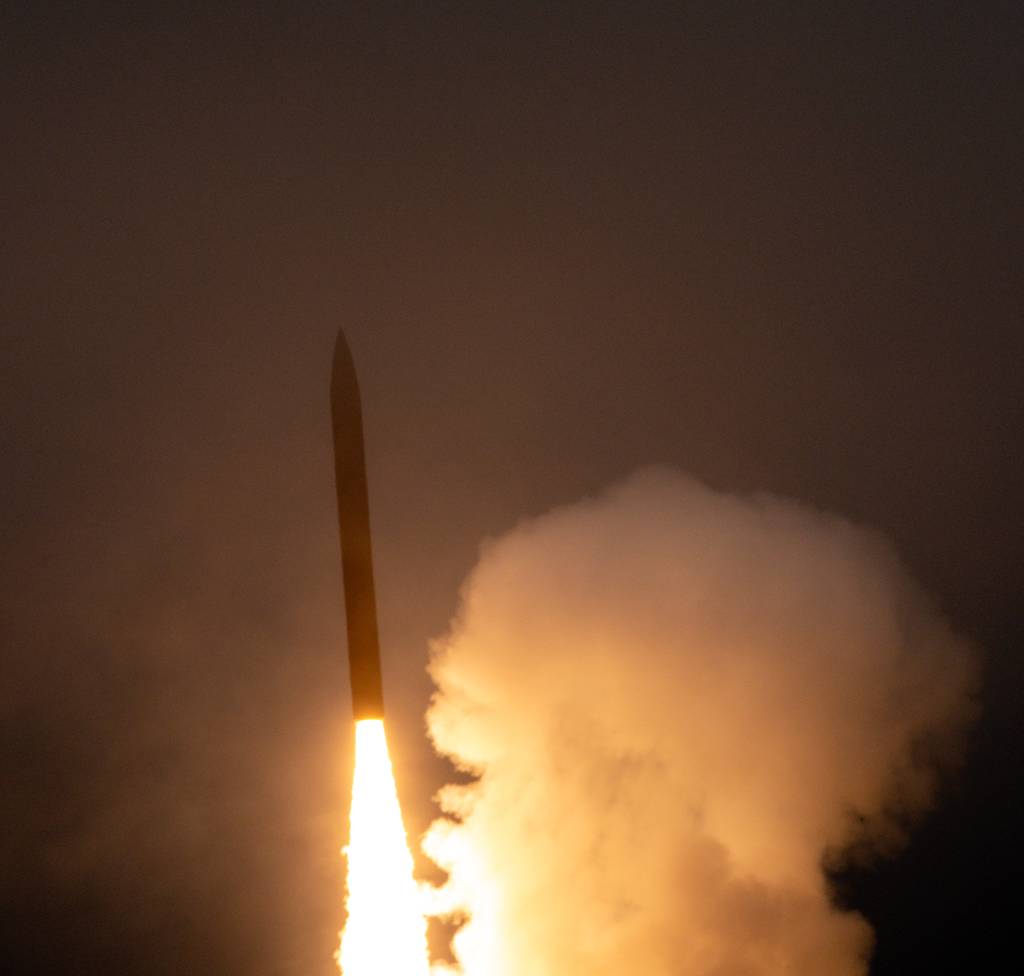
The Missile Defense Agency successfully tested the latest version of the Ground-Based Interceptor (GBI) for homeland missile defense, intercepting an Intermediate Range Ballistic Missile. The test utilized an upgraded GBI with the Capability Enhanced-II Block 1 Exo-Atmospheric Kill Vehicle and marked the first time a three-stage GBI operated in two-stage mode. The test demonstrated the GBI's ability to engage threats faster and provided increased battlespace for the warfighter. The MDA also integrated sensor data from other Raytheon-developed systems. The upgraded GBI will be deployed in the next GMD capability delivery, while the MDA continues to develop the Next-Generation Interceptor to replace current GBIs.
A U.S. Missile Defense Agency flight test of a Ground-based Interceptor missile was successfully launched from Vandenberg Space Force Base on Monday morning. The test, conducted by Space Launch Delta 30, the Missile Defense Agency, and U.S. Northern Command, was deemed a success by base officials.