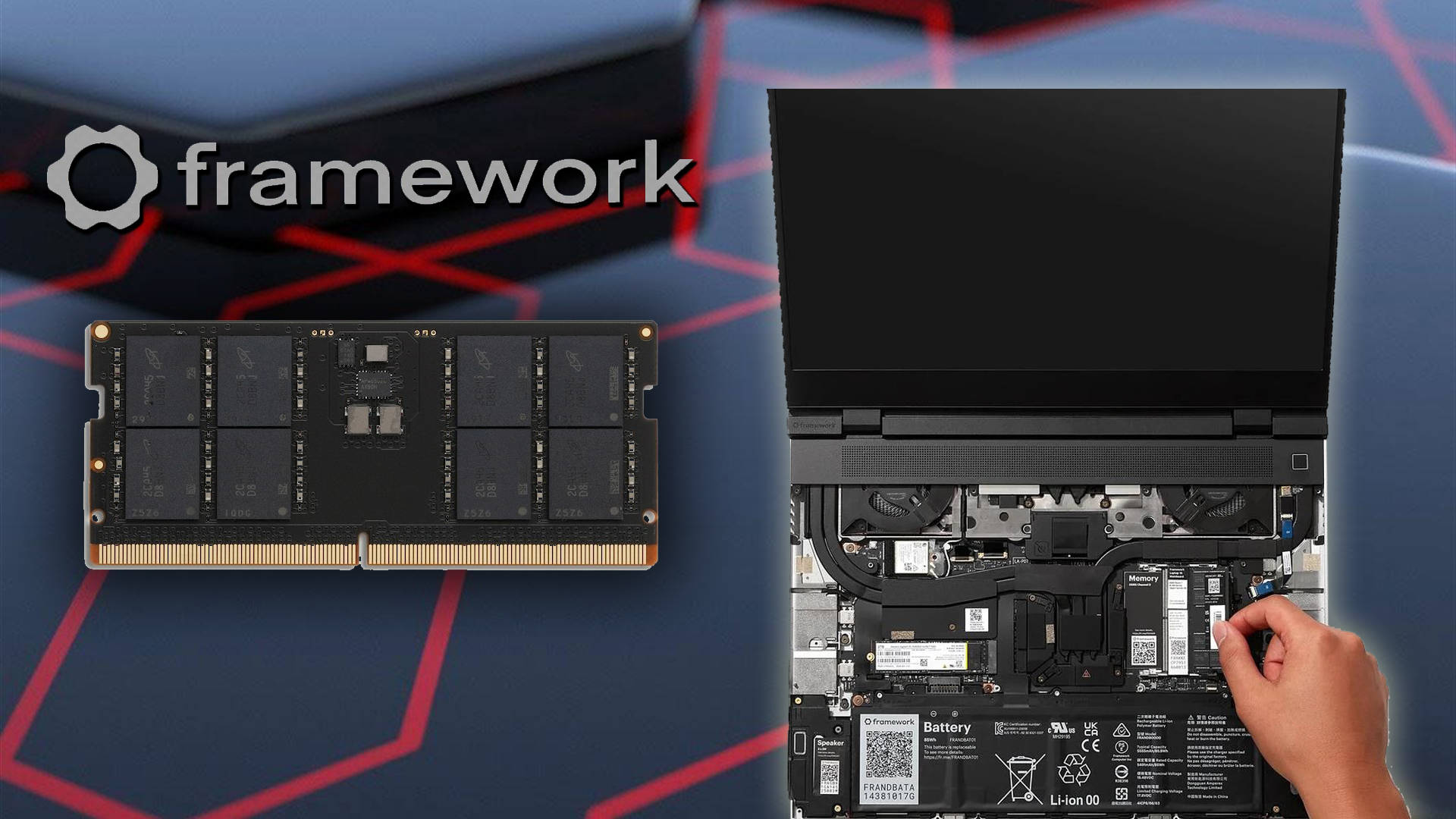
Framework has announced a second increase in DDR5 memory prices due to rising sourcing costs, with prices now up by about 33% in two weeks, though they still remain lower than Apple's prices. The company is trying to absorb as much of the cost increase as possible and expects prices to continue rising into 2026.
Originally Published 3 months ago — by Hacker News
The article discusses the challenges and frustrations with modern standby and suspend/hibernate support on Linux laptops, contrasting it with Apple's Silicon efficiency and macOS, and highlights the technical complexities involved in achieving low power consumption and reliable sleep modes on different hardware platforms. It emphasizes the need for better hardware-software integration and the potential of custom solutions like UKI for Linux hibernation, while also expressing optimism for future improvements in battery life and suspend support across various systems.
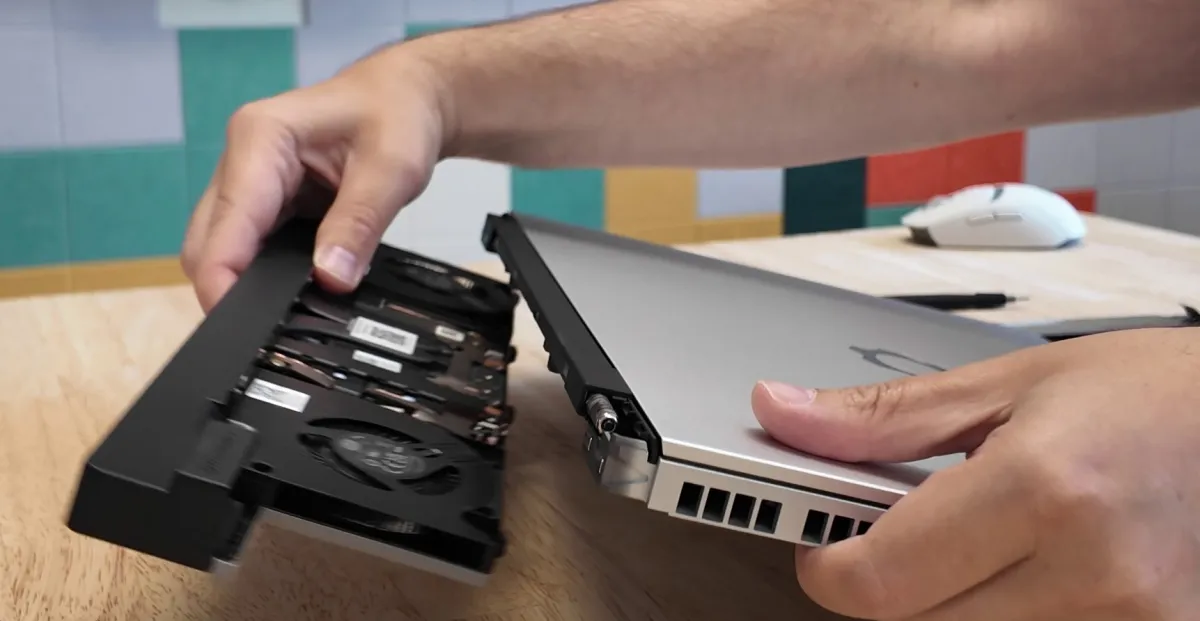
Framework successfully demonstrated a rapid, three-minute upgrade of a laptop's GPU, swapping an AMD Radeon RX 7700S for an Nvidia RTX 5070, showcasing the practicality of their modular, swappable graphics card system for laptops.
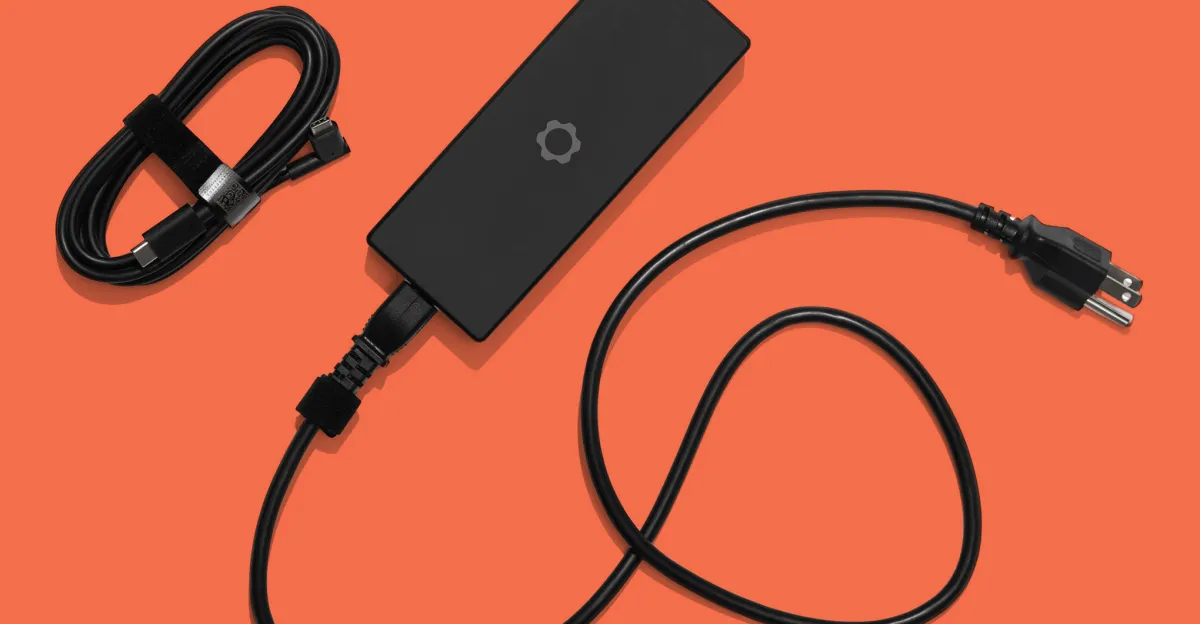
Framework has introduced the first standards-compliant 240W USB-C PD power adapter and a laptop supporting this power level, leading the industry in modular, upgradable laptops and high-power charging solutions, with plans to enable swapping of high-performance GPUs and single-cable docking options.
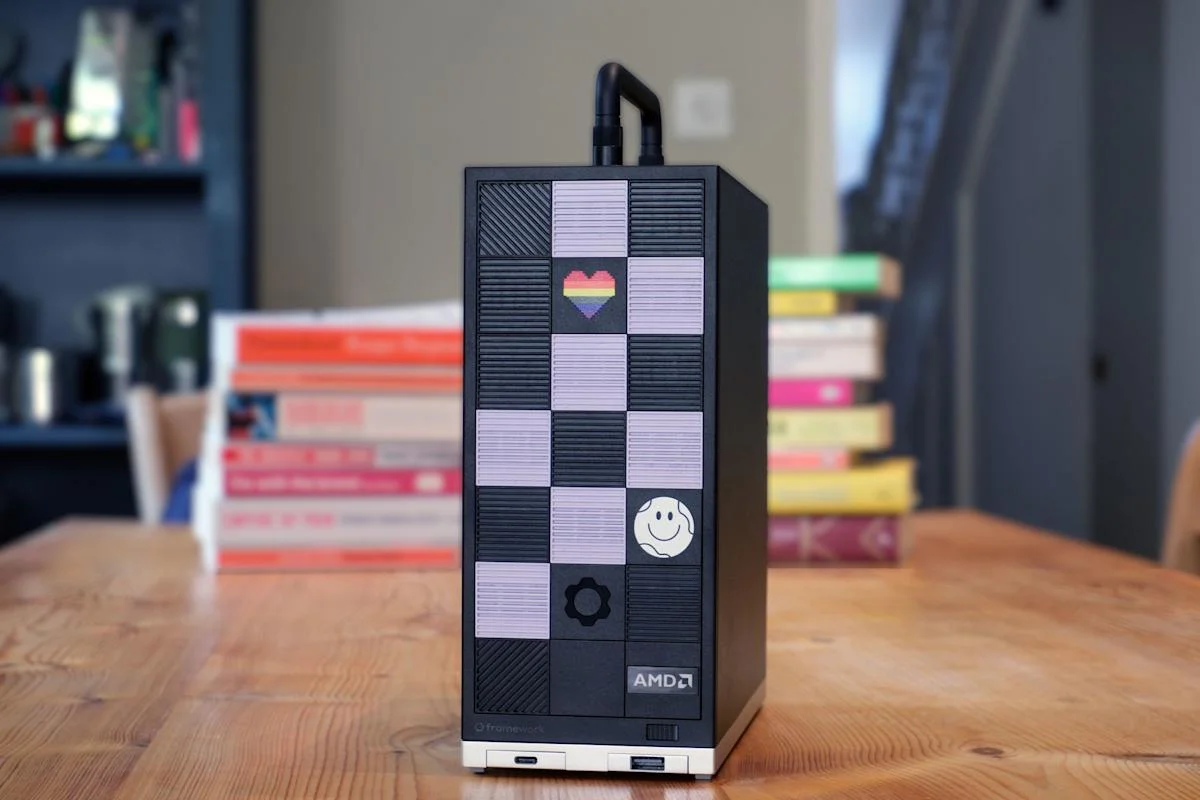
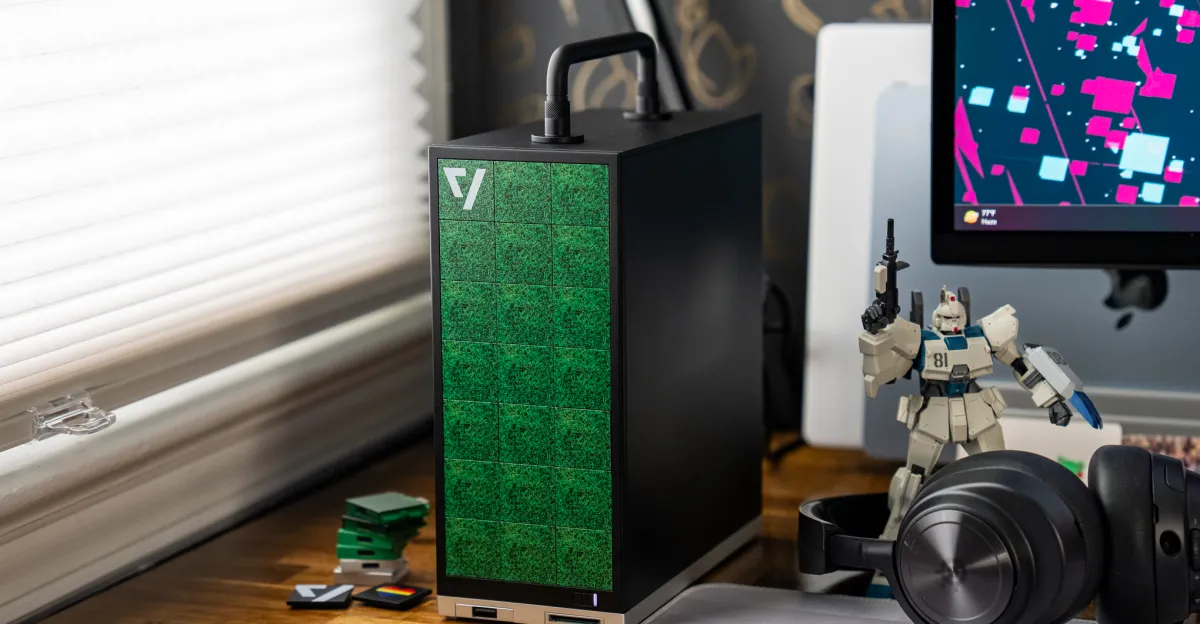
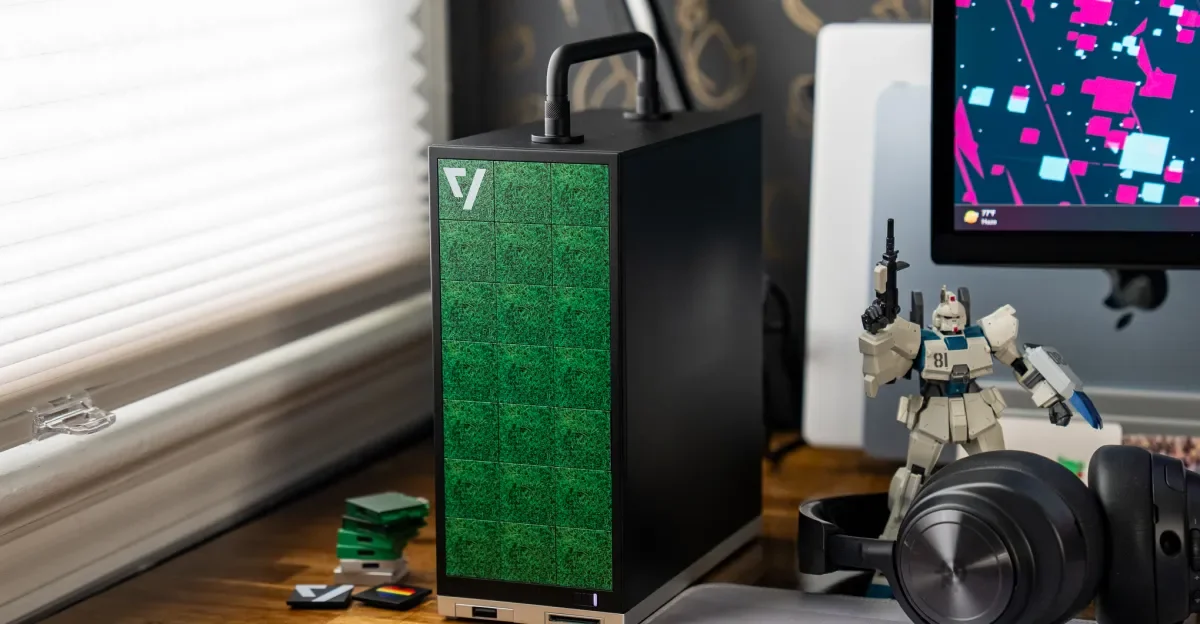
The Framework Desktop, despite being less modular than its laptop counterparts, offers a compact, powerful, and customizable small form factor PC suitable for gaming and content creation, with a unique design and no bloatware.
Framework has introduced new upgrades for its Laptop 13, including a 120Hz display, improved webcam, and Intel Core Ultra chips, all of which can be retrofitted into existing laptops. The company is also offering new expansion modules and reduced prices for its AMD Ryzen 7040 series laptops. Preorders are now open, with shipping starting in August.
Framework has announced the new Laptop 13, featuring Intel Core Ultra Series 1 processors, up to 96GB of DDR5 RAM, a high-resolution display, improved webcam and microphones, and various modular customization options. Preorders start at $1,100, with deliveries beginning next month.
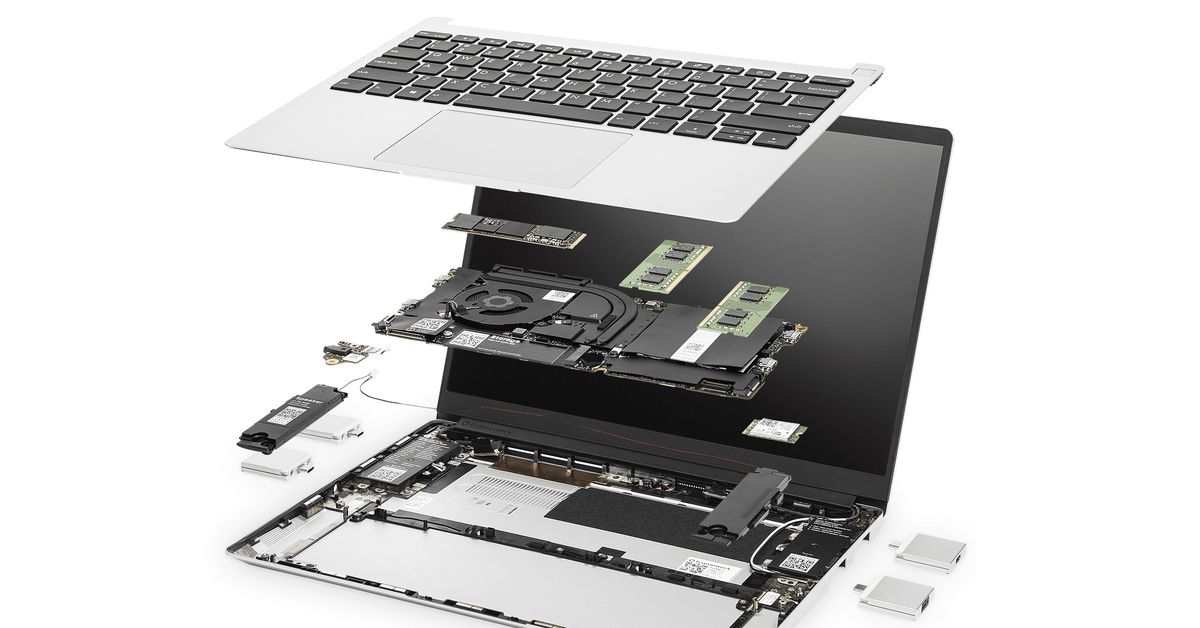
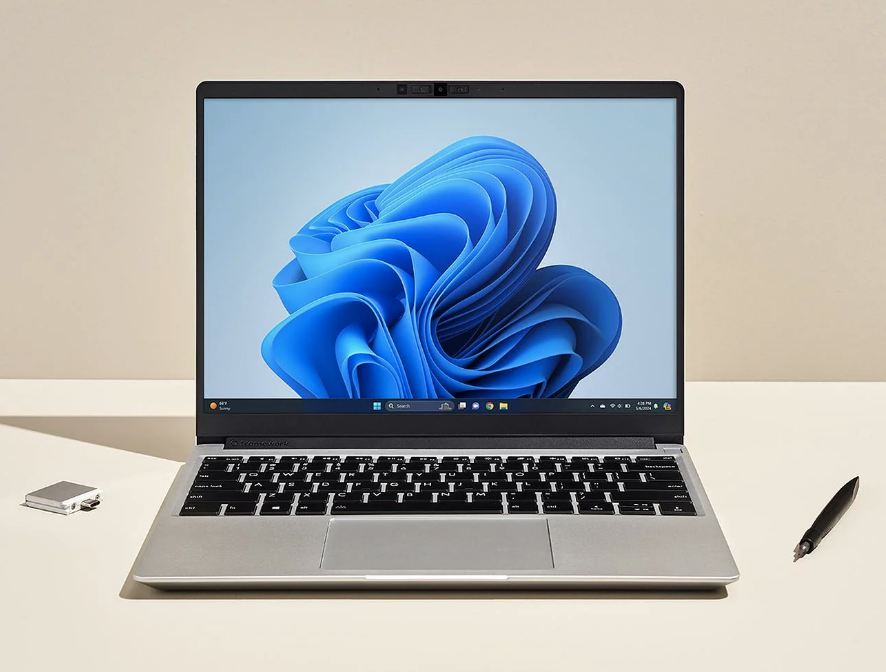
Framework has announced a new Framework Laptop 13 powered by Intel Core Ultra with a 2.8K display option, shipping this summer. The new model features a 13.5-inch 2880 x 1920 120Hz display, a 9.2MP web camera, and improved thermal management. The existing AMD Ryzen 7040 series model will also get the 2.8K display and a high capacity 61Wh battery. Prices for pre-built systems start at $949 USD, with a DIY edition at $799 USD. Framework also introduced new SD and USB-C Expansion Cards and an English International Keyboard for Linux users. The laptops will be available in Finland, Denmark, and Sweden next month.
Framework, known for its modular and repairable laptops, has faced challenges with outdated software and firmware updates, leading to frustrated users and unfulfilled promises. Despite efforts to address these issues, including beta BIOS updates, the company has struggled to provide timely and consistent updates, leaving users waiting for critical fixes and feature improvements. CEO Nirav Patel acknowledges the issues and promises fixes, but the company continues to face difficulties in delivering on its commitments.
New research from Penn introduces a framework for quantifying common sense, revealing variations in common beliefs and the influence of social perceptiveness. The study highlights the uniqueness of common-sense perceptions and suggests potential applications in global studies and AI development. The researchers found that demographic factors like age, education, or political leaning did not significantly influence a person’s level of common sense, but social perceptiveness correlated with higher commonsensicality. They also aim to expand their research globally to understand how common sense varies across different cultures and societies and to develop methods to implement common sense in AI systems.
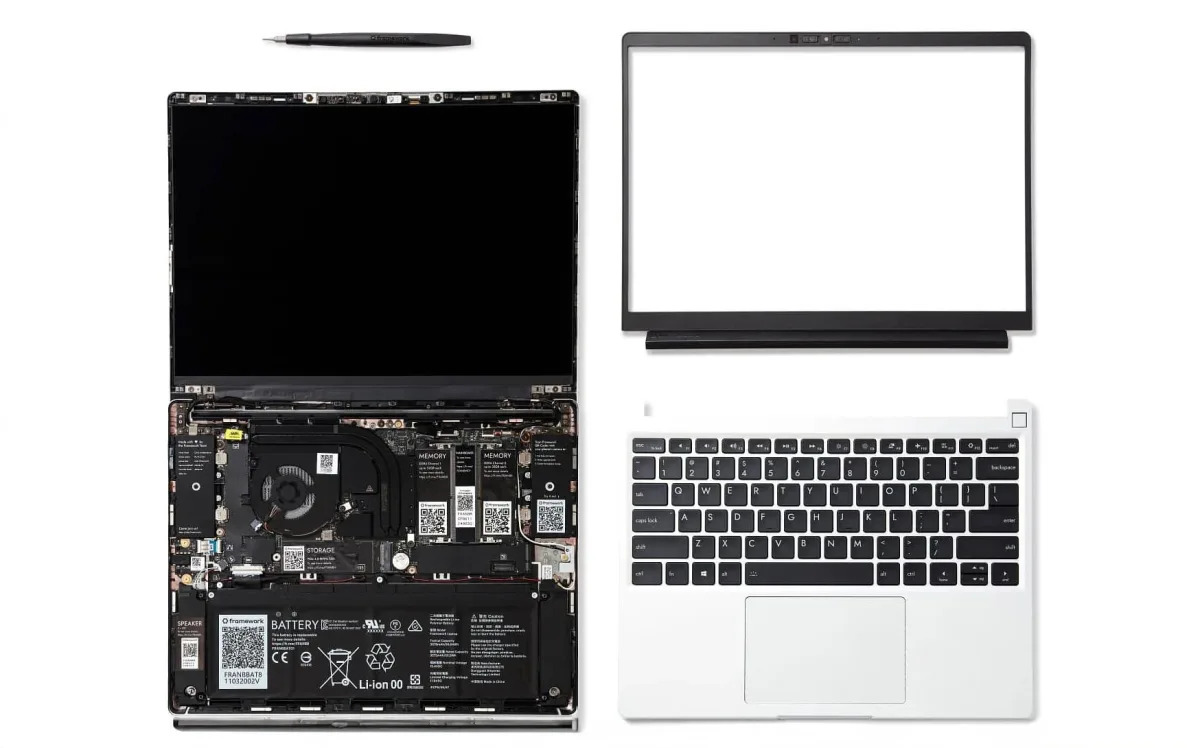
Framework is now offering a sub-$500 barebones configuration of its modular laptop, the Framework Laptop 13, which includes an 11th-gen Intel Core i7 processor but lacks RAM, storage, Wi-Fi connectivity, power adaptor, and an operating system. Tinkerers can purchase additional components from the Framework Marketplace, and refurbished DDR4 memory is available at a discounted price. The B-stock systems may have slight cosmetic display issues and are currently available in the US, Canada, and Australia.
Apple has released MLX, a new machine learning framework specifically designed for Apple silicon Macs. MLX is user-friendly, efficient for training and deploying models, and offers familiar APIs, composable function transformations, lazy computation, dynamic graph construction, multi-device support, and a unified memory model. The framework aims to simplify machine learning research on Apple silicon devices.
Talks between SAG-AFTRA and the studios for a new three-year contract are showing real movement, with a framework in place for a potential agreement. Negotiations have been ongoing for 111 days, and while a deal has not been reached yet, both sides are getting closer. The discussions have been more positive recently, with a focus on AI and success-based compensation. The parties anticipate further talks, and there is a sense of optimism despite the industry's heavy losses from the strikes. The fate of awards-season films and upcoming premieres hangs in the balance, with hopes that the actors will be back at work soon.
YouTuber Pitstoptech has created a modular gaming handheld console using Framework's Intel Core i7-1260P mainboard. The handheld features detachable joysticks, a 7-inch 1080p touchscreen display, 16GB RAM, and a 512GB SSD. Pitstoptech plans to sell it as a DIY kit, allowing users to reuse their Framework motherboards. While the concept is impressive, the device is still in the early stages and its durability and feasibility remain to be seen.
FrameWork, the company behind the modular and upgradable laptop, is offering cheaper mainboards with Intel Tiger Lake-based Core i5-1135G7 processors for $199, half of their original price. These mainboards were discovered during the closure of a factory in China and have been processed and updated by FrameWork. While they do not feature the latest architecture, they utilize the 10nm SuperFin Intel node technology. The CPUs have 4 cores, 8 threads, and Gen12 Xe graphics architecture, making them suitable for low-power Mini-PCs or home servers.