A study conducted by Cambridge scientists found that more than a quarter of individuals who received mRNA Covid vaccines, such as those developed by Moderna and Pfizer, experienced an unintended immune response due to a glitch in the way the vaccine was read by the body. This glitch led to the production of nonsensical proteins instead of the desired Covid spike protein, resulting in an immune system flare-up. While the vaccines still provided strong protection against the coronavirus, this off-target effect raises concerns for future mRNA vaccines, as it could potentially lead to the production of rogue proteins. However, the researchers have identified a solution by changing the mRNA code to minimize the use of the problematic component, improving safety without compromising efficacy. Updated vaccines using this improved mRNA code are already being developed for cancer treatments and other therapeutics.

A study conducted by Cambridge scientists found that more than a quarter of individuals who received mRNA Covid vaccines, such as those developed by Moderna and Pfizer, experienced an unintended immune response due to a glitch in the way the vaccine was read by the body. This glitch led to the production of nonsensical proteins instead of the desired Covid spike protein, resulting in an immune system flare-up. While no adverse effects were observed, the study highlights the imperfections of mRNA vaccines and the potential for off-target effects. The researchers propose a solution by modifying the mRNA code to minimize the glitch and improve safety without compromising efficacy.
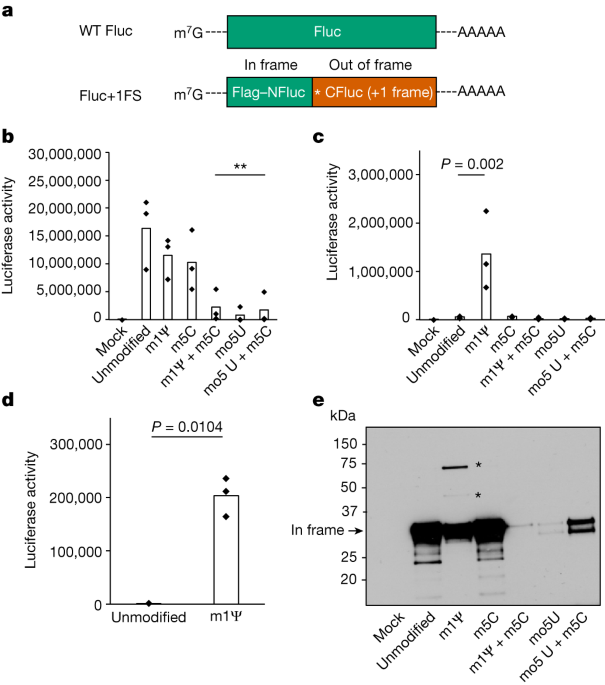
The presence of N1-methylpseudouridine (1-methylΨ) in mRNA can cause ribosomal frameshifting, leading to the production of +1 frameshifted polypeptides. This study investigated the effects of various modified ribonucleotides on mRNA translation and found that 1-methylΨ significantly increased frameshifting. Furthermore, it was observed that mRNA vaccines containing 1-methylΨ, such as the approved SARS-CoV-2 mRNA vaccines, can elicit off-target cellular immune responses due to the production of +1 frameshifted antigens. These findings highlight the importance of understanding the impact of modified ribonucleotides on protein synthesis and the design of mRNA-based therapeutics.