
"Quantum Computing Takes a Magnetic Leap Towards a New Paradigm"
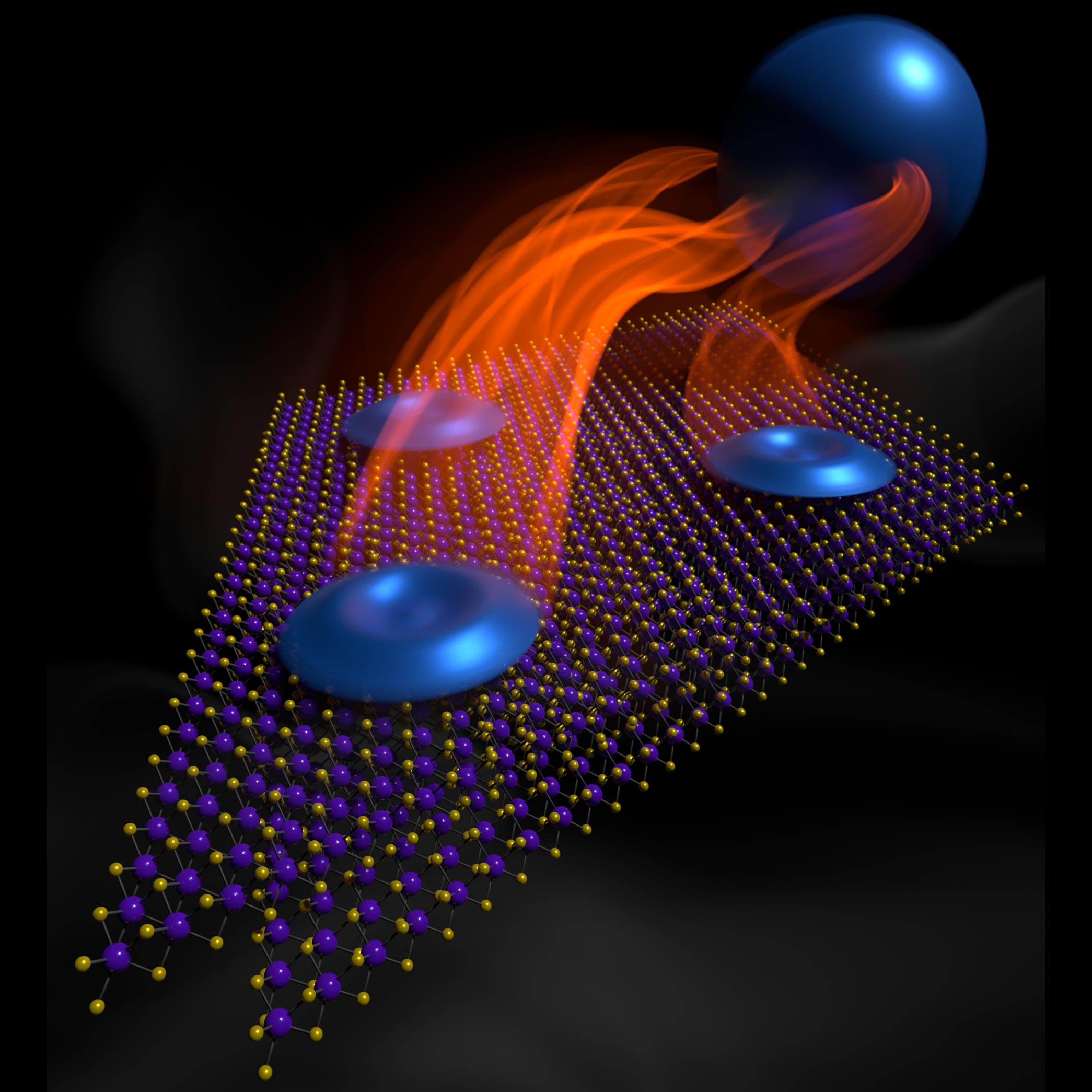
Researchers at the University of Washington have made a significant breakthrough in quantum computing by detecting fractional quantum anomalous Hall (FQAH) states in semiconductor material flakes. These FQAH states can host anyons, which are quasiparticles with only a fraction of an electron's charge. Anyons have the potential to create stable and fault-tolerant qubits, which are crucial for the development of quantum computers. The team's experiments involved stacking atomically thin flakes of molybdenum ditelluride (MoTe2) to create an artificial lattice with exotic properties. The detection of FQAH states marks a new paradigm for studying quantum physics and could lead to the discovery of non-Abelian anyons, which could be used as topological qubits.