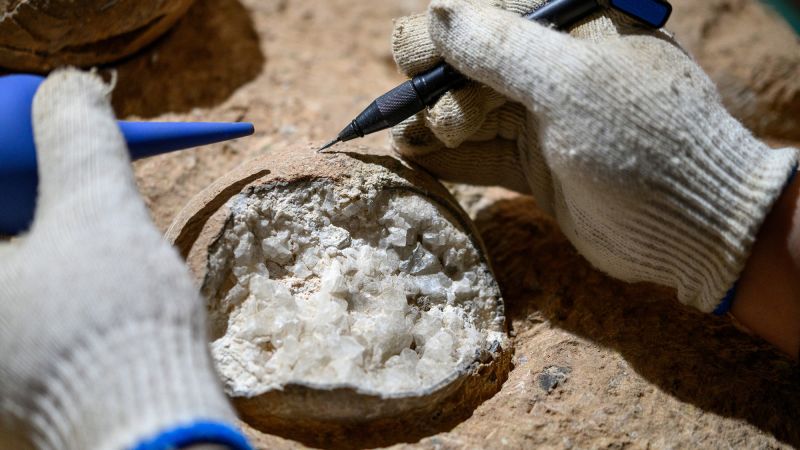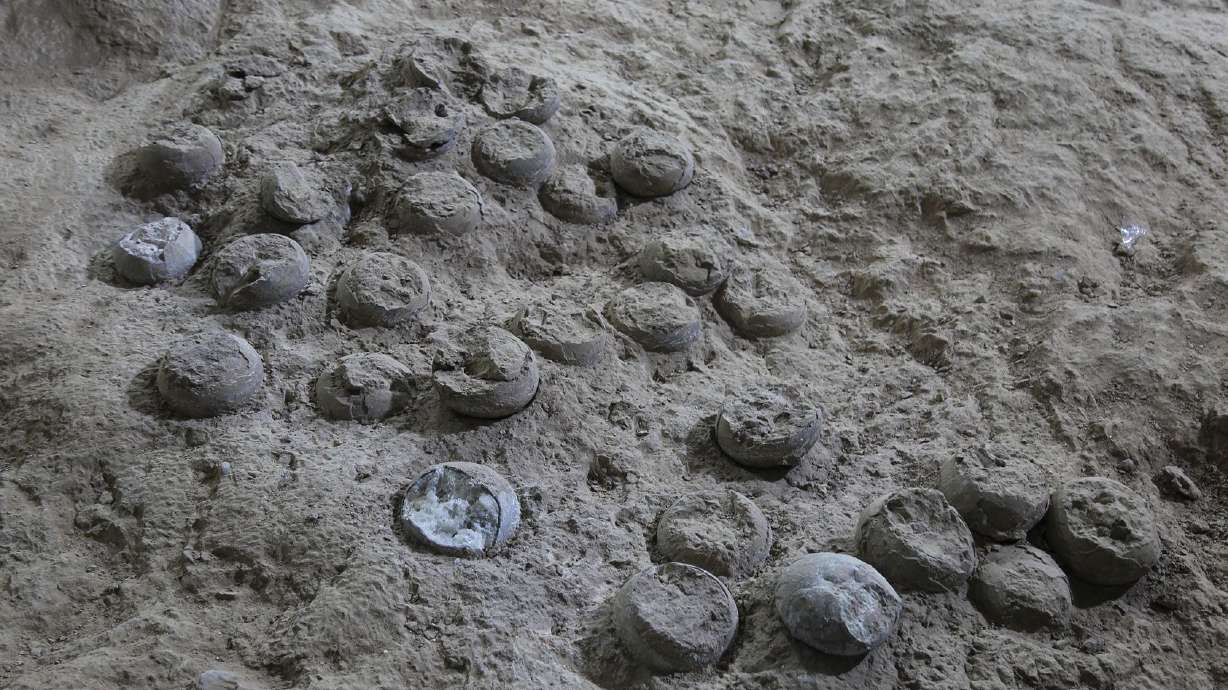
Scientists in China used advanced uranium-lead dating to determine that a clutch of 28 dinosaur eggs from the Cretaceous period is approximately 86 million years old, marking the first reliable dating of fossils from the Qinglongshan site and opening new avenues for understanding dinosaur reproduction and evolution.
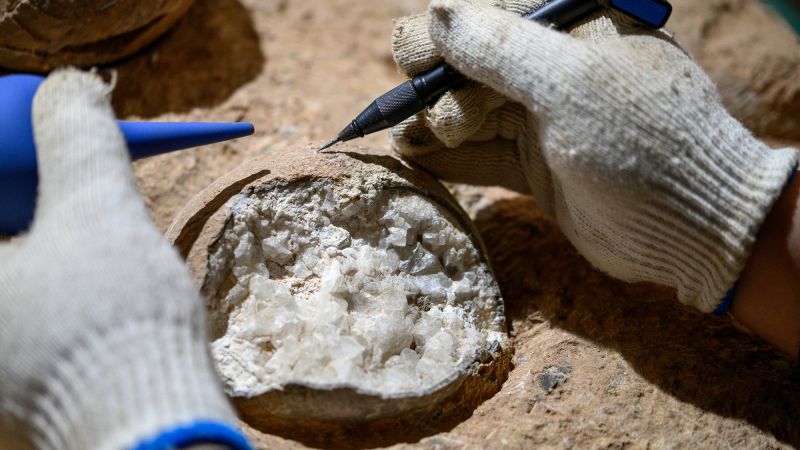
Scientists in China used advanced U-Pb dating to determine that a clutch of 28 dinosaur eggs is approximately 86 million years old, providing new insights into dinosaur reproduction and the Cretaceous period.
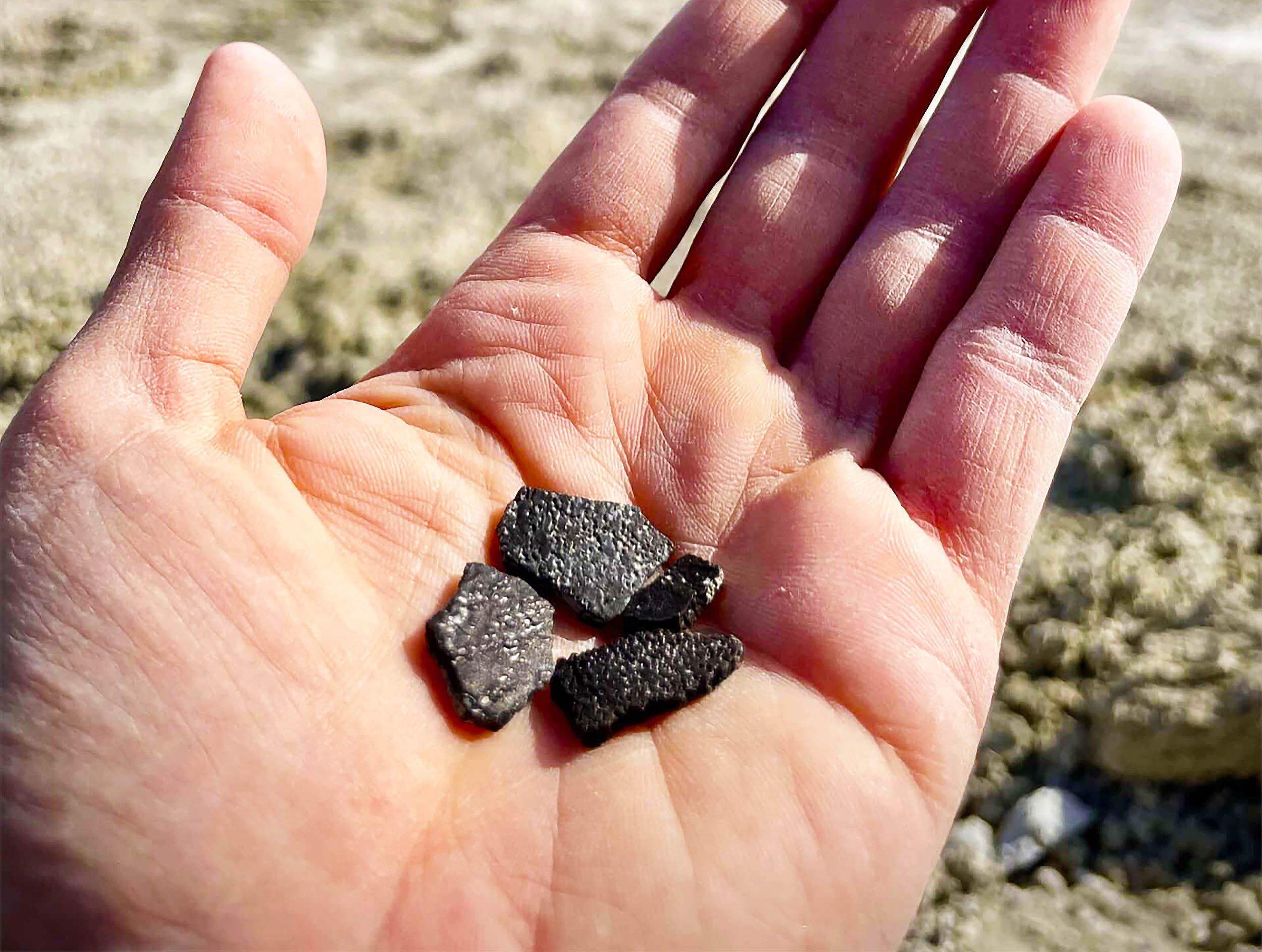
Scientists in China used advanced U-Pb dating techniques on 86-million-year-old dinosaur eggshells to better understand dinosaur reproduction and adaptation during the Cretaceous period, marking a significant advancement in fossil dating methods.
Fossilized eggshells from the Cedar Mountain Formation in Utah reveal a diverse array of dinosaur species, including multiple types of oviraptorosaurs and other reptiles, sharing nesting sites 100 million years ago, indicating complex ecosystems and migration patterns between Asia and North America.