GameStop shares surged 47% after retail trader Keith Gill revealed his $586 million position, sparking a similar rise in Solana-based meme token GME, which soared over 80%. The GME token, inspired by GameStop but unaffiliated, has increased over 3,000% since mid-May, driven by Gill's return to social media.
Standard Chartered predicts that Bitcoin could reach $150,000 by the end of the year if Trump wins the U.S. presidential election, driven by growing bipartisan interest in crypto and recent regulatory developments.
Sam Bankman-Fried, founder of FTX, received a 25-year sentence and an $11 billion forfeiture for his involvement in financial crimes. Despite expressing remorse at his sentencing, he failed to admit to any wrongdoing and is appealing the verdict. His propensity for gambling and arrogance were highlighted during the trial, with the judge emphasizing his disregard for the consequences of his actions. Bankman-Fried's behavior reflects a pattern of risk-taking and a refusal to accept defeat, mirroring the high-stakes nature of the cryptocurrency industry.
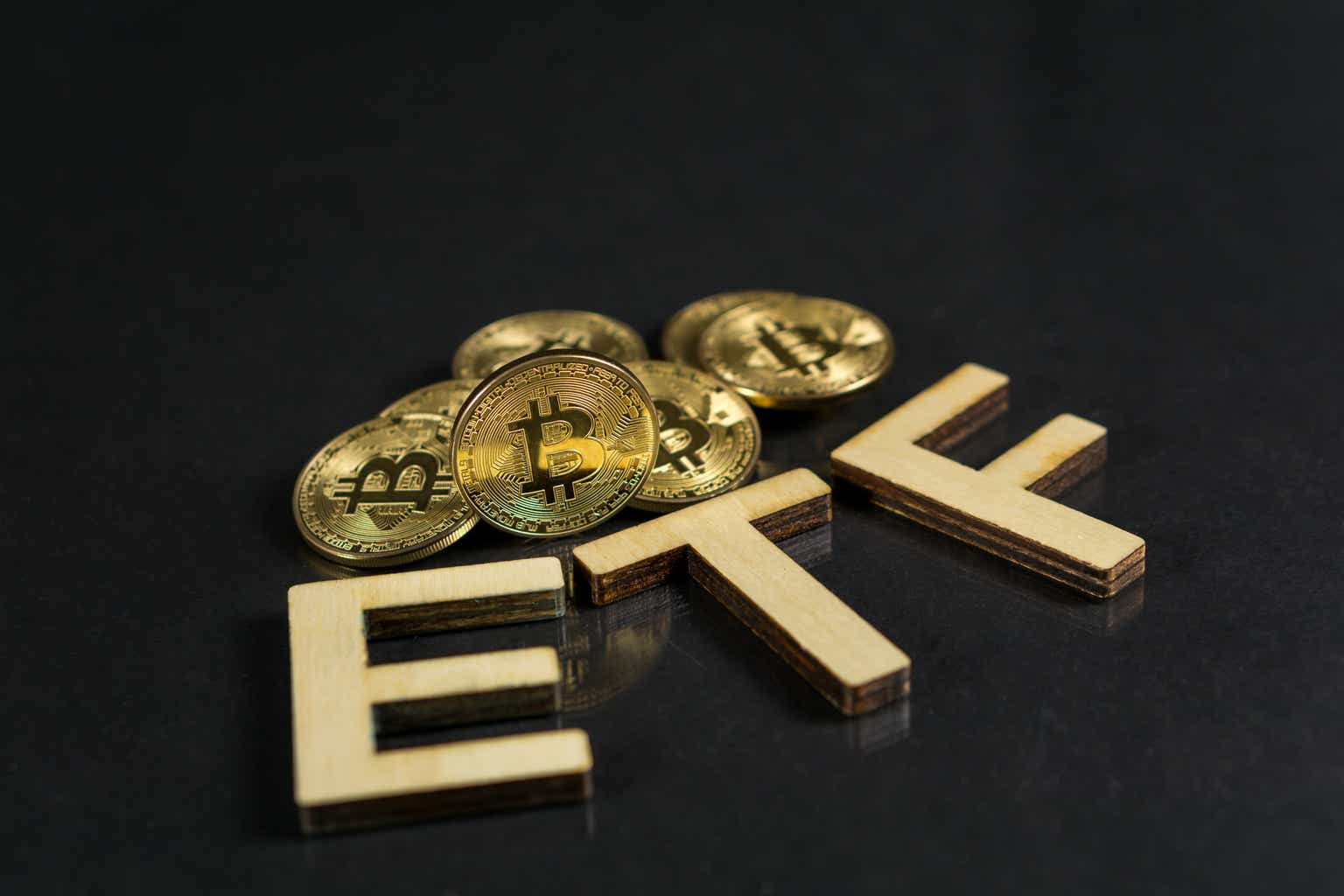
The Securities and Exchange Commission (SEC) may approve the first Bitcoin exchange-traded funds (ETFs) soon, with financial giants like Fidelity and Invesco indicating through early filings that these ETFs may not yield high profits immediately. Fee wars are emerging as firms prepare for the launch of these cryptocurrency investment products.
The potential approval of a spot Bitcoin ETF in the United States could significantly impact BTC prices, with expectations of higher prices this year and beyond. Bitcoin's original vision as a peer-to-peer payment system is challenged by high transaction fees and scalability issues, pushing users towards custodial solutions. Despite this, Bitcoin's role as a settlement layer remains strong, with substantial daily transfer volumes. Financial advisors show interest in BTC but are cautious due to regulatory concerns and the lack of an ETF. Analysts predict a pullback in BTC price before the halving, but any significant dips are viewed as buying opportunities, with the long-term outlook for BTC as a fiat-hedging instrument remaining positive. The article suggests that while self-custody is preferred, the reality of high fees may make ETFs a more practical solution for many investors.
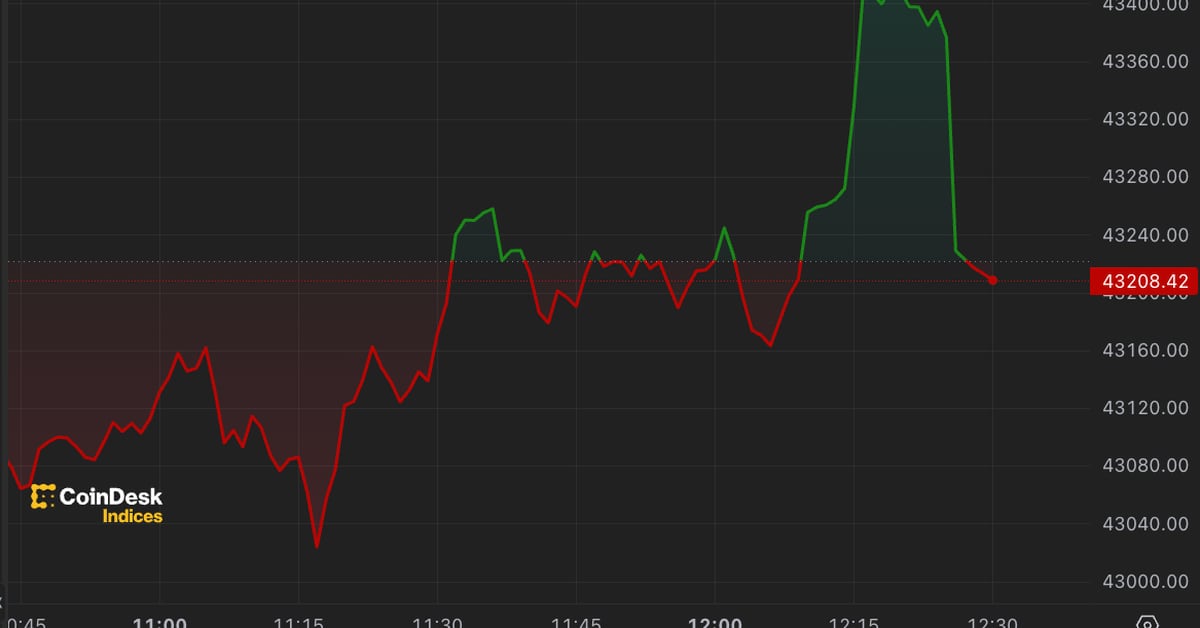
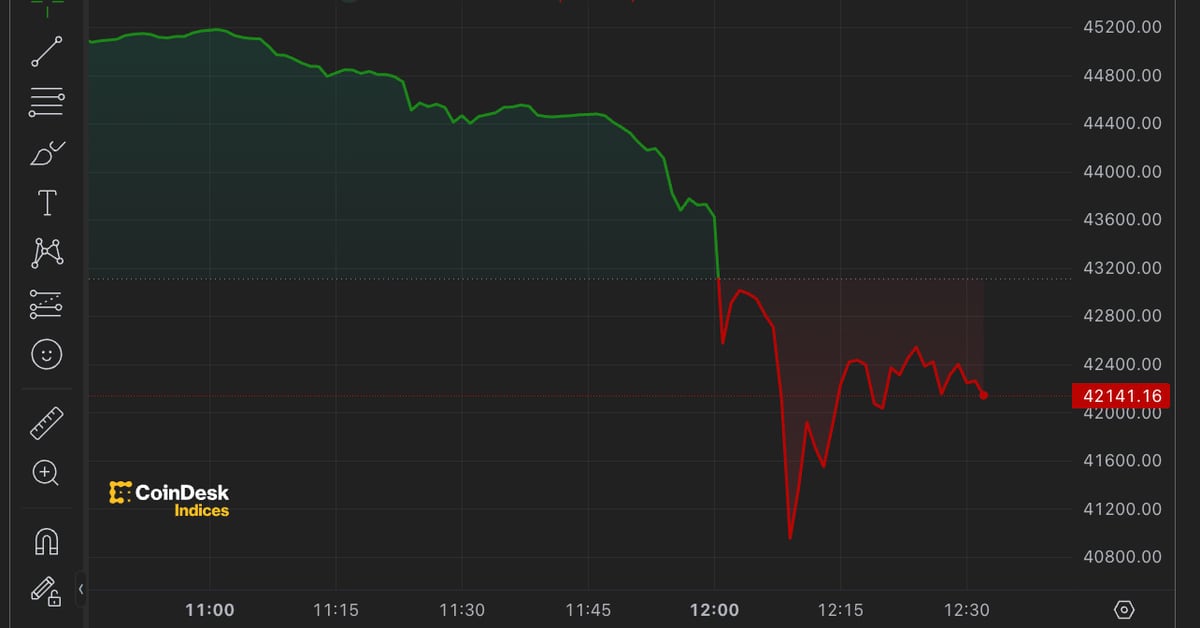
Bitcoin experienced a significant drop, trading just above $43,000, after a leverage flush caused by a Matrixport report and high funding rates led to $560 million in leveraged long positions being liquidated. The market downturn also affected other major tokens like SOL, ETH, and ADA. The Federal Reserve's minutes suggest interest rate cuts in 2024, which could impact Bitcoin's future value. Meanwhile, Goldman Sachs is in discussions to become an authorized participant for upcoming bitcoin ETFs by BlackRock and Grayscale. Market volatility is expected to continue, as indicated by rising volatility indexes across different financial sectors.
Despite the crypto market's volatility, financial institutions are bullish on Bitcoin's price for 2024, with predictions ranging from $80,000 to over $600,000. Messari suggests Bitcoin could reach parity with gold, predicting a value over $600,000. VanEck expects inflows into Bitcoin ETFs to drive the price to $275,000, while ETC Group forecasts a more conservative rise above $100,000, citing the Bitcoin Halving as a key factor. Bitwise anticipates a price above $80,000, highlighting Bitcoin's strong performance and the potential impact of a new spot Bitcoin ETF and the upcoming Halving event. These predictions reflect a collective optimism about Bitcoin's future, driven by its historical performance, increased adoption, and anticipated capital inflows from new investment products.
Bitcoin's price experienced a 7% drop following a bearish report from Matrixport suggesting that the SEC is likely to reject all Bitcoin Spot ETF applications in January, contrary to some expectations of approval. The market's high leverage and long positions exacerbated the impact, leading to significant liquidations. Despite the report's grim outlook, some analysts, including Vetle Lunde and Bloomberg's Eric Balchunas, disagree with the prediction, citing recent developments that make a denial seem unlikely. The debate continues among analysts on social media platforms.
Bitcoin's value dropped by 8% amid market uncertainty regarding the approval of a spot Bitcoin ETF, leading to the liquidation of $500 million in derivatives. The market's confidence was further shaken by the poor performance of crypto mining stocks and a sell-off in crypto-related U.S. stocks. Despite earlier reports suggesting an ETF approval could be imminent, financial firm Matrixport anticipates rejections of all proposals by the SEC until at least Q2 2024. Bitcoin's price saw a significant dip, followed by a partial recovery, alongside a decrease in open interest due to the liquidations and traders reducing their market exposure.
Wall Street professionals predict a significant rise in Bitcoin's value, potentially soaring 685% or more, driven by the anticipated approval of spot Bitcoin ETFs in 2024 and the upcoming Bitcoin halving event. High-profile figures like Anthony Scaramucci and Michael Saylor suggest that Bitcoin could reach $330,000 to $1 million, respectively, while Ark Invest forecasts a price of $1.48 million by 2030. Despite these optimistic projections, the article advises risk-tolerant investors to consider a small, gradually built position in Bitcoin, while risk-averse individuals should avoid cryptocurrency due to its volatility and regulatory uncertainties.
Grayscale, a major digital asset manager, has emphasized that while the potential approval of spot Bitcoin ETFs in the US could bring new investors and demand for Bitcoin, the cryptocurrency's fundamentals and sustained demand from end investors will be more crucial for its price in the long term. Despite the volatility of the crypto market, Bitcoin's role as a store of value, similar to gold, means its price will be influenced by factors such as real interest rates and geopolitical risks. Bitcoin recently saw a price surge, trading above $45,000 for the first time in 21 months.
Bitcoin's price has surged to nearly $46,000, the highest since March 2022, with over $133 million in short positions liquidated amid investor optimism for the potential approval of a spot Bitcoin ETF. The SEC is expected to decide on several Bitcoin ETF applications by January 10, which has been a decade-long anticipation by investors. The rally in Bitcoin's price has also positively impacted other cryptocurrencies, with notable gains in Solana (SOL), Ethereum (ETH), and various altcoins like ORDI and Astar Network (ASTR).
Stockmoney Lizards, a crypto analysis group, predicts continued bullish momentum for Bitcoin, driven by mass adoption and institutional investment, despite expecting volatility and a potential correction in early 2024. They forecast a new all-time high (ATH) for Bitcoin in 2024, influenced by the upcoming halving event and increased adoption. The analysis also considers macroeconomic factors like recession and inflation, which could favor Bitcoin's growth. While the insights are optimistic, they are not financial advice and should be used for informational purposes only.
The U.S. Securities and Exchange Commission (SEC) is expected to inform applicants about the approval of spot Bitcoin ETFs by January 3. Meanwhile, CryptoSlate has introduced CryptoSlate Alpha, a web3 membership offering advanced insights into the cryptocurrency space. Members can access premium content by staking ACS tokens through the Access Protocol, a web3 monetization paywall. However, CryptoSlate emphasizes that users must acknowledge the risks and terms associated with locking ACS tokens and that the platform is not liable for any issues related to the use of ACS tokens or digital wallets.
Goldman Sachs anticipates a significant expansion of the cryptocurrency market in 2024, driven by the maturation of blockchain technology and increased institutional adoption. The bank's head of digital assets, Matthew McDermott, believes that the efficiency benefits of blockchain are most impactful at scale and expects traditional assets to be tokenized, enhancing liquidity and transparency. The potential approval of Bitcoin ETFs is also seen as a catalyst for investment from pension funds and insurers, although growth may be gradual throughout the year.