Netflix has released "Eric," a psychological thriller starring Benedict Cumberbatch as Vincent, a children's show creator whose son goes missing. The show, written by Abi Morgan, explores themes like grief, substance abuse, and corruption through Vincent's desperate search and Detective Michael Ledroit's investigation in 1985 New York. The series is noted for its ambitious storytelling and strong performances, particularly by Cumberbatch and McKinley Belcher III.
The Netflix limited series "Eric," created by Abi Morgan, concludes with a mix of hope and lingering sorrow. Vincent (Benedict Cumberbatch) seeks rehabilitation to become a better father, while his son Edgar returns home. Cassie prioritizes herself and her children, and Detective Ledroit finds justice for Marlon Rochelle's murder. The series highlights the privileges that aid Vincent's recovery and underscores the societal issues that prevent many children from returning home, emphasizing the need for better love and care in society.
"Eric," starring Benedict Cumberbatch, struggles to balance its dual narratives of a father's fantastical search for his missing son and a detective's grim investigation. The series fails to provide depth to its characters, resulting in a disjointed and unengaging story. Despite a gritty 1980s Manhattan setting and some compelling performances, "Eric" ultimately falls flat, earning a grade of C-.
Sister's new Netflix series 'Eric,' starring Benedict Cumberbatch, debuts today. The show, set in 1980s New York, follows a father searching for his missing son with the help of a seven-foot puppet visible only to him. Creators Jane Featherstone and Abi Morgan emphasize a talent-first approach despite industry challenges. Featherstone praises Cumberbatch's fearless performance, and Morgan highlights the show's blend of magical realism and real-world issues.
Benedict Cumberbatch stars in Netflix's new drama 'Eric,' created by Abi Morgan, which blends humor and drama to explore themes of grief, creativity, and systemic issues in 1980s New York. The series follows Cumberbatch's character, Vincent Anderson, a puppeteer whose son goes missing, leading him to believe that bringing his son's drawing of a blue monster to life as a puppet will bring him back. The show also delves into the struggles of a black queer detective, Michael Ledroit, and addresses broader societal issues such as crime, racism, and the AIDS epidemic.
In the upcoming week on The Bold and the Beautiful, Ridge begins to doubt his decision to allow Finn and Bridget to try to save Eric's life, leading to a tense situation. Zende and R.J. argue over their grandfather and the company, while Zende is surprised when a position he wanted goes to R.J. Steffy worries about the decision she made regarding Eric's treatment, and Eric's family reminisces about their time with him as his life hangs in the balance.
John McCook, who portrays Eric on BOLD AND BEAUTIFUL, reveals that the show takes precautions to protect his health during intense scenes. Stunt doubles and knee pads are used to ensure his safety, even for simple actions like collapsing on the floor. McCook also mentions that the on-screen coughing he has done recently has had no negative impact on his health.
Eric is overjoyed to have his family gathered at the Forrester mansion, but concerns arise over Bridget and Thorne's emotional state. Meanwhile, Finn is preoccupied in his office and ignores Steffy's messages, leading Li to question his absence from the party. As the evening progresses, Eric's health deteriorates, but he remains determined to enjoy the celebration. Donna, Katie, and Brooke offer support to their loved ones, while Ridge vows to fulfill his father's wishes. The party concludes with Eric expressing his gratitude to everyone for a memorable evening.
In a cliffhanger episode of Bold & Beautiful, Eric collapses at the end, leaving viewers wondering about his fate. Despite his refusal to seek treatment for his unnamed illness, word about his condition is slowly spreading. While Eric will live to see another day, the number of days he has left remains unknown. Next week's episodes will focus on celebrating Eric's life and achievements, with Donna stumbling upon information that Ridge has kept hidden and the possibility of surprises in Eric's new will.
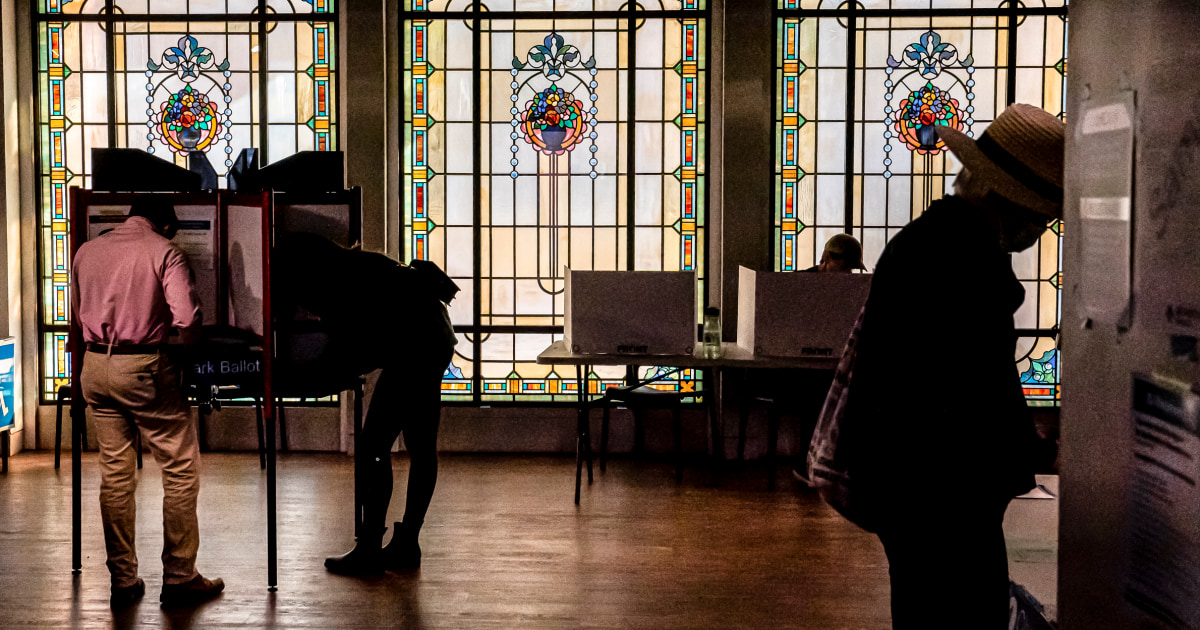
Virginia has become the latest state to withdraw from the nonpartisan election information-sharing pact known as ERIC, citing concerns about increasing costs and inconsistent enforcement of membership criteria. The pact, designed to improve the accuracy of voter rolls and detect potential cases of voter fraud, has faced conspiracy theories surrounding the 2020 presidential election. Virginia's move makes it the ninth state, all with Republican governors except Louisiana, to either withdraw or announce plans to withdraw from the pact. The Democratic party accused Virginia's Republican administration of making it harder to vote and easier to cheat, while ERIC's Executive Director refuted allegations of data misuse and emphasized the organization's commitment to data security.
Texas, the largest Republican-led state, is leaving the bipartisan voting list maintenance program known as the Electronic Registration Information Center (ERIC). This move follows a trend of Republican-led states leaving the program, reducing its bipartisan nature. The departure is attributed to rising costs and recently-signed legislation that prevents long-term participation. ERIC has faced attacks and conspiracy theories, but state officials claim their departure is due to frustrations with the program's governance and operation. Texas' departure will take effect in three months, leaving only five Republican-leaning states as members.
The far right has targeted the Electronic Registration Information Center (ERIC), a bipartisan voting partnership that helps identify dead people on voting lists and catch if someone votes in more than one state, fracturing a partnership that had 32 member states at its height. Eight states where Republicans oversee voting have so far pulled out of ERIC, making voter fraud easier to get away with. The Gateway Pundit, a right-wing website, published a series of articles that falsely said the partnership was a "left wing voter registration drive," bankrolled by billionaire George Soros, aimed at helping Democrats win elections.
Virginia is set to withdraw from the Electronic Registration Information Center (ERIC), a bipartisan effort aimed at ensuring accurate voter lists and combating fraud, making it the eighth Republican-led state to do so. The decision was based on concerns over stewardship, maintenance, privacy, and confidentiality of voter information. ERIC uses data-sharing among member states to identify voters who might have moved out of state or died and should be considered for removal from a state’s voter rolls. The move comes amid conspiracy theories spread since the 2020 presidential election, with former President Donald Trump among those calling on Republican state officials to leave.
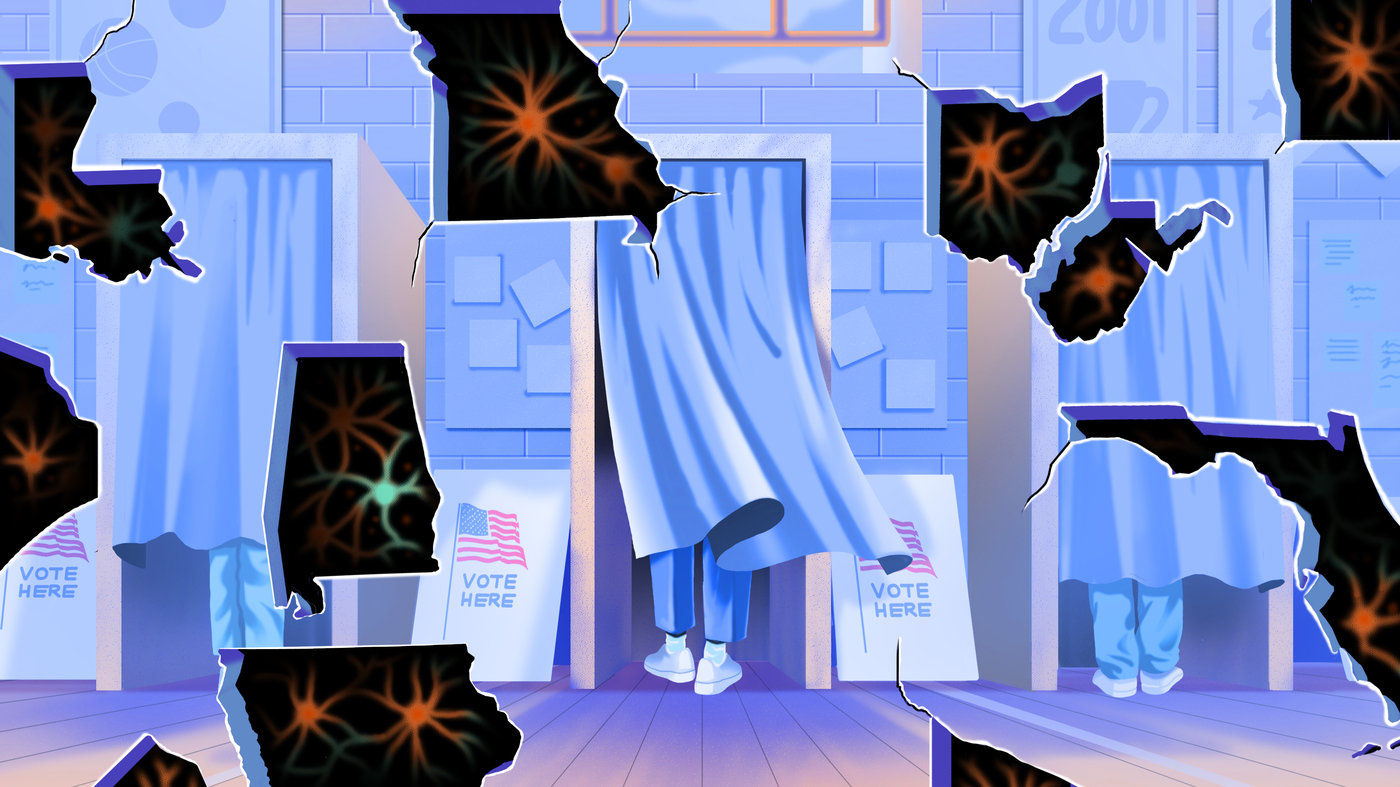
Ohio and Iowa have become the latest Republican-led states to withdraw from the Electronic Registration Information Center (ERIC), a bipartisan interstate voter program. They join five other Republican-led states that have left the organization over the past year. ERIC helps organizations maintain their voter rolls by issuing reports on voters who may have moved, died, or potentially voted in two different states. The exodus of GOP officials from the once-uncontroversial group comes as some prominent Republicans, most notably former President Donald Trump, have publicly attacked it, falsely saying it is a liberal plot to control the county’s voter rolls.
Ohio has become the sixth state to leave the Electronic Registration Information Center (ERIC), a multi-state consortium that aims to help maintain accurate voter rolls. ERIC has become a growing target for conservative groups, and Ohio Secretary of State Frank LaRose cited the defeat of several proposals that would have improved data security and reduced partisan influence in the organization as reasons for leaving. ERIC was founded in 2012 by seven states as a way to update voter registration rolls, encourage voter registration, and thwart potential voter fraud.