Microsoft is restricting access to Internet Explorer mode in Edge browser after discovering that hackers exploited zero-day vulnerabilities in the Chakra JavaScript engine to gain remote access to devices. The company has made IE mode activation more deliberate to prevent abuse, while urging users to migrate to more secure, modern technologies. These restrictions do not affect enterprise users who can still configure IE mode via policies.

Microsoft has enhanced the security of IE mode in its Edge browser after reports of hackers exploiting legacy features to gain unauthorized access, involving social engineering and unpatched exploits in Internet Explorer's JavaScript engine. The company has removed automatic IE mode activation, requiring users to explicitly enable it for specific sites, aiming to balance legacy support with security.
Microsoft has introduced Copilot Mode in its Edge web browser, allowing users to access AI features while browsing. The feature is currently available in experimental mode on Edge for Windows and Mac.
Microsoft is integrating an AI-based video translation feature into its Edge browser, enabling real-time transcription and dubbing for videos on various sites, including YouTube, LinkedIn, and Bloomberg. Initially, the feature will support translations between English, Spanish, Italian, Russian, and Hindi, with plans to expand to more languages and sites. This move aims to enhance accessibility and user experience, although concerns about the reliability of fully automatic translations remain.
Microsoft is testing a user-controlled RAM limit feature in its Edge browser, allowing users to manually limit the browser's RAM usage with a slider and toggle. This feature, currently available in the Canary channel, may appeal to PC gamers and those who want to manage their browser's memory usage, but setting the limit too low could impact performance and SSD longevity. If the feature makes it to stable builds, it's best used sparingly.
Microsoft has fixed a bug in its Edge browser that was automatically importing browsing data and tabs from Chrome without user consent. This issue has raised concerns about Microsoft's tactics to promote its web browser, including using harmful design tactics and ignoring default browser settings. The Digital Markets Act in EEA markets will address some of these tactics, allowing users to uninstall Edge and enabling search providers to extend the main Windows Search interface with their own custom web searches.
Microsoft's Edge browser is reportedly importing open Chrome tabs and other data without permission, even when the feature is disabled, causing privacy concerns for Windows users. Reports indicate that the issue has been ongoing since at least mid-2022 and has persisted despite attempts to disable the feature. The problem seems to have intensified following a recent Windows 11 update, KB5034204, which has also been associated with other issues. Microsoft has yet to provide a comprehensive explanation or solution, but it is reportedly addressing the problem for the next Edge Stable release.
Microsoft's Edge browser for Android has revealed plans for a Copilot Pro subscription, potentially offering perks such as access to the latest AI models and high-quality image generation. The code within the browser hints at a subscription-based offering, similar to ChatGPT Plus, but it remains to be seen if these features will make it to a public release. The current free version of Copilot already provides access to some of these perks, so it's possible that the Pro tier could restrict certain features. Microsoft has been contacted for comment on Copilot Pro.
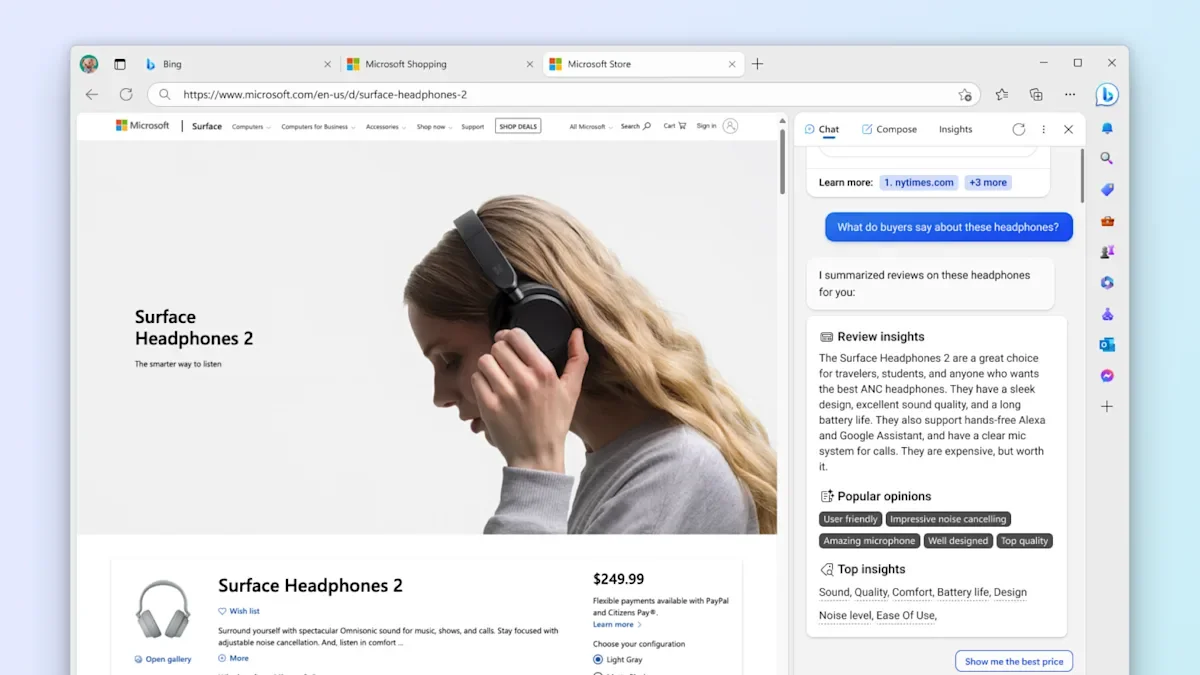
Microsoft is introducing new AI-powered features to its Bing search engine and Edge web browser to enhance the online shopping experience. The capabilities include AI-based buyer's guides, summaries of user reviews, and the ability to request price matches from sellers even after making a purchase. The Buying Guide feature acts as an AI shopping assistant, providing recommendations and specifications for various products. Users can access the Buying Guide through Bing chat in the Edge browser. Additionally, Microsoft will monitor the price of purchased items and assist in initiating the price match process if the price drops. This move by Microsoft follows the trend of tech companies investing in AI technology, with Alphabet and Google also introducing similar AI-powered shopping tools.
Microsoft's Edge browser's content-follower feature, which is on by default, may be sending information about every site visited to Microsoft-owned "bingapis.com" domain, including locally hosted URLs and IP addresses. The feature was intended to notify Bing only when users were on specific sites they had elected to follow, but it appears to be sending nearly every domain visited to Bing. Microsoft said it is aware of the issue and will take appropriate action to address it. Users can disable the feature in the Edge settings to prevent URL-leaking.
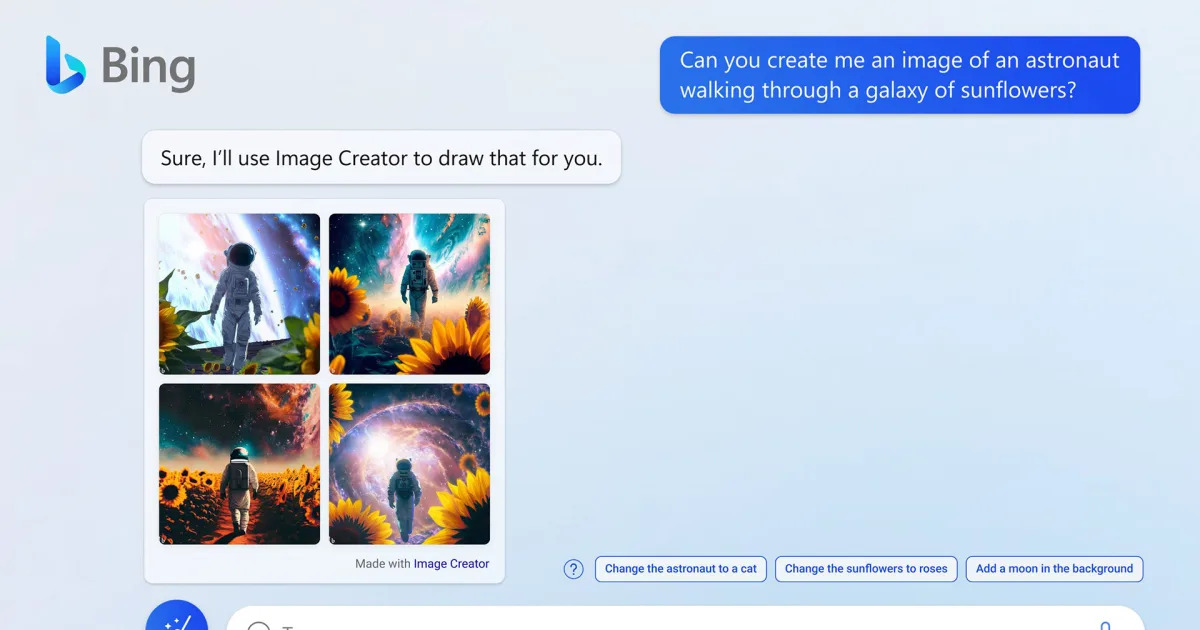
Microsoft has made its DALL-E powered Image Creator tool available to all Edge browser users on desktop worldwide, allowing users to create their own AI-generated images. The tool uses OpenAI's AI image generator, DALL-E 2, and can be accessed from the Edge sidebar. Users can enter a prompt and the deep learning model generates up to four images that match the prompt. The process can be sped up by redeeming Microsoft Rewards. The feature is pitched as a more streamlined way to create AI-generated images while browsing the web.
Microsoft has introduced a Bing Image Creator preview that adds OpenAI's DALL-E AI image generation to both Bing search and a sidebar in the Edge browser. The AI chatbot can create an image with either a direct description or a follow-up to a previous query. Microsoft is applying "additional protections" beyond OpenAI's own to block users from creating potentially "harmful" images. The DALL-E tool comes just as Adobe has unveiled plans to put generative AI in Photoshop, After Effects and Premiere Pro, while NVIDIA is launching a customizable cloud AI service that includes image creation.
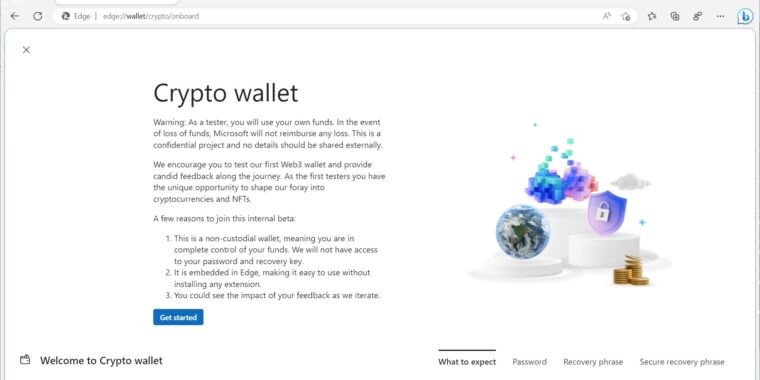
Microsoft is reportedly testing a built-in cryptocurrency wallet for its Edge browser, according to screenshots from a beta build. The wallet is non-custodial, meaning users have sole ownership and responsibility for their passwords and recovery keys. The feature is strictly for internal testing, and Microsoft may not release it to the public. The company has added several money and shopping-related features to Edge, including a "buy now, pay later" financing option, which faced backlash.
Microsoft has launched the stable version of its Edge web browser, which includes the new Bing AI chatbot in a sidebar called Edge Copilot. The AI feature provides intelligent suggestions and insights based on the context of the web page and the user's goals. The sidebar can be hidden when not in use, and IT admins can control whether or not users have access to it. The browser also includes a larger version of the Microsoft Feed and various security mode improvements.