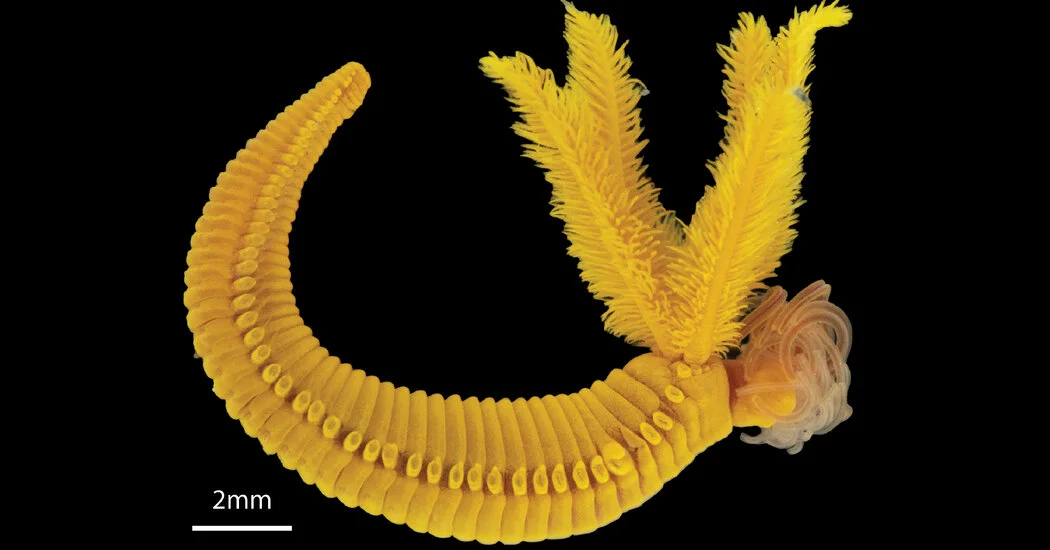
A deep-sea polychaete worm, Paralvinella hessleri, survives high arsenic levels by converting it into a less toxic mineral through a process that combines arsenic with sulfide, revealing a novel biological adaptation to extreme environments.
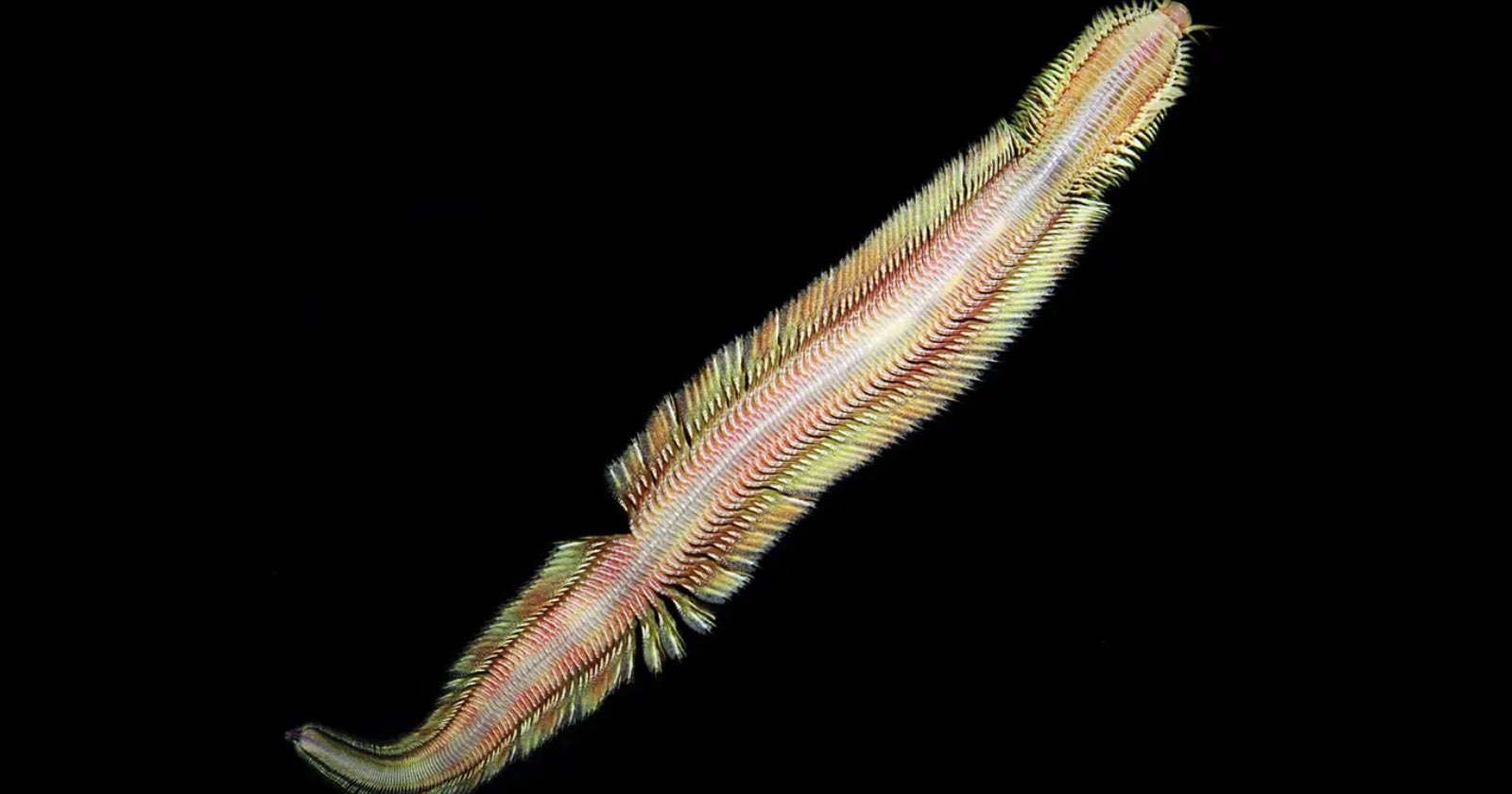
Scientists have captured the first live male specimen of a new species of deep-sea worm, Pectinereis strickrotti, near an underwater methane seep off the Pacific coast of Costa Rica. The worm, which moves in a sinuous pattern reminiscent of a magic carpet, was first spotted in 2009 and formally described in a study published in PLOS ONE. Measuring about four inches long, the blind worm uses feathery appendages called parapodia to swim and likely relies on its sense of smell and touch to navigate the dark ocean depths. Despite its impressively large jaws, its diet remains a mystery.