The article reviews Robert S. Gard's challenging Saturday crossword puzzle for The New York Times, highlighting its complex clues, clever wordplay, and thematic references to cosmic and aquatic themes, with explanations of some of the tricky clues and answers.
The article reviews a Sunday crossword puzzle by John Kugelman that features a clever theme where solutions are phrases formed by adding a letter to a common term, changing its meaning, with examples like 'classy matey' for 'classmate' and 'fishy hooky' for 'hooky.' The puzzle is praised for its witty clues, creative execution, and challenging yet enjoyable wordplay.
The article is a compilation of various entertainment news and recaps, including a mention of a daily crossword puzzle titled 'The Bodak Yellow Puzzle' for September 19, but primarily focuses on recent TV show recaps, celebrity news, and industry updates.
The article reviews a creatively designed Sunday crossword puzzle themed around Wile E. Coyote and the Road Runner, featuring intricate grid art, black square arrangements, and references to animation and classic cartoons, highlighting the constructor's innovative approach and thematic elements.
Live Science offers a weekly free science crossword puzzle that challenges players with questions on various scientific topics, including the human body, animals, and space, designed to be fun and accessible for all ages.
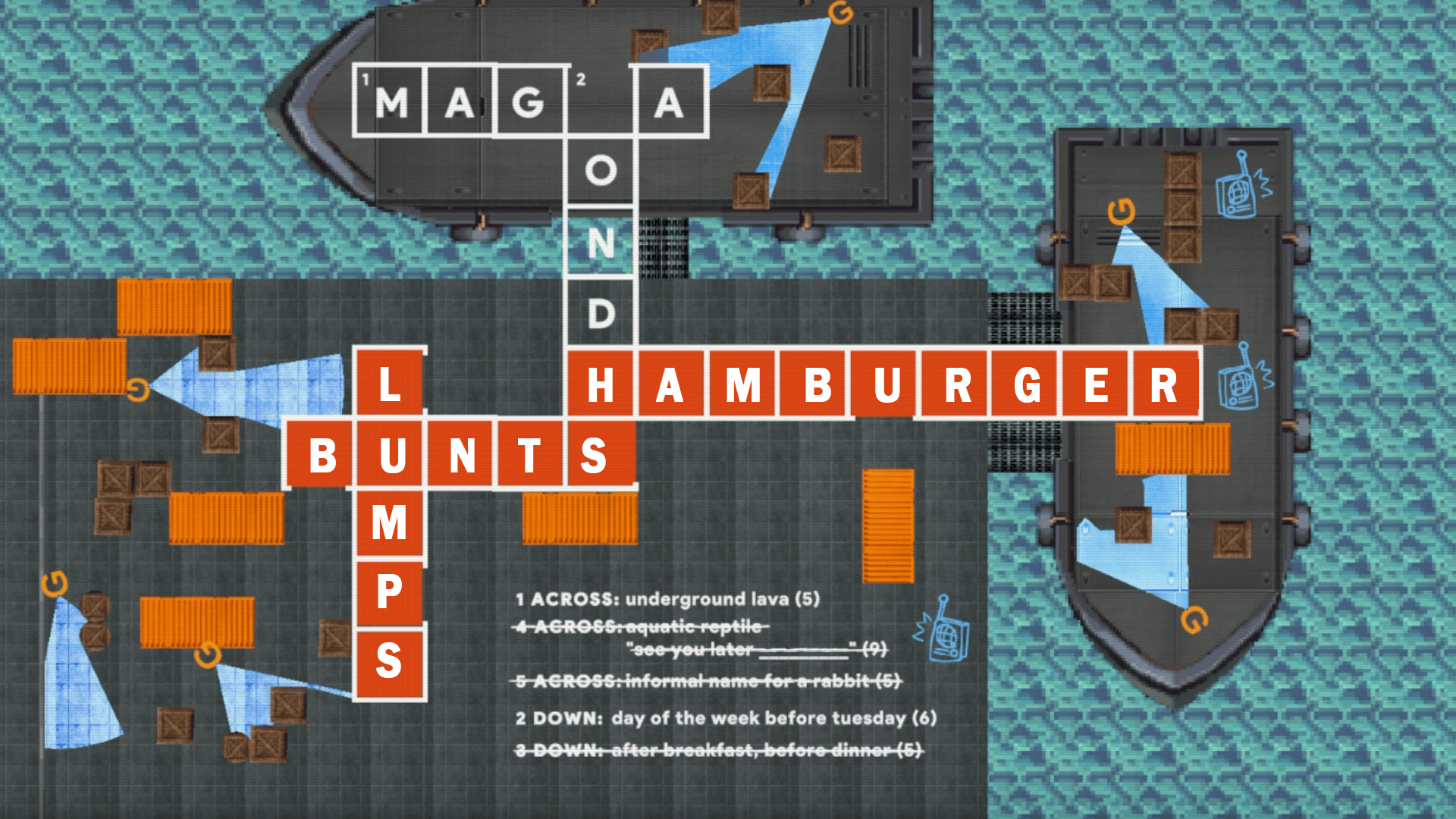
A reviewer discovers 'Stealth Crossword,' a short, innovative browser game blending crossword puzzles with stealth mechanics, highlighting the joy of stumbling upon unique indie games unexpectedly.
Jesse Guzman debuts his third NYT crossword puzzle, featuring challenging clues, inventive grid design, and eccentric entries like Bowser, Koopa Troopa, Angelica, and Celine Dion, showcasing his creative approach to puzzle construction.
A challenging New York Times crossword puzzle created by Adam Aaronson and Ricky Cruz, featuring difficult clues, surreal trivia, and a long development process spanning over three years, ultimately published in 2025.
Tracy Gray, a retired lawn-and-landscaping business owner, created a Sunday crossword puzzle titled "Double Duty" that features a clever theme involving homophones. The puzzle includes six theme entries with normal-looking clues and a rebus, challenging solvers to identify words that sound like pluralized single letters. The puzzle is described as graceful, fun, and fast-paced, making it suitable for groups or crossword mentors and their mentees.
The New York Times crossword puzzle for February 19, 2024, created by Adam Wagner, features a theme where the first word of each starred clue counts the syllables in its second word, adding an extra layer of complexity to the puzzle. Puzzle editor Sam Ezersky describes it as having "lots of fancy footwork" and "a nice mix of phrases," making it a challenging but engaging solve for crossword enthusiasts.
Jake Halperin's Monday crossword puzzle debut in The New York Times features a theme set with four clues marked with an asterisk, including trivia questions about British publishing house PENGUIN BOOKS and certain ice cream or soap product DOVE BAR. The puzzle is described as challenging and thought-provoking, with an explanatory entry at 56-Across.
Adam Wagner and Michael Lieberman, crossword constructors and fathers of fast-growing toddlers, have collaborated on a Sunday puzzle inspired by their children's growth spurts. The puzzle features seven entries with a four-letter run of gray squares, which, when removed, reveal a different term. Examples include "Baller in China" becoming "Ballerina" and "Affectionate squeeze of an infant's bottom" becoming "Baby Bum Pinch." The puzzle showcases playful letter manipulation and cheerful fill, inviting solvers to test their cruciverbal skills.
Jeff Stillman, known for constructing Monday to Wednesday puzzles, makes his Saturday debut with a gorgeous grid that features lively span entries. The puzzle includes tricky clues, such as an extra-wide shoe spec, emojis, and a 17th-century expression. Stillman shares his constructor notes, celebrating his 10th NYT acceptance and first themeless puzzle. Readers are encouraged to submit their own crosswords to The New York Times.
David P. Williams's second crossword for The New York Times follows the same grid pattern as his previous puzzle, inspired by Wallace Stevens's poem "Thirteen Ways of Looking at a Blackbird." The construction is excellent and challenging, with some tricky clues. The hyphenated "run-down" is an adjective meaning decrepit, while "acute" can refer to seriousness or the opposite of an acute accent. The phrase "yo-yos, in a way" clues to the action of walking the dog with a yo-yo.
The New York Times crossword puzzle for October 16, 2023, was created by constructors Michael Lieberman and Andrea Carla Michaels, who designed it to challenge fans' expertise in cinema. The themed entries in the puzzle are names of physically fit movie stars, and the revealer is "MOVIE BUFFS," which describes both fans of films and the stars themselves. The puzzle also includes some tricky clues, such as the use of "buff" to mean enthusiasm or savvy, and the term "buttinskies" to mean gossips. The constructors collaborated on this puzzle after meeting at the 2023 American Crossword Puzzle Tournament.