
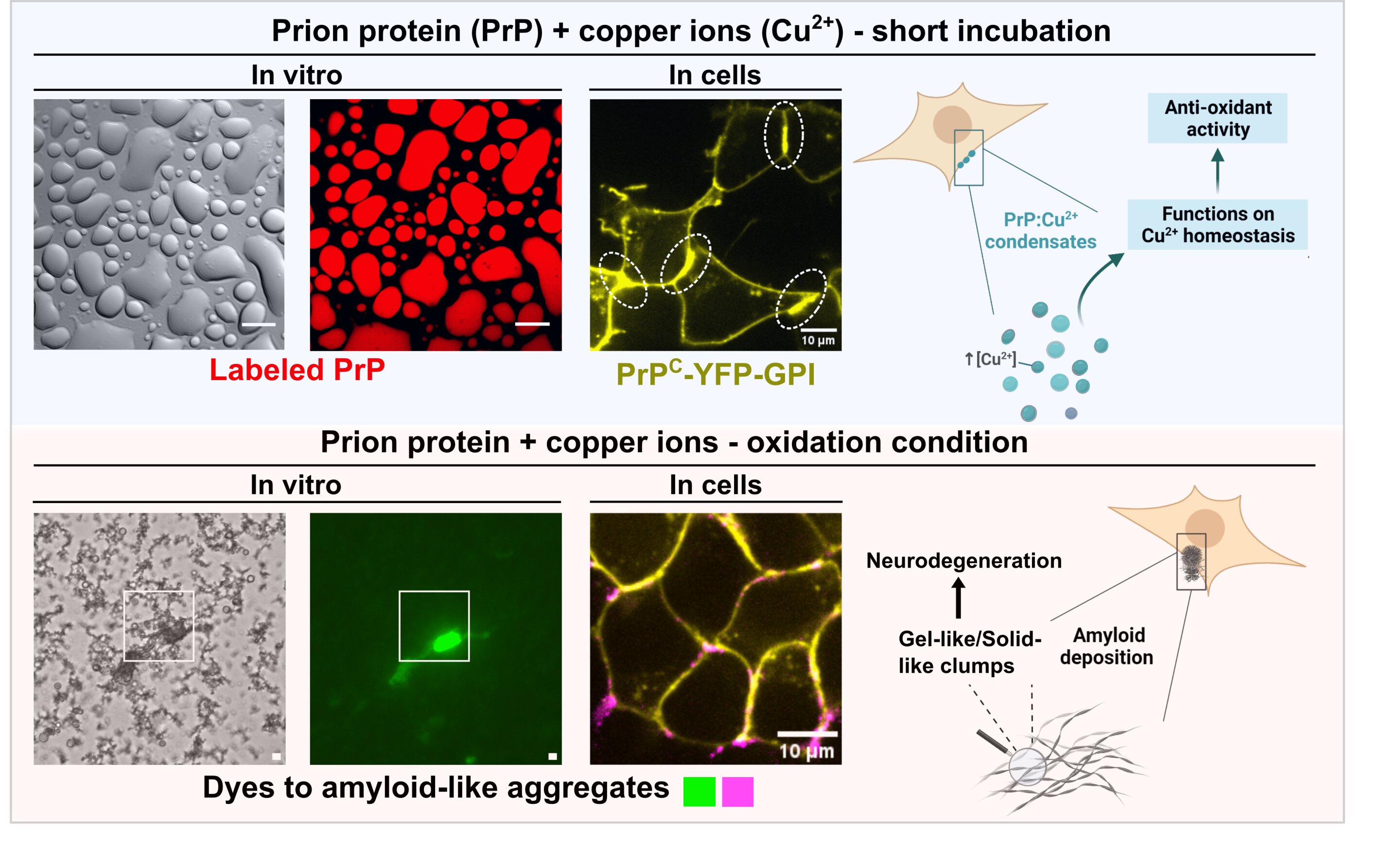
Prion protein and copper drive liquid-liquid phase separation in a physics-biology fusion
Researchers from the Federal University of Rio de Janeiro and the German Center for Neurodegenerative Diseases have discovered that the prion protein (PrP) can form dynamic liquid condensates at the cell surface, potentially acting as scavengers for excessive copper ions. The study sheds light on the intricate relationship between PrP and copper ions in live cells and highlights the role of liquid-liquid phase separation in regulating copper homeostasis. The findings have implications for understanding prion diseases and suggest potential interventions targeting copper-bound prion protein condensates to prevent abnormal solid formation and mitigate neurodegenerative outcomes.