
Tag

Computational Imaging

All articles tagged with #computational imaging

Software-Driven Sensor Array Delivers Sub-Micron, Lens-Free Imaging
technology1 month ago

Software-Driven Sensor Array Delivers Sub-Micron, Lens-Free Imaging

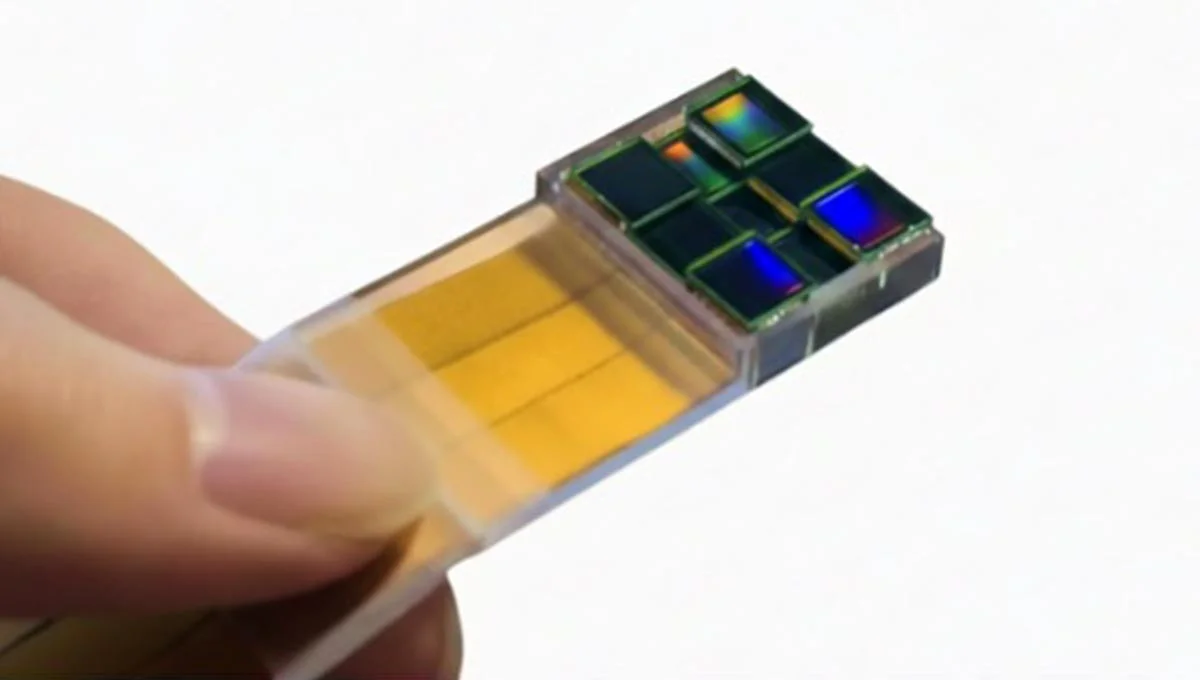
University of Connecticut researchers led by Guoan Zheng introduced MASI, a lens-free imaging system that uses an array of coded sensors to record diffraction data and relies on post-capture software to align and reconstruct a virtual, larger aperture. This avoids precise hardware synchronization and lenses, delivering sub-micron resolution over a wide field of view at visible wavelengths. The scalable, computation-driven approach could enable advances in medicine, forensic science, industrial inspection, and remote sensing.
"Breakthrough: Ultrafast Camera Sets Record at 156.3 Trillion Frames Per Second"
science-and-technology1 year ago

"Breakthrough: Ultrafast Camera Sets Record at 156.3 Trillion Frames Per Second"

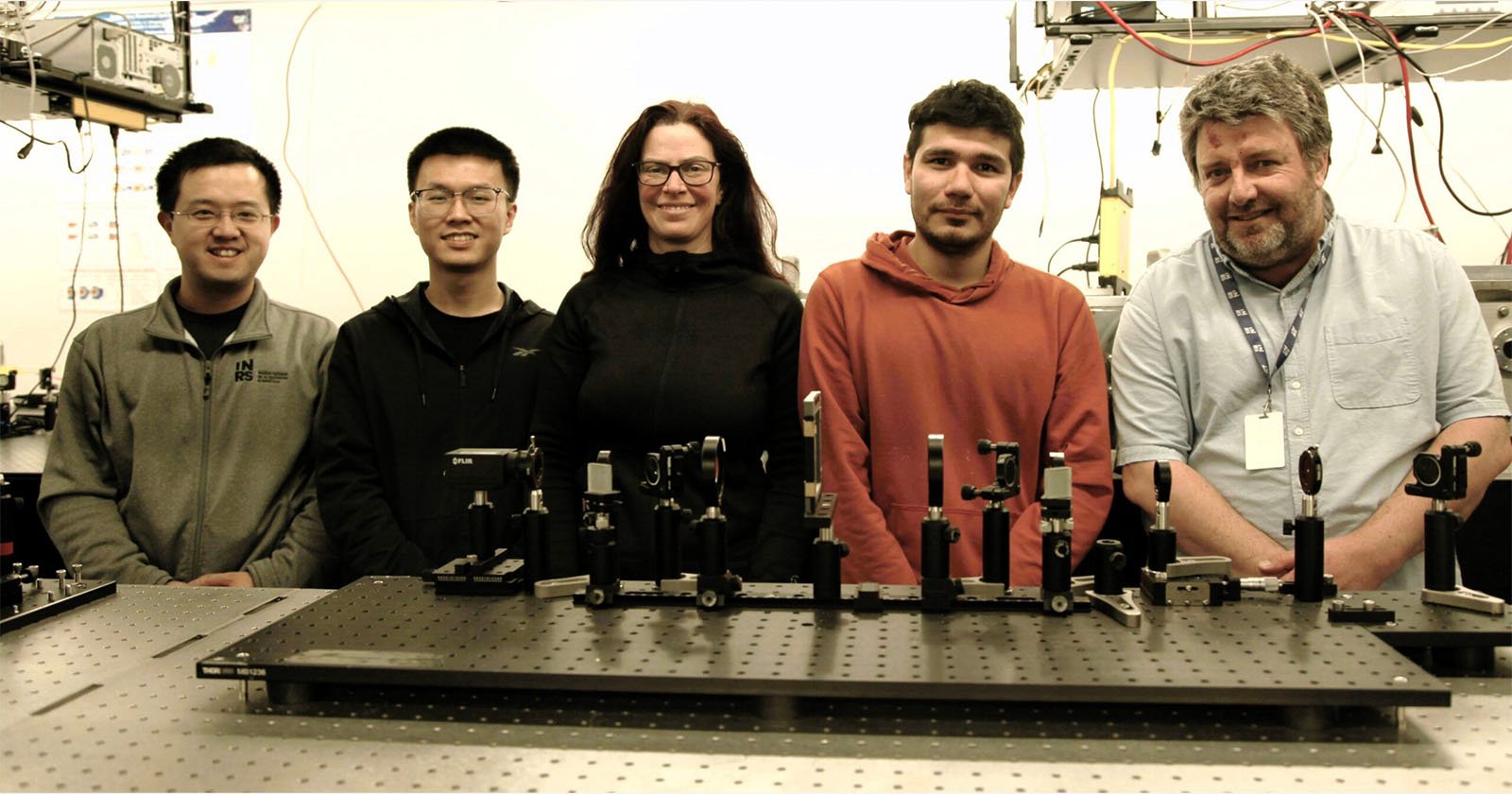
Canadian researchers have developed the SCARF camera system, capable of capturing up to 156.3 trillion frames per second using passive femtosecond imaging. This breakthrough in ultrafast photography allows for the study of micro-events that occur too quickly for existing sensors, such as absorption in a semiconductor and demagnetization of a metal alloy. The camera uses computational imaging to process time-staggered inputs and create a full picture, enabling the study of phenomena like femtosecond laser ablation and shock-wave interaction with living cells. The system, made using off-the-shelf optical components, represents a significant advancement in ultrafast imaging technology.

"Revolutionary Neural Network Enhances Coherent Imaging on a Large Scale"
science-and-technology2 years ago

"Revolutionary Neural Network Enhances Coherent Imaging on a Large Scale"

Researchers have developed a complex-domain neural network that enhances large-scale coherent imaging, revolutionizing optical imaging by providing wide field-of-view and high-resolution capabilities. The technique exploits latent coupling information between amplitude and phase components, leading to multidimensional representations of complex wavefront. The network significantly reduces exposure time and data volume while maintaining high-quality reconstructions, offering implications for high-level semantic analysis and intelligent medical care. This technology holds promise for real-time cell observation and pushing the boundaries of medical diagnostics.