
Tag

Chandraxrayobservatory

All articles tagged with #chandraxrayobservatory

science1 year ago

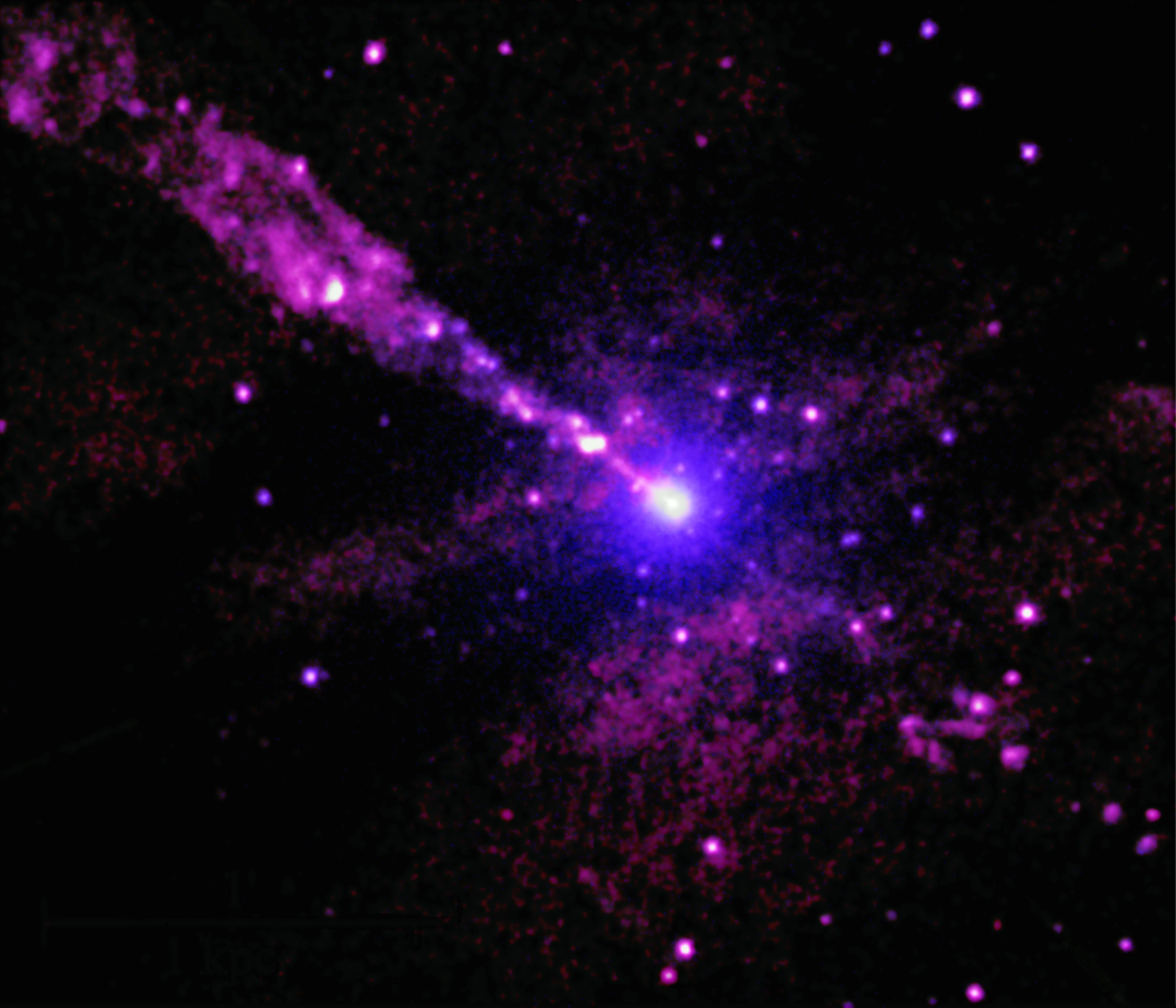
Black Hole Jet Encounters Mysterious Obstacle

Astronomers using NASA's Chandra X-ray Observatory have discovered a mysterious V-shaped X-ray emission in the galaxy Centaurus A, caused by a jet from a supermassive black hole striking an unidentified object. This object, named C4, is located about 12 million light-years from Earth. The V-shape, with arms at least 700 light-years long, suggests a collision with a massive star or gas cloud, generating turbulence and enhanced X-ray emissions. The exact nature of the object remains unknown, and the findings are detailed in The Astrophysical Journal.
science-and-technology2 years ago

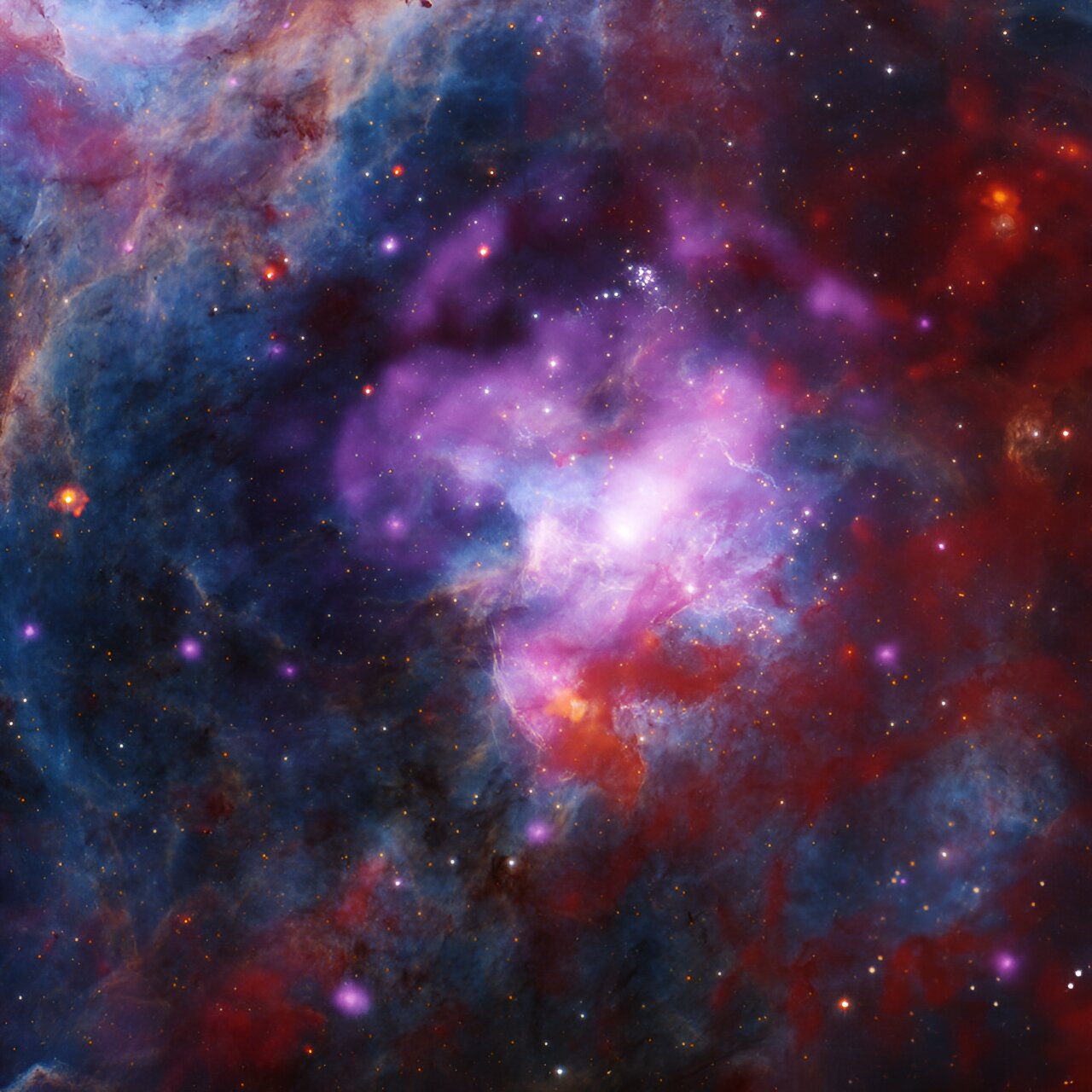
"NASA's Telescopes Kick Off New Year with Dual Cosmic Discoveries"

NASA's telescopes have captured a new image of the supernova remnant 30 Doradus B, revealing the complex aftermath of at least two massive stellar explosions in the Large Magellanic Cloud. By combining data from the Chandra X-ray Observatory, the Blanco telescope, the Spitzer Space Telescope, and the Hubble Space Telescope, astronomers have identified a faint X-ray shell and a pulsar wind nebula, indicating separate supernova events that occurred more than 5,000 years ago. This research, led by Wei-An Chen, provides new insights into the life cycles of massive stars and their explosive deaths.

science-and-technology2 years ago

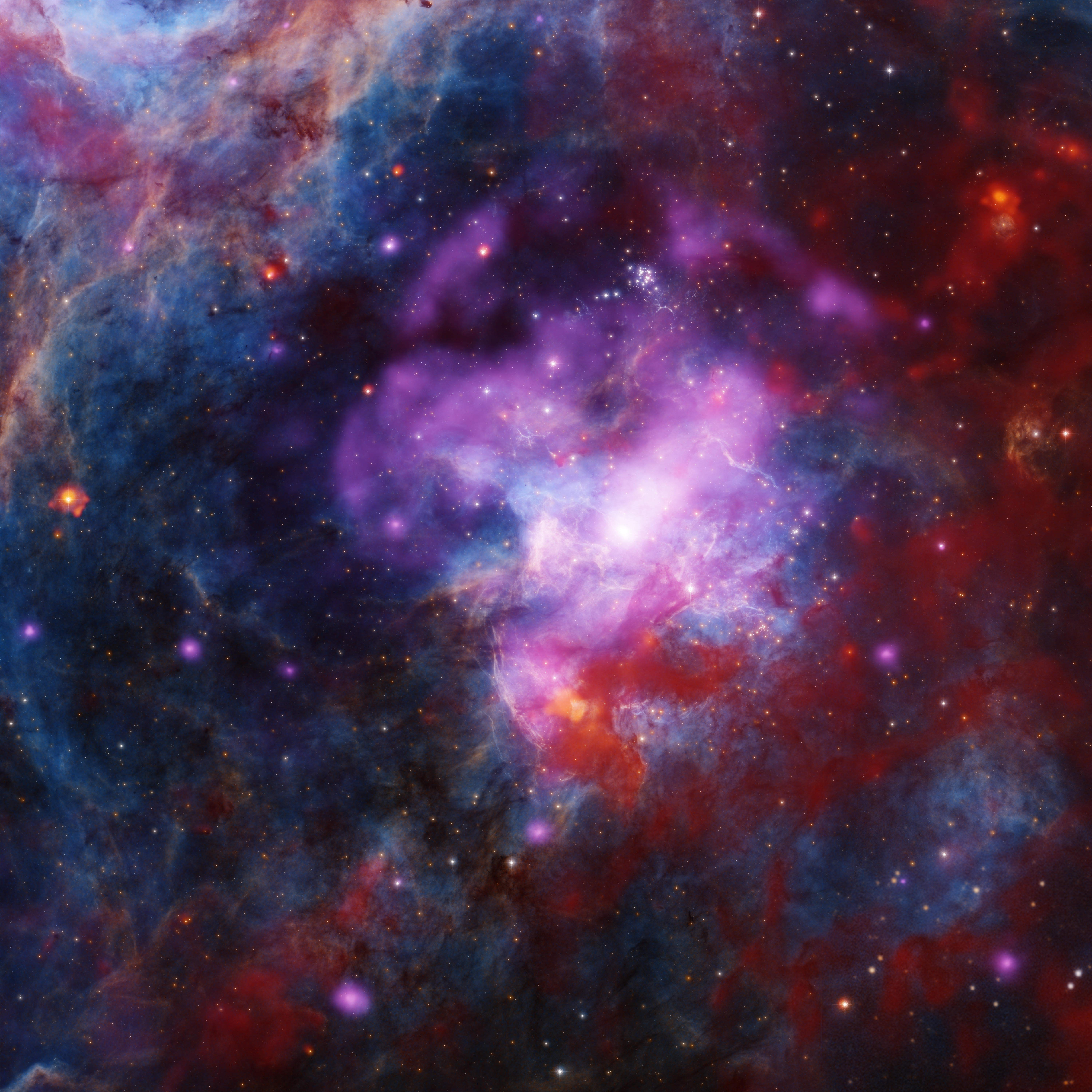
"NASA Telescopes Kick Off New Year with Dual Cosmic Discoveries"

NASA's telescopes have captured a stunning image of 30 Doradus B, a supernova remnant in the Large Magellanic Cloud, revealing the complex aftermath of at least two massive stellar explosions. The composite image combines data from multiple telescopes, including Chandra's X-ray observations and Hubble's optical data, to analyze the region's structure and history. Astronomers have concluded that the remnant's features, such as a faint X-ray shell and a pulsar wind nebula, indicate multiple supernovae occurred, with the most recent explosion dating back about 5,000 years. This research provides valuable insights into the life cycles of massive stars and their explosive deaths.