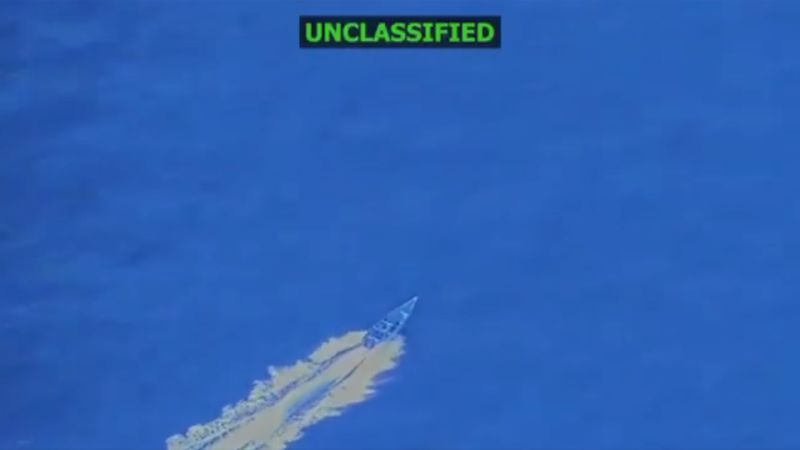
The US military conducted three strikes against suspected drug-running boats in the Eastern Pacific, killing 14 people and marking an escalation in anti-drug operations, with the US equating these actions to a war on terrorism, despite lacking concrete evidence linking the vessels to cartels.
The Trump administration has a classified legal opinion that justifies lethal strikes against a secret list of drug cartels and traffickers, potentially allowing the president to target and kill suspected traffickers without legal review, raising concerns about the legality and scope of US counter-narcotics operations.
Tom Homan clarifies that President Trump is not at war with Chicago itself, but with criminal cartels operating in the city, amid tensions over military deployment and a provocative social media post.
The US conducted a military strike on a Venezuelan drug boat in the Caribbean, targeting alleged members of the Tren de Aragua gang, amid increased US efforts against Venezuelan narcoterrorism and drug cartels, signaling a potential escalation in US actions against drug trafficking organizations.
Mexican criminal groups are increasingly adopting modern warfare tactics by acquiring homemade mortars, land mines, rocket-propelled grenades, and bomber drones, escalating violence and posing new challenges for authorities.
The U.S. is deploying three guided-missile destroyers off Venezuela to combat Latin American drug cartels amid rising tensions between the Trump administration and Maduro's regime, which is accused of drug trafficking and labeled a terrorist organization. Venezuela dismisses these accusations and increases security measures, while the U.S. intensifies efforts to target cartels and Venezuelan leadership.
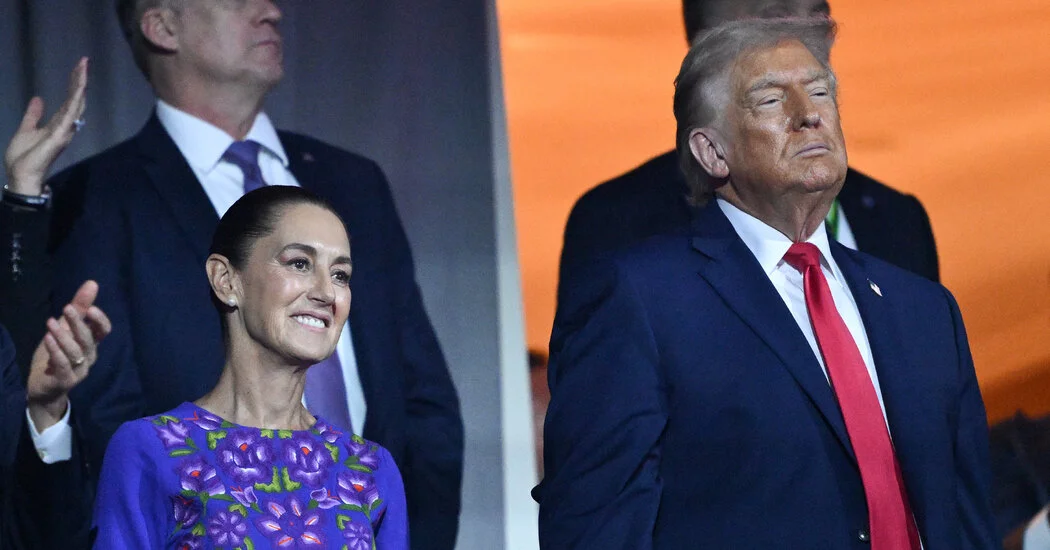
Mexican President Claudia Sheinbaum firmly rejects any U.S. plans to invade or strike Mexican territory over drug cartel issues, emphasizing Mexico's sovereignty amid reports of potential U.S. military action against cartels in Latin America, including Venezuela and Ecuador.
Mexican President Claudia Sheinbaum assured that Mexico will not be invaded following reports that President Trump ordered the U.S. military to target drug cartels, which the U.S. has designated as terrorist organizations. The Trump administration's actions include potential military operations and increased efforts to target cartel leaders, raising concerns about sovereignty and intervention in Mexico.
Despite international efforts to phase out mercury, illegal mining driven by cartels in Mexico and South America has led to a surge in mercury smuggling, contaminating ecosystems and harming indigenous communities, with authorities struggling to control the trade.
As Mexicans prepare to vote on June 2, the country faces severe violence from organized crime and a polarized political climate. The election is historic, with two leading female candidates, Claudia Sheinbaum and Xochitl Galvez, representing continuity and change, respectively. The outcome could impact marginalized groups and Mexico's approach to clean energy, amid ongoing challenges like water shortages and cartel violence.
Mexican President Andrés Manuel López Obrador reflects on his legacy and his country's ties to the U.S., emphasizing the need for addressing root causes of migration issues and proposing a $20 billion annual commitment from the U.S. to Latin America and the Caribbean. He dismisses the possibility of a border closure, citing the economic interdependence between the two countries. López Obrador also discusses his approach to combating cartels, addressing violence and corruption, and his administration's achievements and challenges.
Mexican President Andrés Manuel López Obrador discusses immigration, trade, the fentanyl crisis, and cartels in a candid conversation, asserting that President Trump's border wall threats are bluffing and emphasizing the need for addressing root causes of migration. He defends his approach to cartels as "hugs, not bullets," denies U.S. claims of Mexico being the primary source of fentanyl, and highlights the mutual economic dependence between the U.S. and Mexico. López Obrador also addresses criticisms of corruption, infrastructure spending, and upcoming elections, while expressing his intention to retire from politics after his term.
Mexican drug cartels are increasingly using improvised land mines in their warfare, resulting in deaths and injuries to both soldiers and civilians in the Tierra Caliente region. The use of land mines, along with other sophisticated weaponry such as drones and grenade launchers, marks an alarming escalation of violence in Mexico. Experts attribute the rise of land mines to an influx of mercenary fighters from Colombia, who bring bomb-making technology to rural Mexico. The widespread use of land mines has turned the region into a literal minefield, causing fear and displacement among residents. The Mexican government and the U.S. have increased support to combat the use of explosives, but the conflict continues to pose a significant threat to the local population.
Ecuador is facing a severe security crisis marked by a surge in violence, prison riots, and gang warfare, prompting President Daniel Noboa to declare a state of emergency and designate over 20 gangs as terrorist groups. The country's descent into chaos is attributed to a power vacuum created by the demobilization of FARC in Colombia, shifts in global cocaine consumption, and increasing institutional corruption. Foreign criminal groups, including Mexican cartels and Venezuelan gangs, have capitalized on the situation, exacerbating the turf war between Ecuador's two largest gangs, Los Lobos and Los Choneros. Despite the government's military crackdown, experts emphasize the need to address systemic corruption and adopt new strategies to combat drug trafficking and organized crime.
Mexican authorities successfully rescued 31 migrants who had been kidnapped near the U.S. border by criminal cartels. The migrants, from various Latin American countries, were the target of a kidnap-for-ransom scheme, a growing issue in the region. The rescue involved a significant deployment of troops and technology. The incident highlights the dangers faced by migrants and asylum seekers due to the lucrative criminal industry that has developed around migration, and it calls into question the effectiveness of current migration policies that leave individuals vulnerable to such crimes.