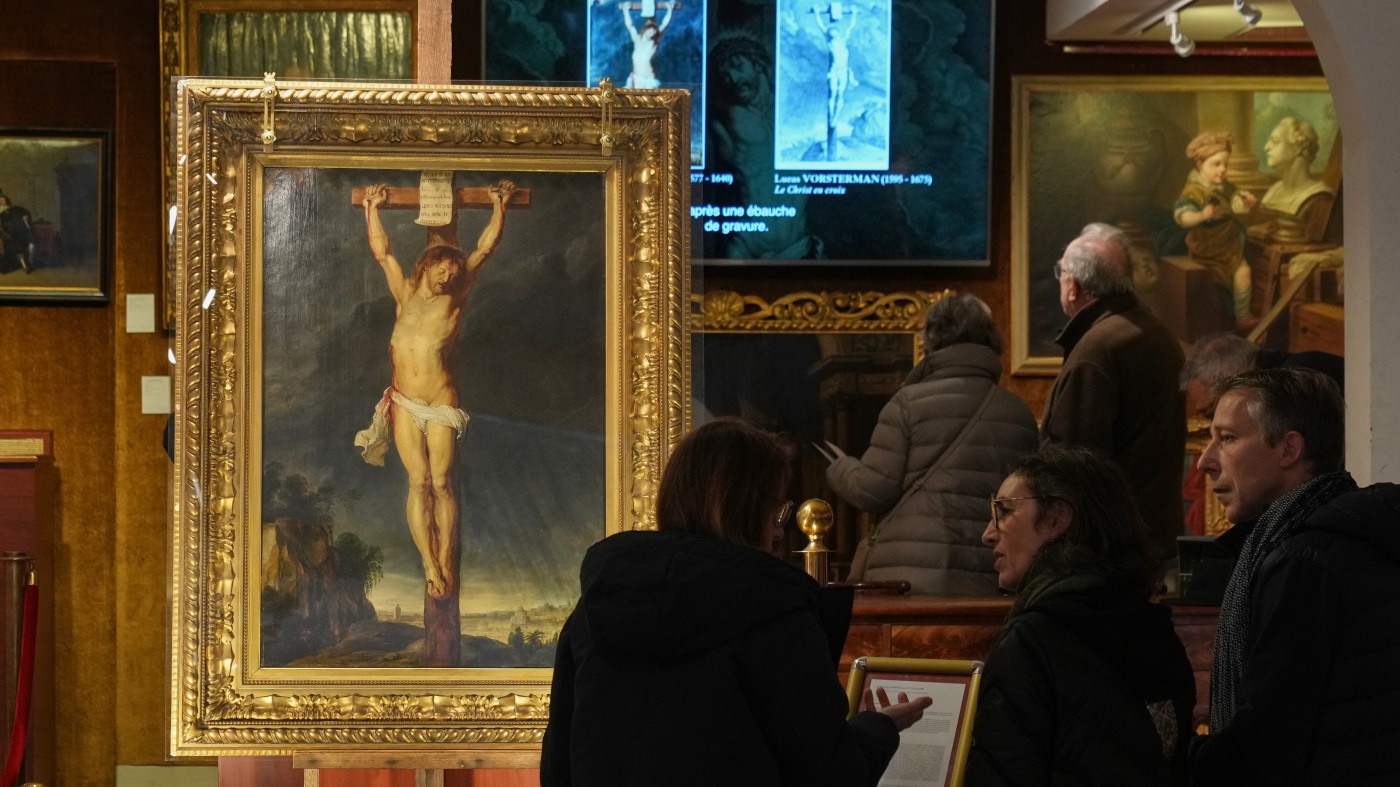
A long-lost 17th-century Rubens painting, 'Christ on the Cross,' discovered in a Paris townhouse after over 400 years, sold for €2.3 million ($2.7 million) at auction following scientific authentication confirming its provenance.
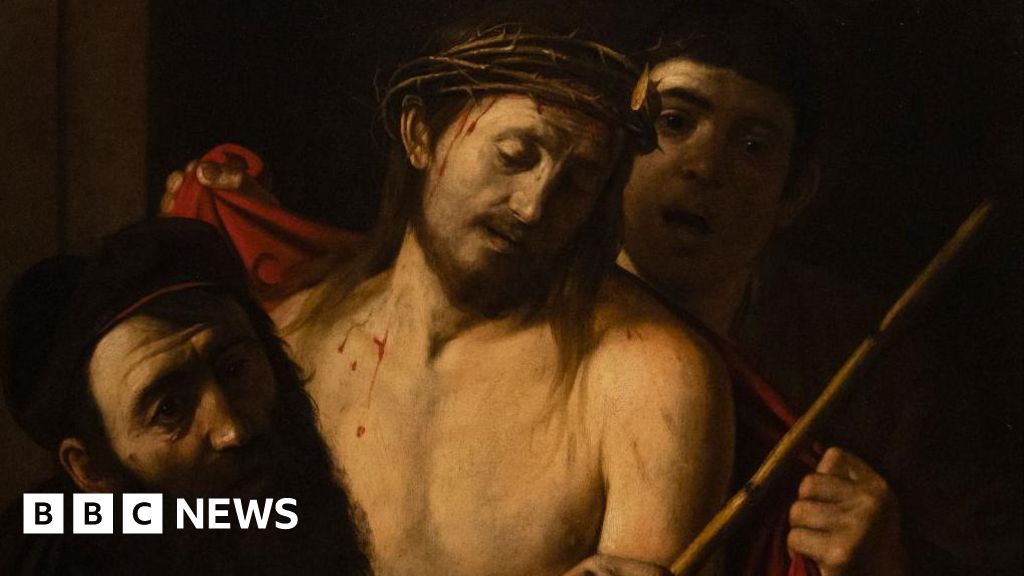
A newly authenticated Caravaggio painting, "Ecce Homo," is now on display at the Prado museum in Madrid. Initially misattributed and nearly sold at auction for €1,500, the painting was withdrawn from sale by the Spanish government in 2021. Experts later confirmed its authenticity, calling it a significant discovery. The painting will be exhibited until October and then move to the Prado's permanent collection for four months. It reportedly sold for €36 million and will remain on loan to public collections.
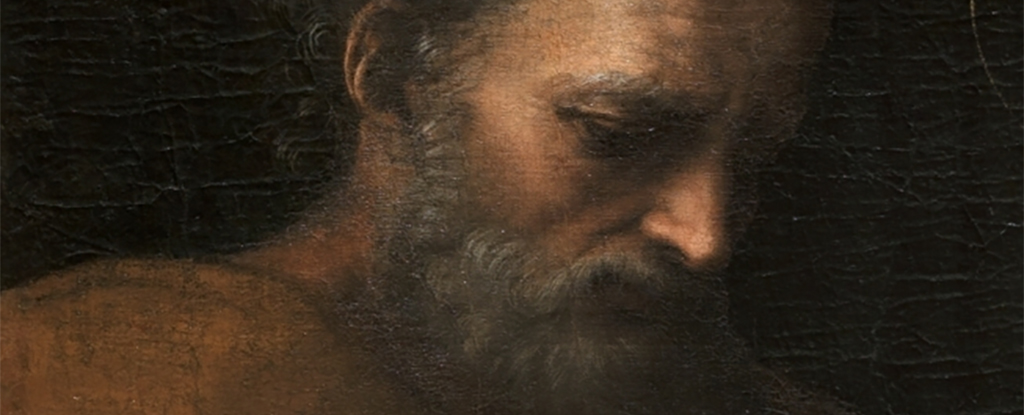
An AI neural network has identified that the face of St Joseph in Raphael's painting, Madonna della Rosa, may not have been painted by Raphael himself. Using deep feature analysis, researchers trained the AI to recognize Raphael's style and found that St Joseph's face differs from the rest of the painting. This discovery suggests that another artist, possibly Raphael's pupil Giulio Romano, may have contributed to the artwork. While the AI's accuracy in identifying Raphael paintings is high, the research team emphasizes that it should be used as a tool to assist art experts rather than replace them.
Bosch, a major manufacturing company, has adapted its revolutionary technology, Origify, originally designed to detect counterfeit spare parts in the car and aerospace industries, to now identify counterfeit works of art. The system creates "tamper-proof digital fingerprints" of paintings and sculptures, enabling museums to quickly spot whether an original work has been swapped with a fake. The technology, which captures unique details not visible to the human eye, stores data in a "tamper-proof cloud" and allows authentication via a smartphone app. The system has the potential to revolutionize art authentication and security in museums, following a recent case where a German museum fell victim to art theft and forgery.
An auctioneer, Michael Barzman, has admitted to creating fake Basquiat paintings and passing them off as authentic. The paintings were displayed in a Basquiat exhibition at the Orlando Museum of Art in Florida in February 2022. The FBI raided the museum in June and seized the paintings in an investigation into their provenance. Barzman was charged with and pleaded guilty to making false statements to a government agency. Basquiat’s artwork has fetched prices upward of $100 million since his death in 1988, making them a target for forgers.