Scientists discovered specialized intestinal cells in Burmese pythons that process calcium from bones, helping them digest whole prey and manage calcium absorption, a finding that could have broader implications for understanding bone digestion in other animals.
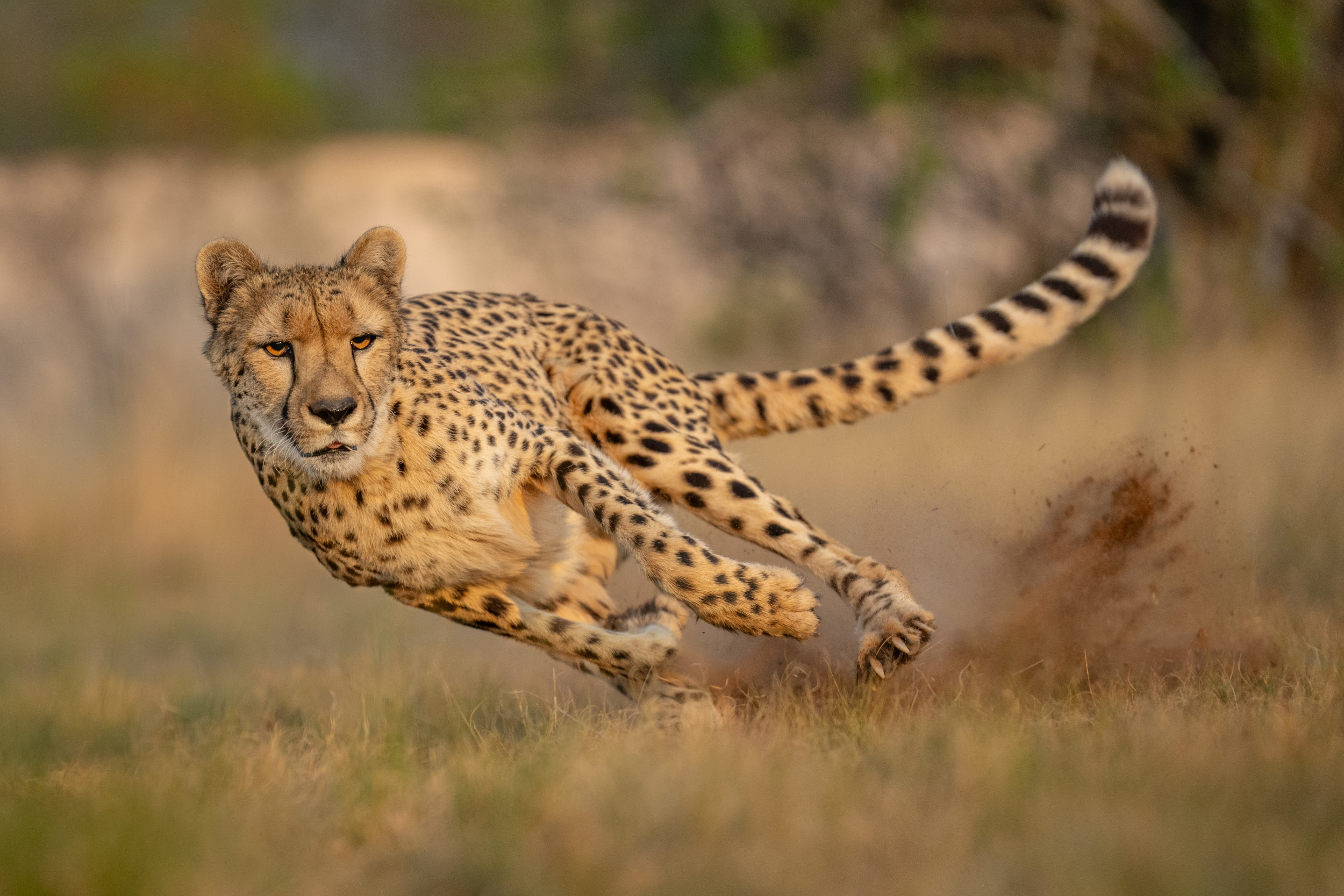
Scientists have discovered a "sweet spot" in animals that explains why fast-moving animals like cheetahs can reach such high speeds, with a study published in Nature Communications. The study found that maximum running speed is constrained by how fast and by how far an animal's muscles can contract, with a "kinetic energy capacity limit" for smaller animals and a "work capacity limit" for larger animals. Animals around the size of a cheetah, at around 50kg, exist in a physical sweet spot where these two limits coincide, making them the fastest. The research also sheds light on muscle evolution and provides insights into differences between animal groups, raising questions about the muscle physiology of extinct and current animals, including human athletes.