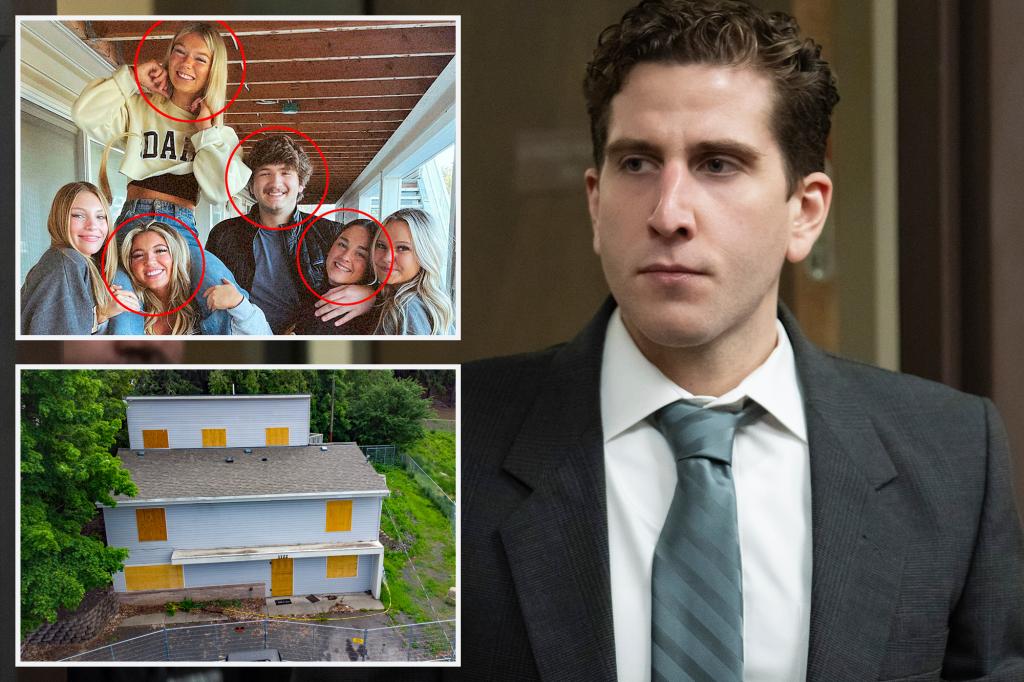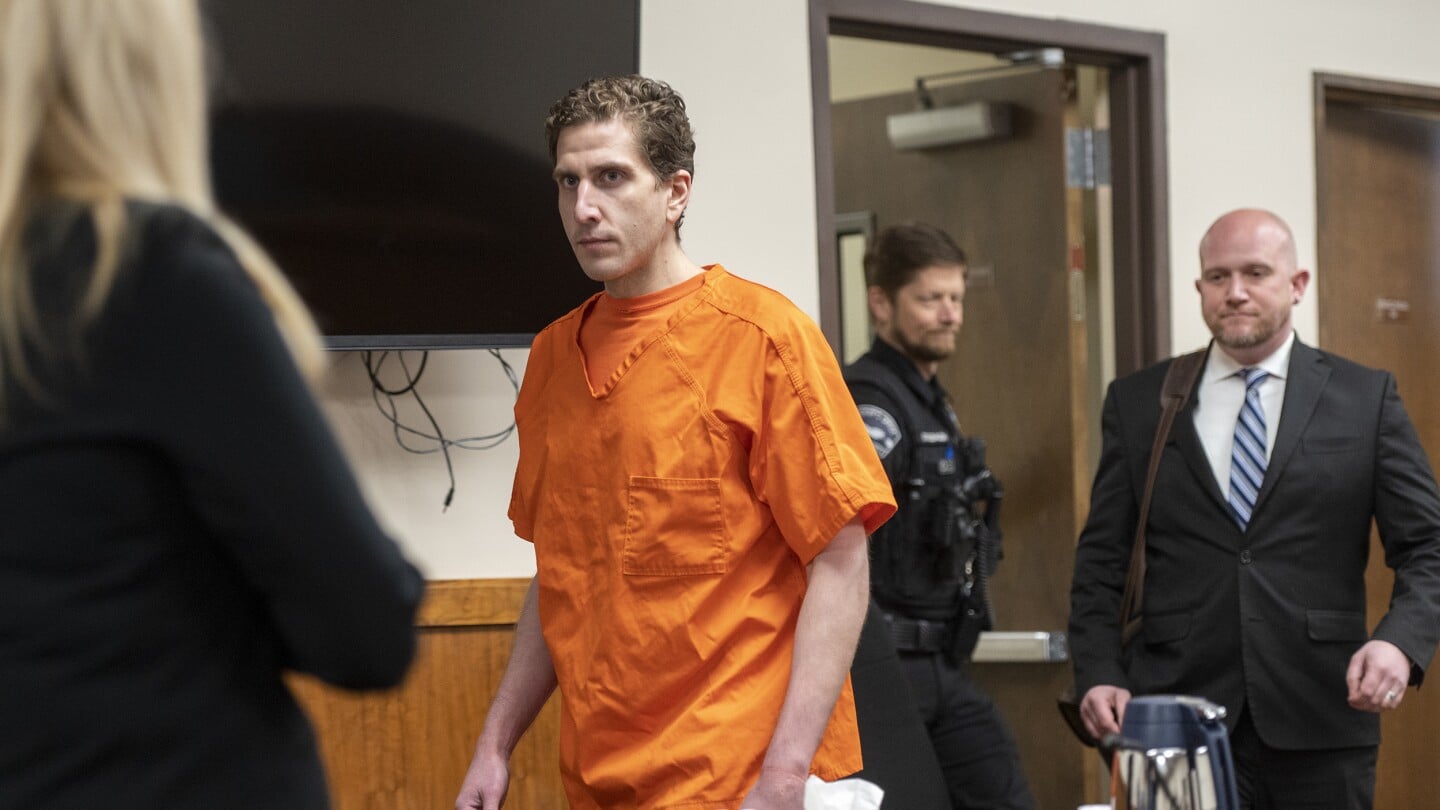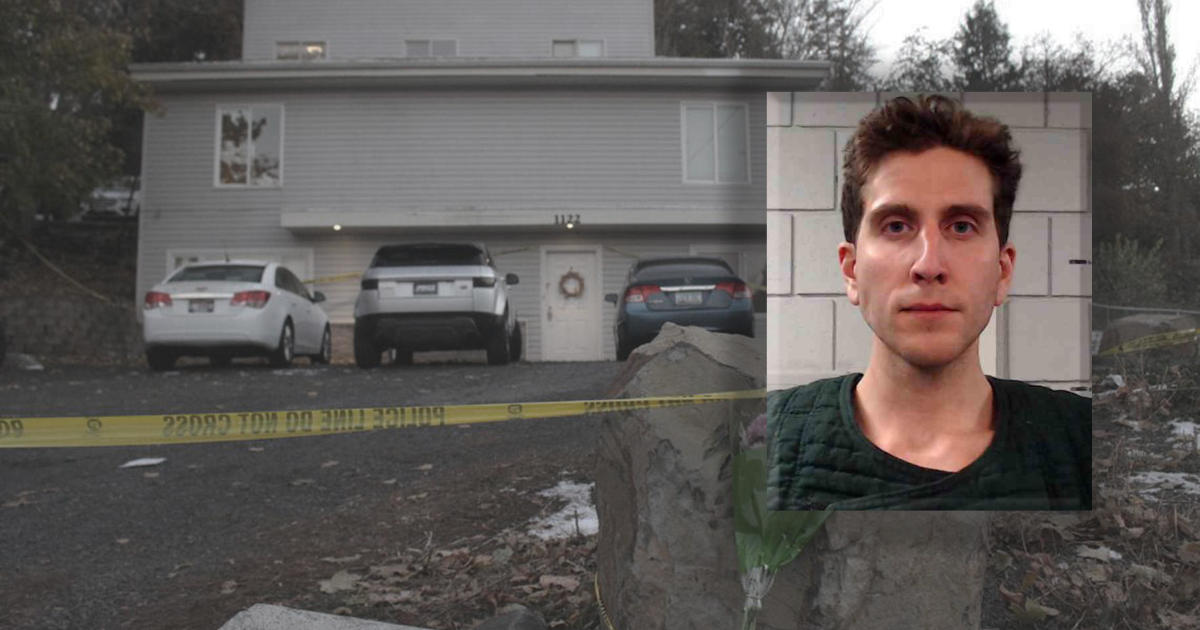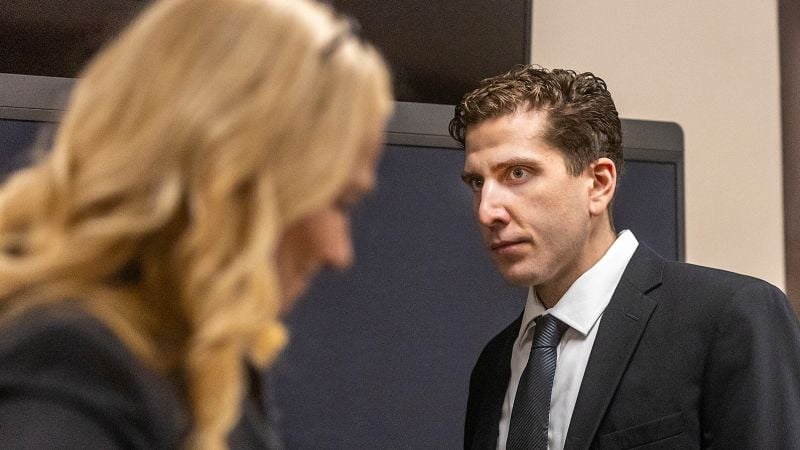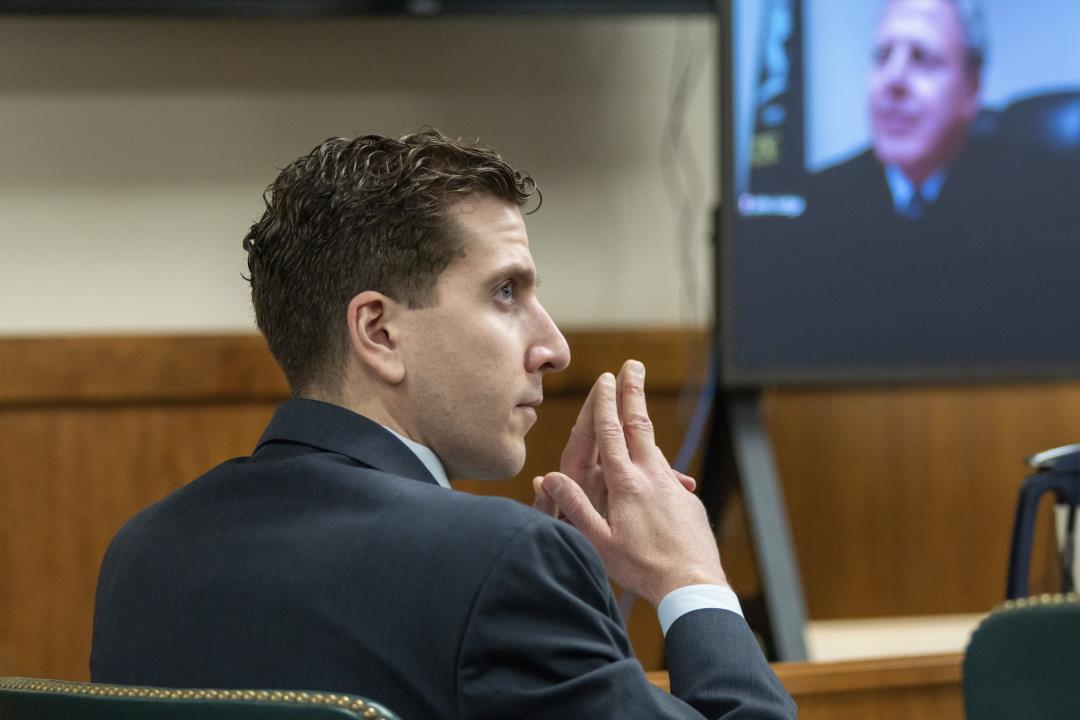
The family of Kaylee Goncalves, one of the murder victims in the University of Idaho case, expressed relief upon learning the details of Bryan Kohberger's alibi, finding it in direct conflict with the evidence. Kohberger's defense claims he was elsewhere during the time of the murders, but the family points out that his phone was turned off during that time. Investigators believe Kohberger fatally stabbed four students, and his DNA was found at the scene, though the murder weapon has not been located.
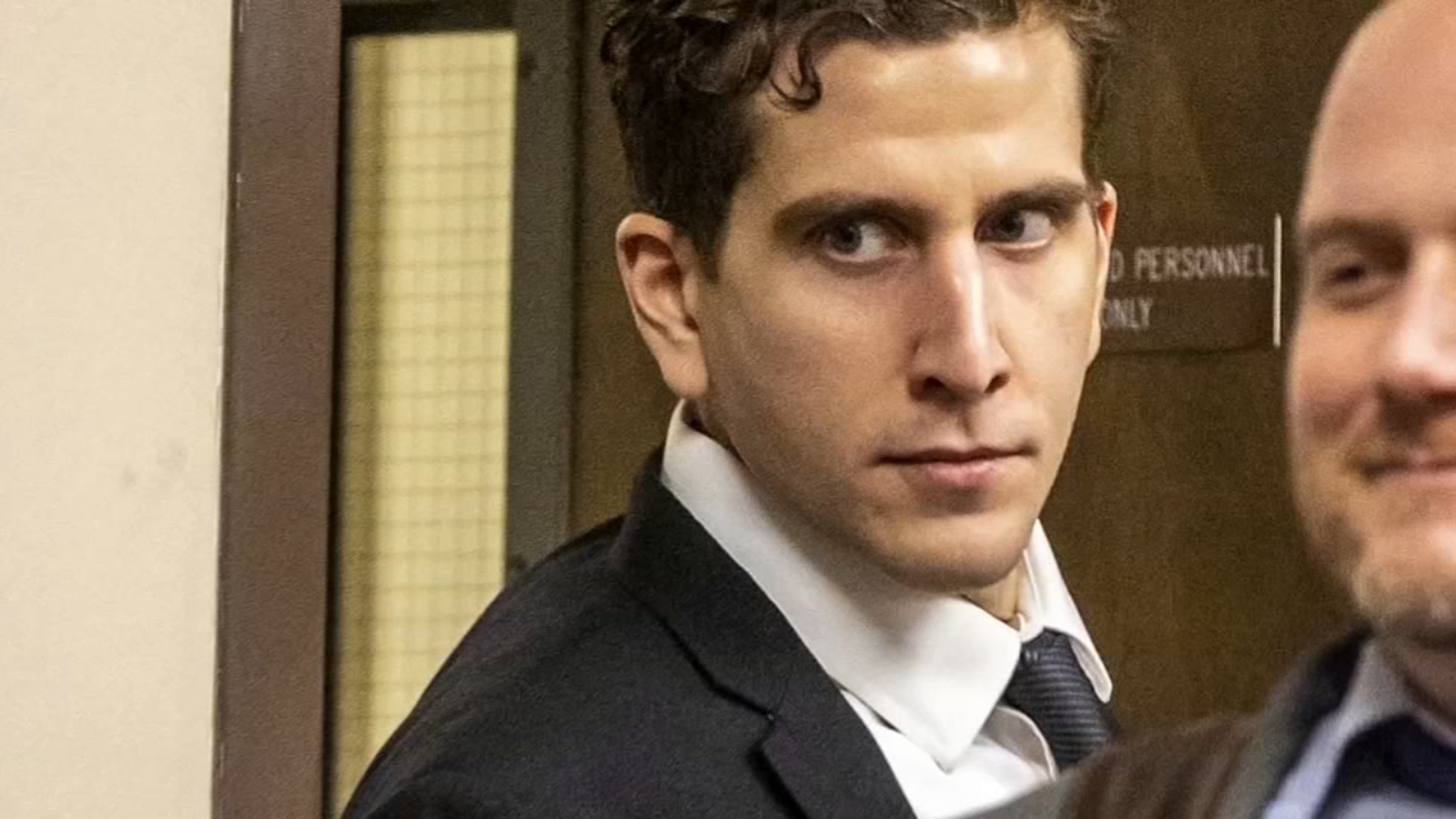
Bryan Kohberger, the suspected killer in the Idaho college murders, claims he was driving in a remote area and hiking in a park at the time of the murders, backed up by cell phone data. His lawyers plan to use cell tower data to show he was not near the crime scene. However, experts note that while cellphone records can estimate a person's location, it is difficult to pinpoint their exact whereabouts, especially in rural or remote areas.
Bryan Kohberger, accused of killing four University of Idaho students, plans to present witness testimony claiming his cellphone was not near the scene of the murders, contradicting prosecutors' allegations. His attorney suggests a cell-tower expert will testify that Kohberger's phone was in a different location at the time of the killings. Kohberger, who maintains his innocence, was linked to the crime through DNA evidence and cellphone records. The next hearing in the case is set for May 14, with no trial date set yet.
Lawyers for Bryan Kohberger, the former Ph.D. student accused of murdering four University of Idaho students, have filed documents outlining an alibi using cell-tower data to prove he was not near the crime scene at the time of the murders.
The legal team of Bryan Kohberger, the suspect accused of killing four University of Idaho students, claims that cellphone tower data proves he was driving miles away at the time of the deaths. They intend to call an expert witness to support this alibi. Prosecutors had previously linked Kohberger to the crime scene through DNA evidence and security footage. The suspect's attorneys argue that his cellphone data and photographs of the night sky support his alibi, while authorities claim he turned off his phone during the time of the killings. Kohberger, who pleaded not guilty, was a doctoral student at the University of Washington studying criminal justice and criminology.
Bryan Kohberger's defense team claims that cell phone data will prove he was driving miles away from the Idaho murder scene the night four college students were slain, emphasizing that an expert witness will testify to his mobile device being south of Pullman, Washington and west of Moscow, Idaho. They argue that his grueling academic schedule forced him to indulge in outdoor activities at night and threaten to reveal more details about his whereabouts unless the state shares more discovery. Kohberger, a criminology student at Washington State University, is accused of fatally stabbing the students and his defense has been filing motions to challenge the indictment and prolong the trial.
Monica Sementilli, the wife of slain hairdresser Fabio Sementilli, is facing trial for allegedly conspiring with her lover, Robert Baker, to murder her husband. Prosecutors claim that Monica was having an affair with Baker and orchestrated the murder, while her defense team disputes the evidence. Baker, who changed his plea to "no contest," stated that Monica had no knowledge of his involvement in the murder. Monica's trial is set to begin on April 2, 2024, and her daughters are standing by her, maintaining her innocence.
Bryan Kohberger, the suspect in the killing of four University of Idaho students, claims he was out driving at the time of the stabbings, according to court filings. His attorney stated that while they do not have witnesses to prove his exact location, supporting evidence may come during the trial. Kohberger was indicted on murder and burglary charges and remains silent on how he will plead. The trial is set for October.
Bryan Kohberger, the suspect accused of killing four University of Idaho students, has presented an alibi claiming he was on a late-night drive when the homicides occurred. Kohberger's lawyer stated that he had a habit of going for drives alone and was on one of those drives when the victims were stabbed in their off-campus apartment. While there is no specific witness to confirm his whereabouts during the time of the murders, Kohberger's defense suggests that corroborating evidence may emerge during cross-examination or through the testimony of defense experts. Prosecutors have announced that they will seek the death penalty in the case.
Bryan Kohberger's defense attorney has released his alibi, claiming that he was out driving alone at the time four University of Idaho students were murdered in their sleep. The attorney stated that Kohberger had a habit of going for drives alone and was unable to provide a specific location or witness to corroborate his whereabouts during the night of the killings. The defense plans to challenge the evidence presented by the state and seek corroboration through cross-examination of witnesses. Kohberger, a former criminology Ph.D. student, was indicted for the murders of the four students.
Defense attorneys for Bryan Kohberger, the man accused of stabbing four University of Idaho students to death, have filed court documents stating that he was on a long solo drive around the time of the killings. Kohberger's defense team mentioned that he often went for drives alone, including on the night of November 12 and into November 13, 2022, when the students were killed. They also indicated that there may be witnesses who can corroborate his absence from the crime scene. The defense is still reviewing evidence and transcripts, so specific details about the witnesses are not yet available. Prosecutors had requested Kohberger to disclose if he plans to present an alibi defense, which requires notifying the prosecution in advance.
Bryan Kohberger, the suspect in the murder of four University of Idaho students, has claimed in court filings that he was on a routine drive when the killings occurred. His attorneys stated that he has a habit of going for drives alone and that there is no specific witness to confirm his whereabouts during the time of the murders. Kohberger's defense plans to present corroborating evidence through the cross-examination of state witnesses. Authorities believe the victims were asleep when they were attacked, and court documents allege that Kohberger's DNA is a near-exact match to DNA found on a knife sheath at the crime scene.
Prosecutors in the case of Bryan Kohberger, who is accused of killing four University of Idaho students, have requested the court to compel his defense team to provide information about his potential alibi. Kohberger's attorneys have suggested that he was not present at the location where the crimes occurred. Prosecutors are seeking details on the specific places Kohberger claims to have been during the time of the crimes and the names and addresses of potential alibi witnesses. The defense has stated that evidence supporting Kohberger's alibi will be disclosed through discovery and cross-examination of witnesses. Kohberger's trial is set for October, and his attorneys have also filed motions to stay the proceedings and dismiss the indictment, citing concerns about jury selection and the grand jury process.