Panther Lake X9 388H Powers Hybrid Might in the Zenbook Duo 2026
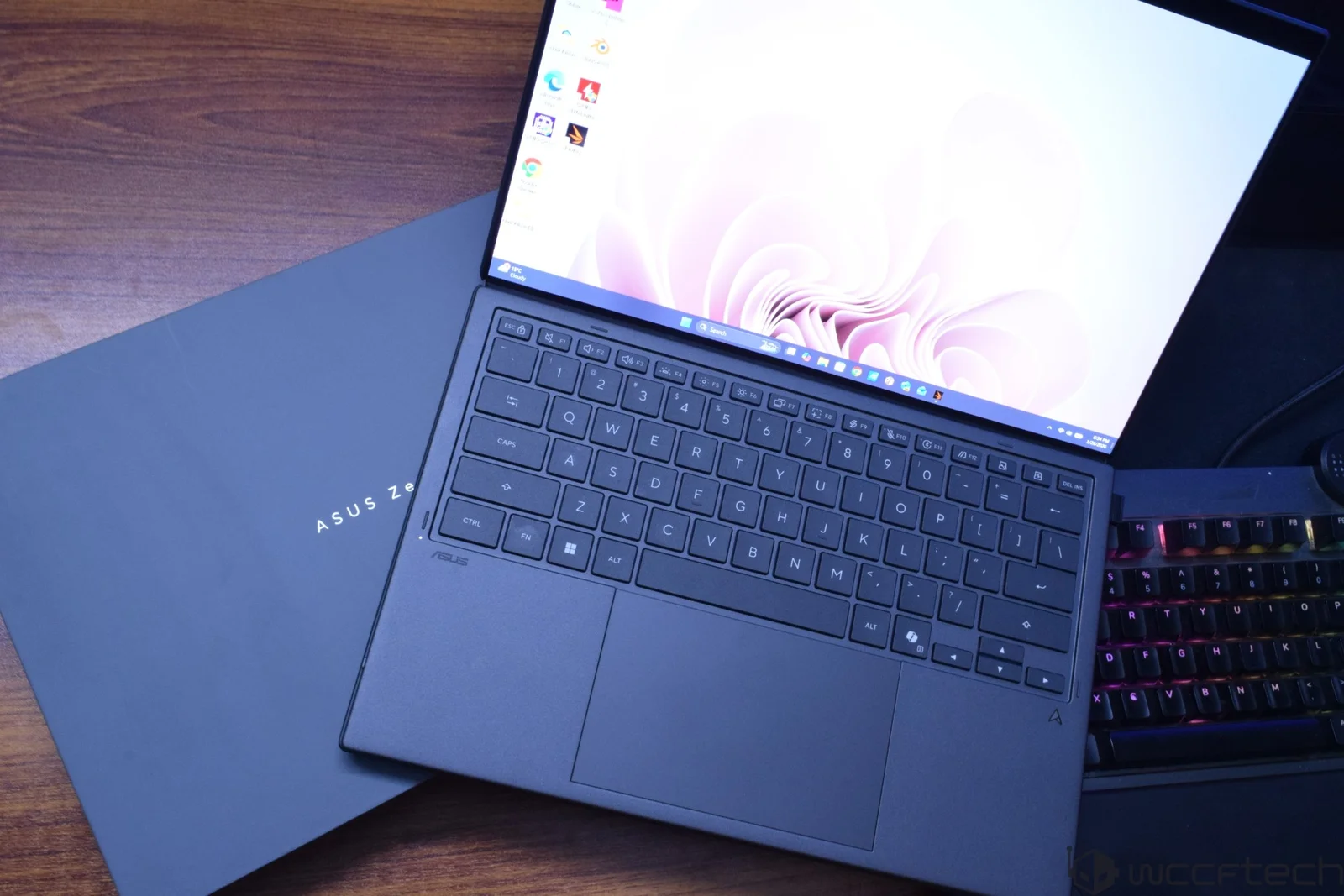
Intel’s Panther Lake X9 388H arrives in the ASUS Zenbook Duo 2026 as a 16‑core hybrid CPU (4 P-Cores, 8 E-Cores, 4 LP-E cores) with an Arc B390 Xe3 iGPU and an NPU5, delivering strong single- and multi‑core performance, solid AI/GPU benchmarks, and high memory bandwidth on 32 GB LPDDR5X at 9600 MT/s. The laptop pairs this with a 1 TB SSD, dual 14" 3K OLED displays at 144 Hz, and a 99 Whr battery in a refined dual‑screen chassis. In practice it mostly stays under 40 W, with peak stress occasionally hitting ~69 W, and tasks like office work can surpass 22 hours of battery life, gaming around 4 hours (brightness at 60%), and video playback over 30 hours with the second screen off. Thermals show throttling under heavy load (70–80 °C range) despite a dual‑fan cooling system, but the design’s hinge and cooling keep the experience premium. Benchmarks place the X9 388H ahead in many synthetic tests (CPU, memory, AI suites) and the Arc B390 iGPU tops several GPU tests, signaling a compelling if power‑hungry, office‑friendly hybrid that leans into power efficiency and AI acceleration alongside its strong CPU/GPU performance.