Steam's December update has transitioned the Windows client to a fully 64-bit version, enhancing stability, memory access, and performance, while also introducing improvements to Friends and Chat features, hardware support, and controller configurations.
Microsoft has introduced a new lightweight, open-source command-line text editor called 'Edit' in Windows 11 versions 25H2 and 24H2, addressing the lack of a default CLI editor on 64-bit Windows. The update also includes multi-monitor notification support, but some features like Administrator Protection are still pending.
Debian 13 "Trixie" is expected to ship with RISC-V 64-bit support, according to an update from Debian's release team. While RISC-V 64-bit is not yet an official architecture, it is making good progress and is expected to be included in the Debian 13 release in a year and a half to two years. The open-source ecosystem for RISC-V 64-bit is expected to be more mature by then.
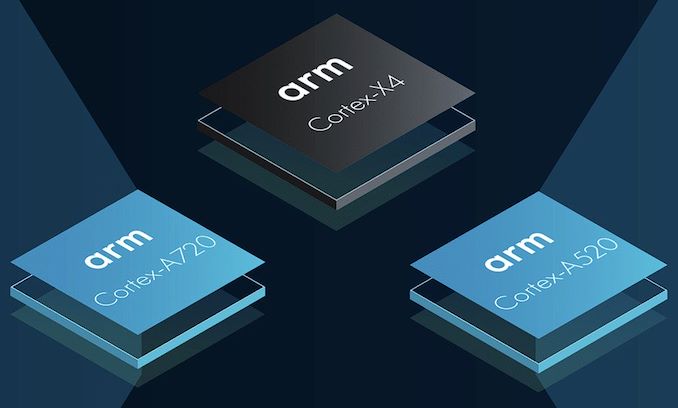
ARM has launched its first lineup of CPU core designs that are exclusively 64-bit, which is likely to push Android phone makers towards 64-bit only devices. The new Cortex-X4, Cortex-A720, and Cortex-A520 offer improved performance and power efficiency, while the Immortalis-G720, Mali-G720, and Mali-G620 GPU designs introduce a deferred vertex shading pipeline that uses less bandwidth. The new ARM range effectively pushes Android phone makers to upgrade to pure 64-bit SoCs or risk being left behind.
Arm has unveiled its latest set of CPU cores, including the flagship Cortex-X4, mid-core Cortex-A720, and little-core Cortex-A520, all designed to push efficiency and performance while moving entirely to the AArch64 64-bit instruction set. The latest CPU designs from Arm are also designed to align with the ongoing industry-wide drive towards improved security. Arm's latest DynamIQ Shared Unit, DSU-120, offers support for up to 14 CPU cores in a cluster, which opens the door to a significant number of different CPU core combinations. Cortex-X4 offers upwards of a 40% reduction in power consumption versus Cortex-X3, while Cortex-A720 and A520 save 20-22% over their respective predecessors.
Intel has released a whitepaper proposing the removal of all pre-x86_64 features from x86 CPUs, including 16 and 32-bit modes, rings 1 and 2, and other low-level I/O features. The system would boot straight into 64-bit mode, which Intel believes is what most users use anyway. However, current 64-bit operating systems would not be compatible with this new boot procedure and low-level features. This proposal is reminiscent of Intel's failed Itanium architecture, and it remains to be seen how AMD will respond.
Intel has released a whitepaper and specification for their proposal on "X86-S" as a 64-bit only x86 architecture, which would require booting CPUs directly into 64-bit mode and removing legacy modes. Intel is still investigating the 64-bit mode-only architecture and hopes to solicit industry feedback while exploring it. Those wanting to run legacy 32-bit operating systems would have to rely on virtualization.