
Mass Grave in Cambridge Sheds Light on Viking-Saxon Turmoil, Highlighted by a 6'5" Skeleton with a Healing Skull Hole
TL;DR Summary
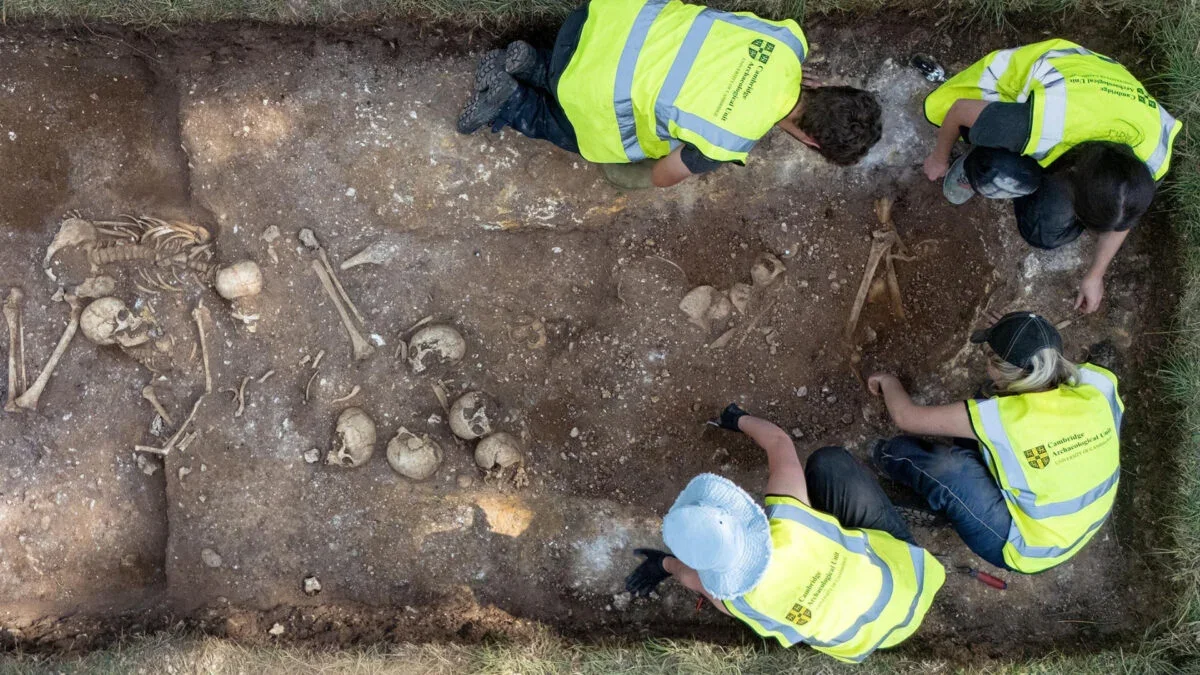
Archaeologists near Cambridge, England, uncovered a roughly 4-by-1 meter mass grave dating to about 772–891 CE containing at least 10 skulls, four complete skeletons, and disarticulated remains, suggesting violence tied to Saxon–Viking conflicts and possibly mass execution or display. One exceptionally tall man (about 6'5") died with a healing skull hole from trepanation, hinting at head trauma or medical treatment. The exact context remains unclear, but researchers plan health, ancestry, and kinship analyses and aim to reconstruct the remains to better estimate the death toll and identities of those interred.
- A Giant, 10 Skulls, and Rope-Bound Corpses: This Viking-Era 'Execution Pit' Has Stories to Tell Gizmodo
- Wandlebury's Viking-era mass grave finds include trepanned skull BBC
- News - 1,100-Year-Old Burial Pit Unearthed in Cambridgeshire Archaeology Magazine
- Discovery of Viking-era man’s skull points to evidence of world’s first surgical procedure New York Post
- Cambridge students unearth possible execution pit RTE.ie
Reading Insights
Total Reads
1
Unique Readers
1
Time Saved
17 min
vs 18 min read
Condensed
97%
3,506 → 90 words
Want the full story? Read the original article
Read on Gizmodo