
Revolutionary AI Brain Implants Enable Unprecedented Communication for Paralyzed Patients
TL;DR Summary
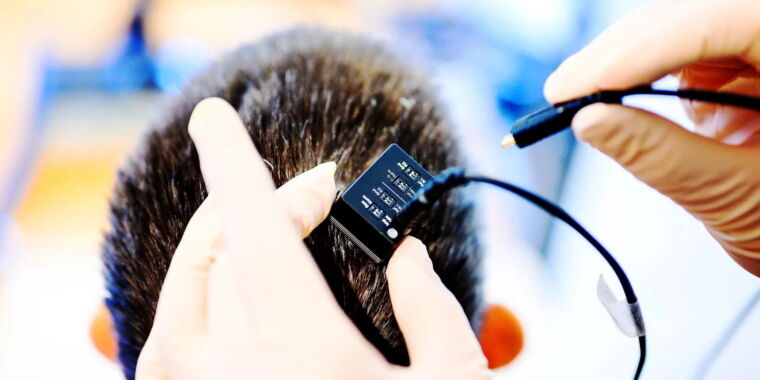
Two women with paralysis caused by ALS and stroke have regained the ability to communicate through brain implants that decode their intended speech at a rate of 62 and 78 words per minute, respectively. The brain-computer interface (BCI) technology, developed by separate teams at Stanford University and UC San Francisco, uses artificial neural networks to translate neural activity associated with facial movements into words displayed on a screen. While slower than natural conversation, this advancement brings us closer to restoring real-time speech for paralyzed individuals and opens possibilities for future applications of BCIs in everyday life.
Topics:top-news#artificial-intelligence#brain-implants#communication#neural-prosthetics#paralysis#technology
- AI-powered brain implants help paralyzed patients communicate faster than ever Ars Technica
- In big breakthrough, AI converts brain waves to speech, helps paralysed woman speak again HT Tech
- Paralyzed Woman 'Speaks' with Brain Signals Turned into Talking Avatar in World First Good News Network
- Brain implants help disabled to speak Associated Press
- Brain-to-Text Technology Is About More Than Musk HT Tech
Reading Insights
Total Reads
0
Unique Readers
1
Time Saved
3 min
vs 4 min read
Condensed
86%
670 → 96 words
Want the full story? Read the original article
Read on Ars Technica