
Advancements in Nanoscale Light Sources: Unconventional Antenna Placement
TL;DR Summary
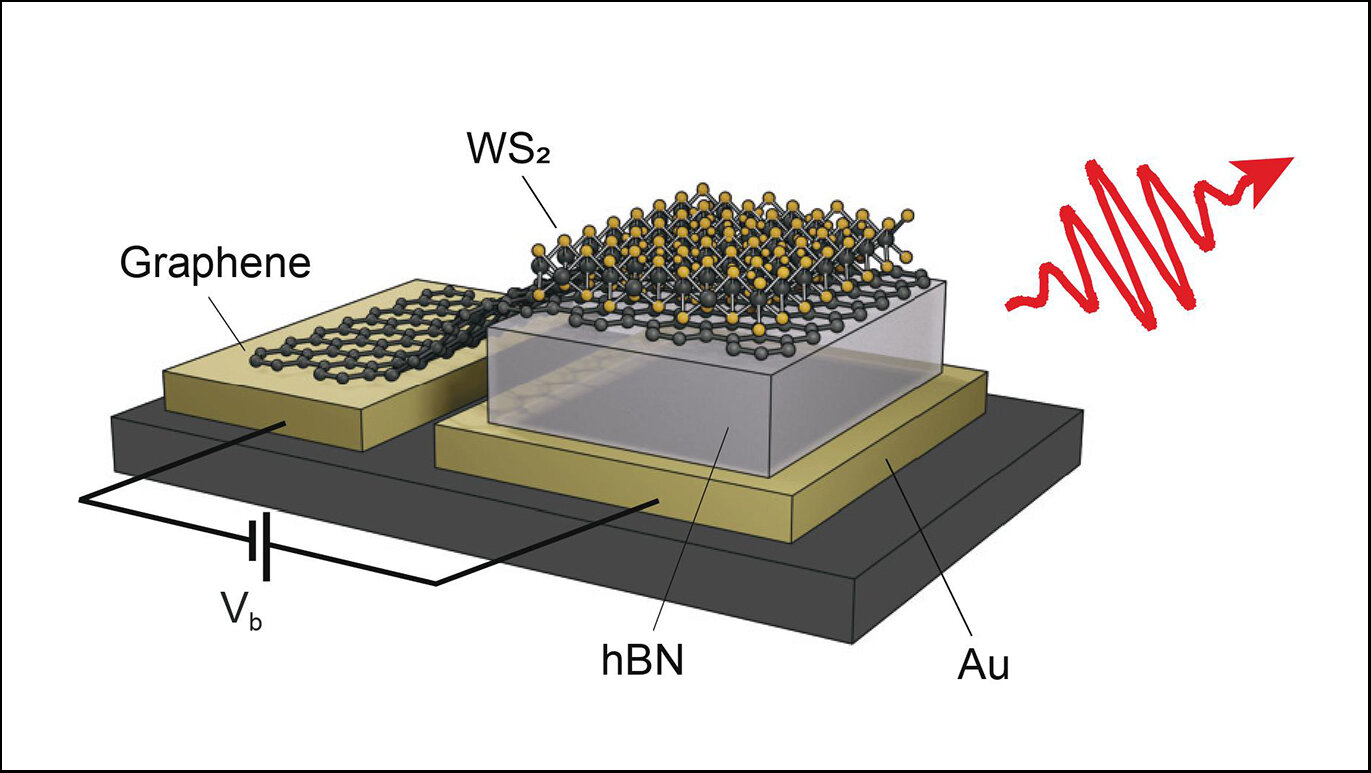
Researchers at ETH Zurich have discovered a new mechanism for creating efficient nanoscale light sources by placing a semiconductor material outside the tunnel junction. By experimenting with the placement of tungsten disulfide, the researchers found that the semiconductor acted as an antenna, absorbing and re-emitting the energy created in the tunnel junction. This unexpected positioning resulted in improved light emission, although further improvements are needed. If successful, these nanoscale light sources could be a thousand times smaller than the wavelength of the light they produce, opening up new applications in data transfer and other technologies.
Topics:science#antenna#nanoscale-light-sources#quantum-mechanics#science-and-technology#semiconductor-material#tunnel-junction
- Researchers create antenna for nanoscale light sources using unusual placement of semiconductor material Phys.org
- Pioneering Quantum Simulations on Photonic Chips: A New Era in Quantum Computing SciTechDaily
- Photonic chip transforms single beam of light into multiple beams, each with a panoply of different properties Phys.org
Reading Insights
Total Reads
0
Unique Readers
1
Time Saved
4 min
vs 5 min read
Condensed
88%
814 → 95 words
Want the full story? Read the original article
Read on Phys.org