
Autistic and non-autistic faces encode emotions in different languages.
TL;DR Summary
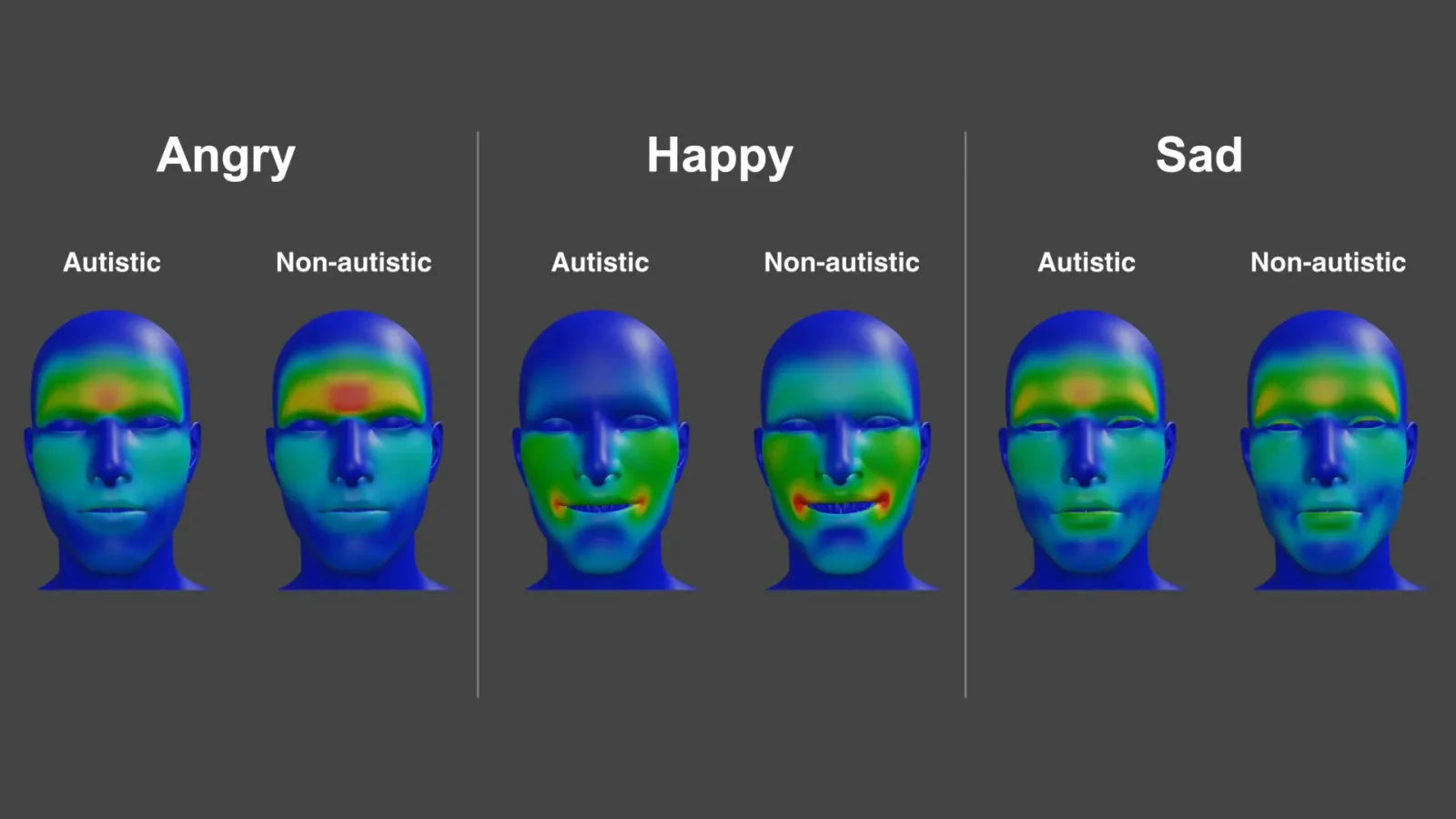
A Birmingham-led study using advanced facial motion tracking found autistic and non-autistic people express basic emotions with different facial cues, leading to mutual misinterpretations. Autistic expressions tend to be more varied and rely more on mouth movements, with subtler smiles and distinct sadness cues; alexithymia further blurs these expressions. The researchers frame emotional expression as two complementary 'languages' rather than a deficit and call for more work on cross-language understanding.
Reading Insights
Total Reads
0
Unique Readers
2
Time Saved
5 min
vs 6 min read
Condensed
94%
1,077 → 70 words
Want the full story? Read the original article
Read on ScienceDaily