
New Drug Shows Promise in Reducing Breast Cancer Risk in Women
TL;DR Summary
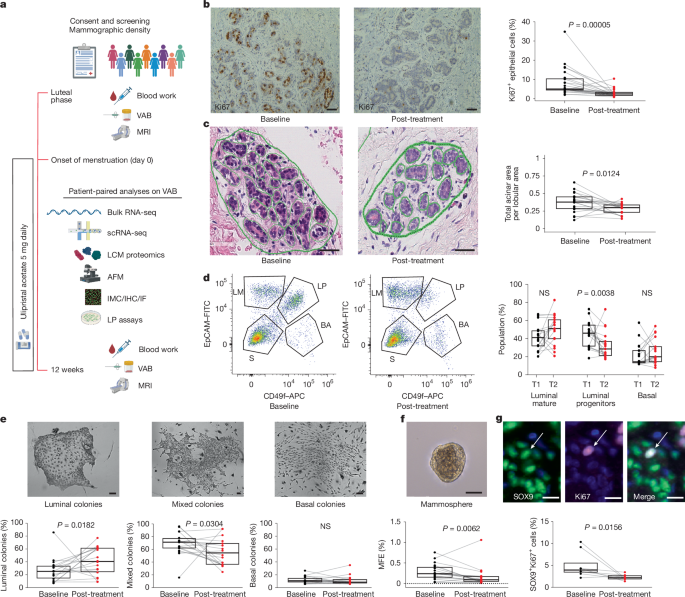
The BC-APPS1 study demonstrates that 12 weeks of ulipristal acetate, an anti-progestin, reduces breast epithelial proliferation, luminal progenitor cell activity, and mammographic density in women at increased breast cancer risk, partly by remodeling the extracellular matrix and decreasing tissue stiffness, suggesting potential for breast cancer prevention.
Topics:health#anti-progestin-therapy#breast-cancer#health-and-medicine#mammographic-density#stroma-remodeling#ulipristal-acetate
Reading Insights
Total Reads
0
Unique Readers
0
Time Saved
77 min
vs 78 min read
Condensed
100%
15,413 → 46 words
Want the full story? Read the original article
Read on Nature