Motion, a Y Combinator-backed startup, has raised $38 million in Series C funding to develop an integrated suite of AI agents aimed at small and midsized businesses, resembling an 'Office of AI' that consolidates various functions like scheduling, sales, and support into a unified platform, with the goal of building a comprehensive, Microsoft Office-like AI ecosystem.

Y Combinator has filed an amicus brief supporting Epic Games in the legal dispute with Apple, arguing that the App Store's policies and fees hinder startup growth and innovation, and urging the court to deny Apple's appeal to maintain rules allowing alternative payment methods.
Pig.dev, a Y Combinator startup working on AI agents for Windows, pivoted from developing desktop automation tech to creating a cache system for AI tasks after facing customer rejection. The shift was inspired by the challenge of long-term computer use for AI, with other companies like Microsoft also advancing in this area. The founder now focuses on offloading repetitive tasks to improve AI reasoning, viewing computer use as a key area for AI development.
Paul Graham, co-founder of Y Combinator, refuted claims that Sam Altman was forced to resign from Y Combinator in 2019 due to conflicts of interest. Graham clarified that Altman chose to focus on OpenAI when it established a for-profit subsidiary, and Y Combinator would have supported him if he had chosen to remain. This contradicts reports suggesting Altman was pressured to leave due to prioritizing personal projects.
Sam Altman, CEO of OpenAI, has become a billionaire through successful startup investments in companies like Reddit, Stripe, and Helion, despite having no equity in OpenAI. His investments, estimated to be worth $1 billion, have made him a new addition to Forbes' list of the world's richest people. Altman's bold bets and keen eye for talent have propelled his success, with his investment portfolio including a mix of smaller speculative bets and larger concentrated positions. His investments are seen as a means to seed the ecosystem and maximize the chances of OpenAI's success, aligning with his vision for the future.
Y Combinator's Winter 2024 Demo Day showcased a surge in AI startups, with 86 AI startups in the cohort. Notable AI startups include Hazel, which automates government contracting processes; Andy AI, an AI-powered scribe for home nurses; Precip, an AI-powered weather forecasting platform; Maia, an AI-powered couples coaching program; and Datacurve, which provides expert-quality data for training generative AI models. These startups aim to address various challenges using AI technology, reflecting the growing interest and investment in AI innovation.
Y Combinator's Winter 2024 Demo Day showcased a diverse range of startups, including AI-powered music generation, nonprofit banking platforms, and AI tools for grant applications and legal document review. The event featured companies addressing various sectors such as fintech, healthtech, and customer support, with a focus on leveraging AI to streamline processes and solve industry-specific challenges. Notable favorites included Aidy, Givefront, Buster, Numo, and Intercept, reflecting the growing interest in AI applications across different industries.
San Francisco-based conversational AI startup Vocode, founded in 2023, has raised $3.25 million in seed funding without a formal pitch deck. The company, which offers open-source products for developers to create conversational AI tools, was initially admitted to Y Combinator without a business plan. The funding, secured from investors including Y Combinator, Base10, GV, Gradient, Accel, and Liquid2, will be used to expand the team and further integrate with tech companies in the US.
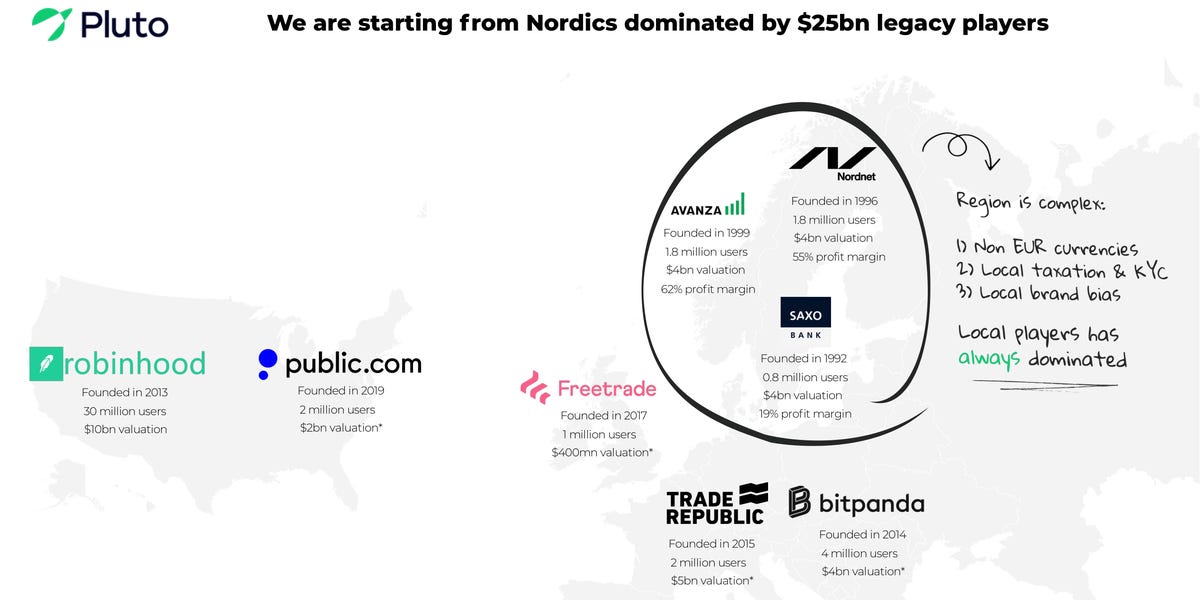
Y Combinator-backed fintech startup Pluto Markets has raised $2.6 million in fresh funds, securing an EU investment license as it aims to disrupt the retail trading market in Europe. The Copenhagen-based company, founded in 2021, offers brokerage services across the Nordics and plans to focus on non-Euro markets. Unlike its peers, Pluto secured an EU-wide investment license before raising significant capital, emphasizing a lean approach. The funding will be used to expand the team and scale operations in the Nordics before targeting other non-Euro markets.
Microsoft is partnering with venture capitalists (VCs) to provide select startups with free access to Azure cloud resources for developing AI models. The updated Microsoft for Startups Founders Hub program will offer high-end Nvidia-based GPU virtual machine clusters for training and running generative models. Y Combinator and its community of startup founders will be the first to gain access to these clusters, with plans to expand access to other startup investors and accelerators in the future. While the access will be time-bound, Microsoft aims to lower the barrier for startups to train and run AI models, positioning the offering as unique in the AI ecosystem.
Venture capitalist Paul Graham, co-founder of Y Combinator, has suggested that the effectiveness of remote work fades over time, which could explain why some company leaders have grown less enamoured with it. Graham said remote work initially works if a system is already healthy from in-person work, and partly because it seemed to solve recruiting, which is always a bottleneck. He acknowledged that there will continue to be remote-first companies, but remote-first won’t be the default.