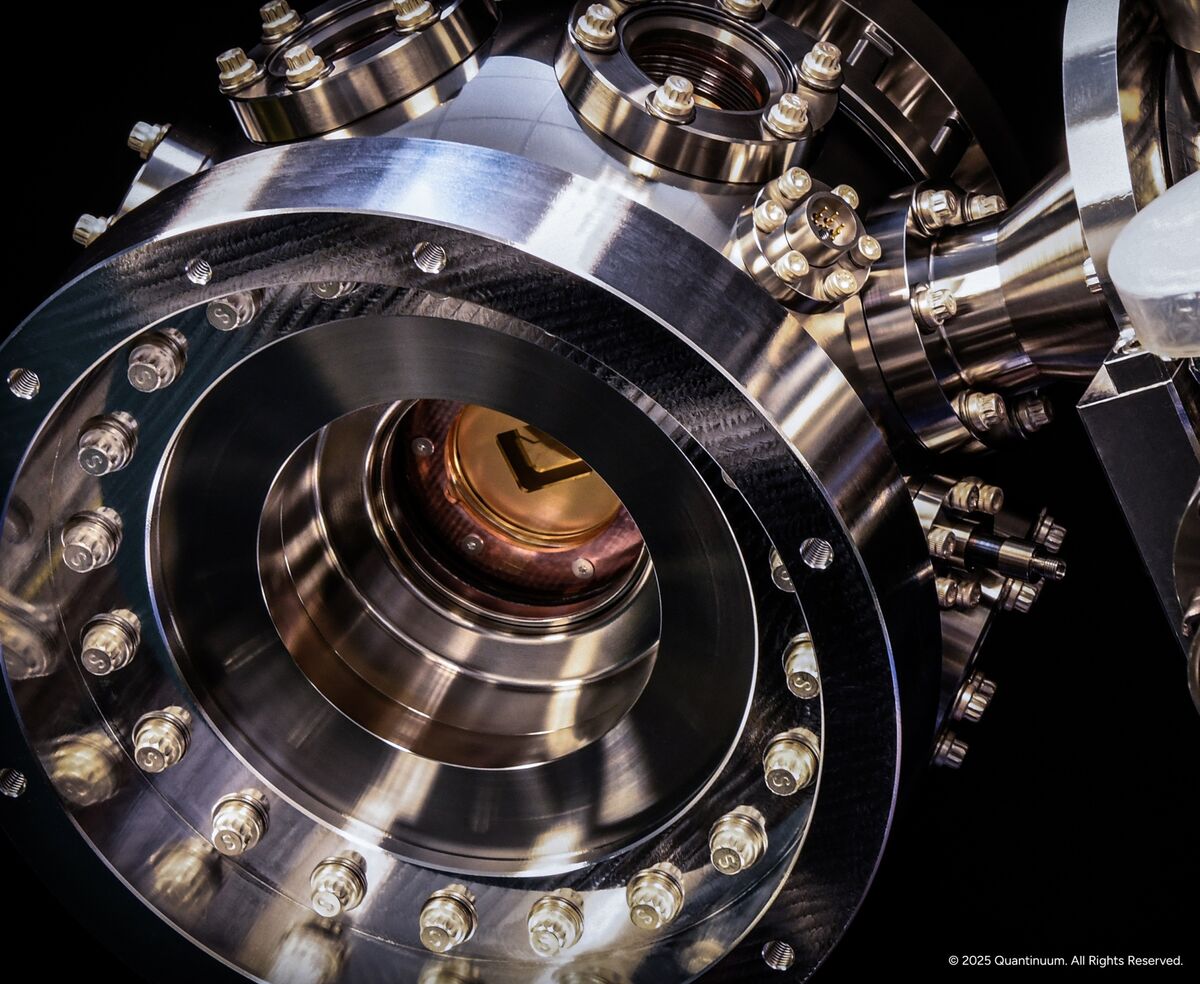
U.S. quantum computing stocks surged following Quantinuum's announcement of its new Helios quantum computer, which features significant advancements in qubit technology, boosting investor confidence in the sector amid ongoing earnings reports and industry progress. IonQ, Rigetti, D-Wave, and Quantum Computing Inc. saw notable gains, with IonQ reporting record revenues and raising guidance, though the sector remains highly volatile and speculative.
Quantinuum, a quantum computing joint venture of Honeywell, raised $600 million at a $10 billion valuation, with Nvidia and other major investors participating, marking a significant step in the quantum industry and hinting at potential IPO plans for 2027.
Nvidia's venture arm has invested in quantum computing company Quantinuum, valuing it at $10 billion, as part of a $600 million funding round, highlighting Nvidia's strategic move into quantum technology to enhance its computing capabilities and prepare for future disruptions in the industry.
This week in quantum computing, UCLA and UC Riverside developed a room-temperature quantum system using tantalum sulfide, reducing energy costs. Quantinuum is seeking a funding round that could value it at $10 billion, while IonQ gained Morgan Stanley as a major investor. Other advancements include Rigetti installing a quantum system at Montana State University and a German-led project testing quantum algorithms for rail network optimization, highlighting ongoing progress and investment in the field.
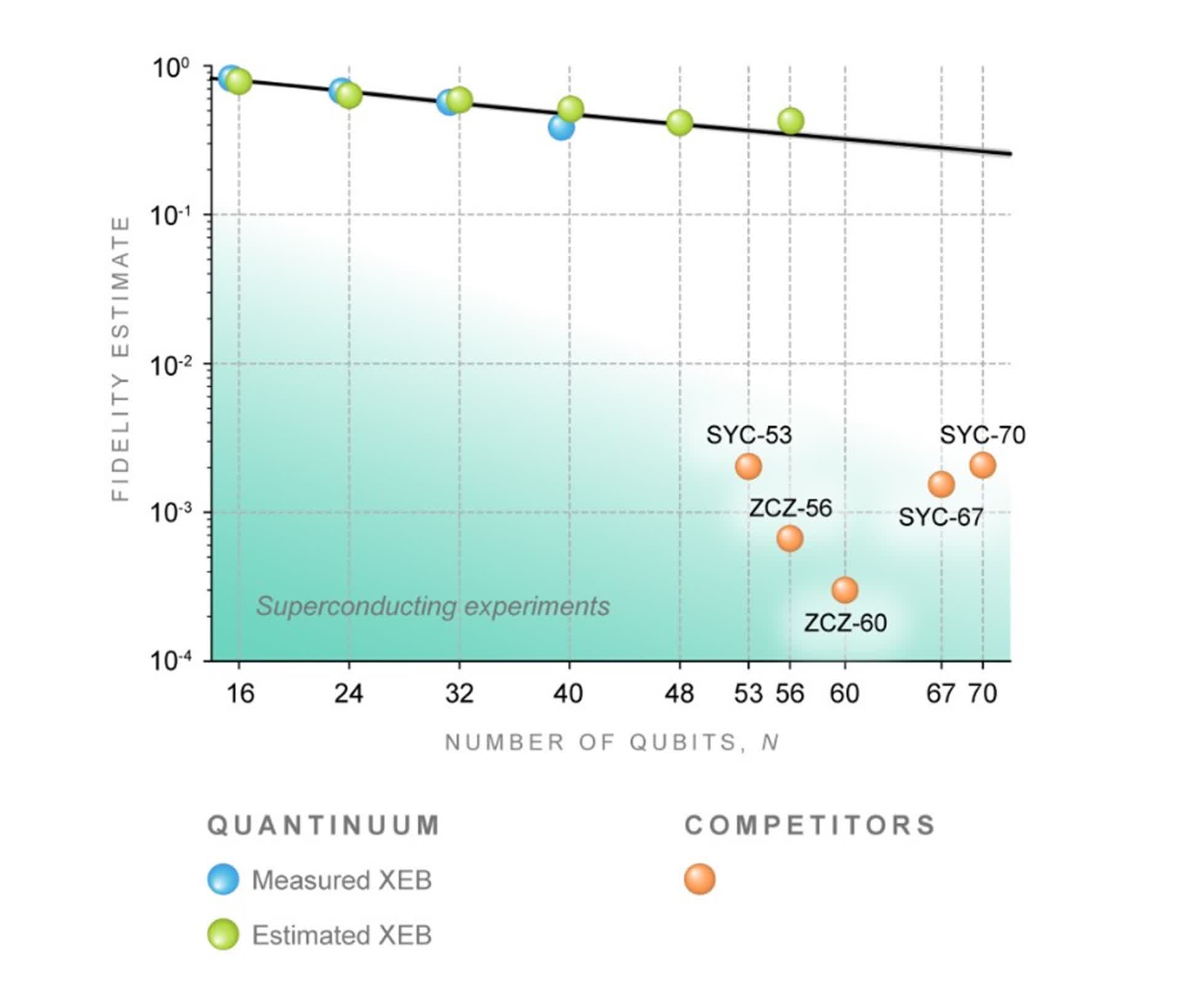
Quantinuum's new 56-qubit H2-1 quantum computer has surpassed Google's Sycamore by achieving a 100-fold improvement in quantum supremacy. The H2-1 demonstrated significant advancements in error correction, achieving a linear cross entropy benchmark (XEB) score of ~0.35 and creating highly reliable logical qubits. This milestone represents a major step towards fault-tolerant quantum computing, with error rates up to 800 times lower than physical qubits. Quantinuum's results, published on arXiv, have not yet been peer-reviewed.
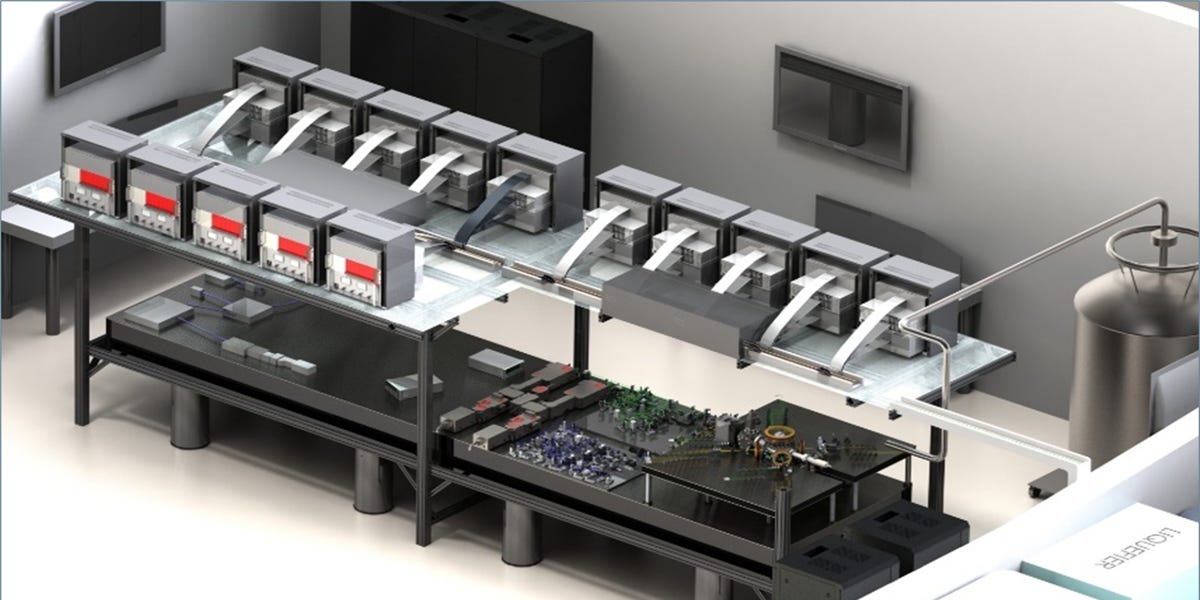
Quantinuum, a spinoff of Honeywell, unveiled its 32-qubit, second-generation quantum computer, H2, which it claims is the most precise quantum computer ever built. The computer is spread across two 100-square-foot platforms and uses lasers to cool and control the chamber the qubits are in. While skeptics have questioned the feasibility of quantum computing at scale, Russell Stutz, the executive responsible for the design and build of these computers at Quantinuum, believes it's only a matter of time before they reach their potential and become far more powerful than today's supercomputers.