
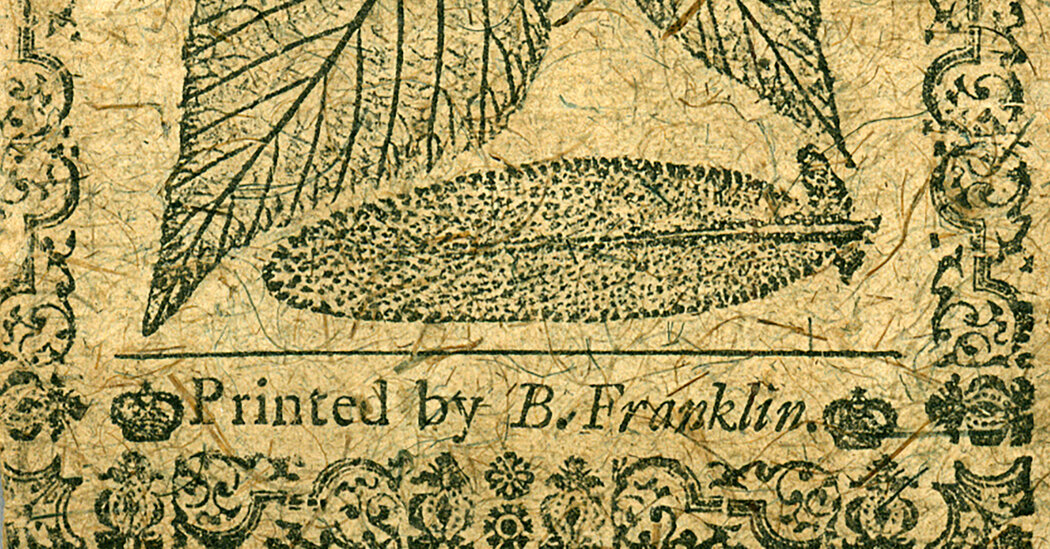
Benjamin Franklin's Lessons in Fighting Counterfeiters
A recent study has shed light on Benjamin Franklin's innovations in printing techniques and currency design. Franklin, who won a contract to print £40,000 for Pennsylvania in 1731, experimented with various methods to combat counterfeiting. His use of intricate patterns, such as a sage leaf, on the money made it difficult to replicate. The study also revealed that Franklin's paper money contained flecks of mica, a substance not easily accessible to counterfeiters. Surprisingly, the researchers found that Franklin used graphite ink, which was uncommon for the time. The findings raise questions about Franklin's intentions and whether his innovations were primarily aimed at preventing counterfeiting or simply experimenting with new printing techniques.