
Oscar Pistorius, the former Paralympian convicted of murdering his girlfriend Reeva Steenkamp, has been released on parole and may fulfill his community service by performing tasks such as sweeping floors at his local church or directing parking. Pistorius, who has been living with his uncle since his release, has a range of service options to choose from, and his activities will be closely monitored by parole officers to ensure compliance. Neighbors and community members have mixed reactions to his return to the affluent suburb of Waterkloof in Pretoria.
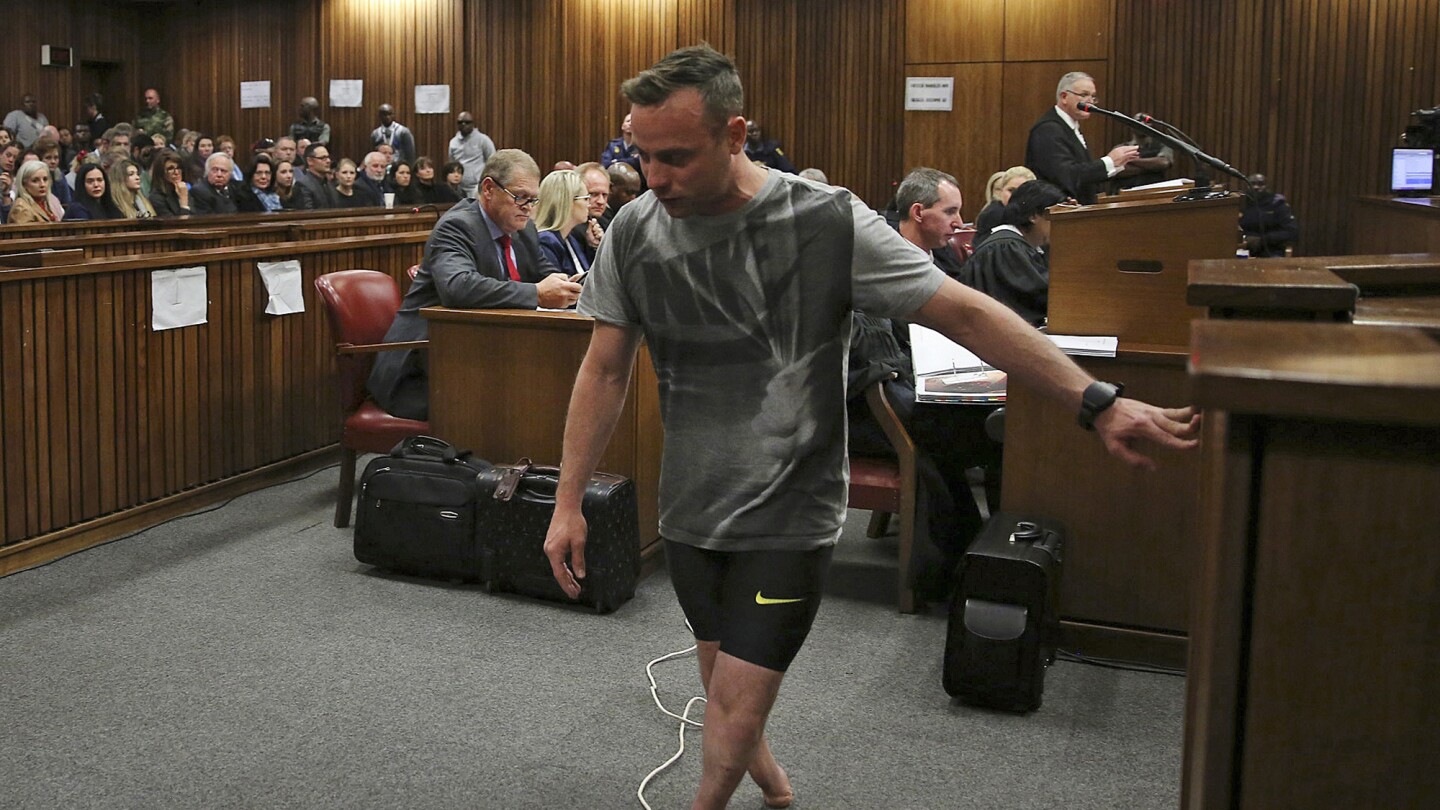
Oscar Pistorius, the South African Paralympic sprinter, was released on parole after serving nearly nine years for the murder of his girlfriend Reeva Steenkamp in 2013. Pistorius claimed he mistook Steenkamp for an intruder and shot her through a bathroom door, but prosecutors argued it was intentional following an argument. The Supreme Court of Appeal convicted him of murder, stating he acted recklessly and should have known the shooting would result in death. The final verdict did not conclusively determine if Pistorius intended to kill Steenkamp specifically.
Oscar Pistorius, the former Paralympic champion, was released on parole after serving half of his sentence for the murder of his girlfriend, Reeva Steenkamp, sparking debate in South Africa about the parole system and its implications for gender-based violence. South Africa faces a severe femicide problem, with high rates of violence against women and a woman being killed by her intimate partner every eight hours on average. Activists and organizations argue that perpetrators of such violence should not be eligible for parole, emphasizing the need for full sentences to respect victims. Despite parole conditions and rehabilitation efforts, there is widespread dissatisfaction and fear among women in South Africa, who face an ever-present threat of violence.
Oscar Pistorius, the South African Paralympic athlete convicted of murdering his girlfriend Reeva Steenkamp, has been released on parole after serving less than half of his 13-year sentence. His early release and the conditions of his imprisonment, which included a private cell and garden, have sparked outrage and are seen as a symbol of injustice, particularly in a country grappling with high rates of gender-based violence. Advocates and the public are concerned that Pistorius' release sends the wrong message about the severity of domestic abuse crimes, while Steenkamp's legacy is overshadowed by the infamy of her killer.
Oscar Pistorius, the former Paralympic and Olympic sprinter, has been released on parole after serving half of his 13-year sentence for the murder of his girlfriend Reeva Steenkamp in 2013. He will remain under parole conditions until 2029, including attending programs on gender-based violence and anger management therapy. The release has been met with criticism from Steenkamp's mother, who questions the extent of Pistorius' rehabilitation and expresses concern for the safety of other women.
Oscar Pistorius, the former Paralympic champion known as "Blade Runner," has been released on parole after serving half of his 13-year and five-month sentence for the murder of his girlfriend Reeva Steenkamp in 2013. He will serve the remainder of his sentence under house arrest at his uncle's secured mansion. Despite his release, Steenkamp's mother continues to dispute Pistorius's claim that he mistook her daughter for a burglar, believing he intentionally killed her. Pistorius's initial conviction of culpable homicide was later appealed and changed to murder, resulting in an increased sentence. His parole comes with concerns for his safety due to potential retaliation.
Oscar Pistorius, the South African Paralympian convicted of murdering his girlfriend Reeva Steenkamp in 2013, is set to be released on parole after serving nearly 11 years of his 13-year sentence. Pistorius claimed he mistook Steenkamp for an intruder, but the prosecution argued he killed her in cold blood. His parole conditions include a ban on alcohol and media interviews, and mandatory participation in programs, including therapy for gender-based violence issues. The Steenkamp family has expressed concerns about his rehabilitation and remorse.
Oscar Pistorius, the former Paralympic champion who was convicted of murdering his girlfriend Reeva Steenkamp in 2013, is set to be released on parole after serving nearly nine years of his sentence. He will live under strict conditions in a guarded estate belonging to his uncle in Pretoria, facing a future of heightened security concerns and mandatory participation in anger-management and gender-based violence programs. Despite his release, Pistorius will be closely monitored until the end of his sentence in 2029 and will have to contend with the lasting public and personal repercussions of his actions.
Oscar Pistorius, the former Paralympic champion convicted of murdering his girlfriend Reeva Steenkamp, has been warned of potential assassination threats following his release from prison. He will reside in a heavily secured compound owned by his uncle in Pretoria, South Africa. Despite the threats, which are believed to come from figures sympathetic to Steenkamp's family, Pistorius's parole conditions include restrictions on profiting from the case, media interviews, and requirements for anger management training. His parole will last until at least 2029.