
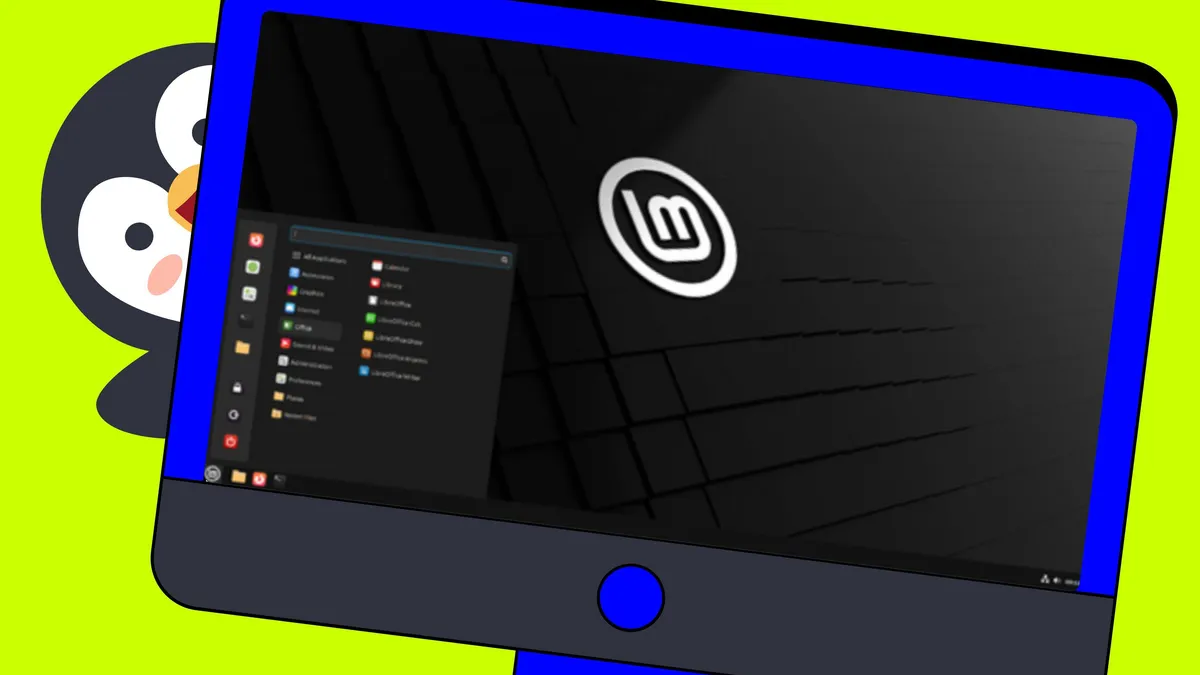
The article reviews five Linux distributions suitable for home office desktops, highlighting openSUSE for its user-friendly configuration tools, Fedora Silverblue for its atomic and reliable system updates, Ubuntu LTS for its stability and hardware support, Linux Mint for its ease of use and backup features, and Zorin OS for its polished interface and customization options.
Despite most Linux distributions defaulting to GCC, Chimera Linux has successfully used LLVM/Clang as its exclusive toolchain for three years, targeting five CPU architectures. The project found LLVM's link-time optimization and security hardening features to be superior, and demonstrated that LLVM can effectively build Linux distributions. Daniel Kolesa presented at FOSDEM 2024 on this experience, and more information can be found on the Chimera Linux non-GNU distribution at Chimera-Linux.org.
Gentoo Linux has expanded its binary package offerings by introducing x86-64-v3 packages, catering to low-end/embedded systems and providing optimized performance for modern CPUs with AVX/AVX2, BMI2, FMA, and other newer instruction set extensions. Users can easily access these packages by replacing "x86-64" with "x86-64-v3" in their Portage sync URIs, aligning Gentoo with other distributions exploring or already providing x86-64-v3 packages.
GTK has merged new "unified" rendering code with a focus on Vulkan API support, encouraging Linux distributions to build with the Vulkan renderer. The NGL and Vulkan renderers, built from the same sources, offer improved anti-aliasing, fractional scaling support, arbitrary gradients, and broader DMA-BUF support. While not yet faster than the old OpenGL renderer, future improvements include HDR color handling, GPU path rendering, and off-the-main-thread rendering. The NGL renderer is now the default in GTK 4.13.6, with the option to revert to the old OpenGL renderer for "very old" hardware.
Linux 6.7 will introduce the ability to enable or disable 32-bit program support at boot-time, allowing Linux distributions to reduce their attack surface while still enabling users to run legacy software without recompiling the kernel. The new patches for Linux 6.7 will provide the option to toggle 32-bit support at boot-time, giving users the ability to enable it with a boot-time flag without rebuilding the kernel. Server administrators will also have the option to easily disable this support. These changes do not alter the default policy.