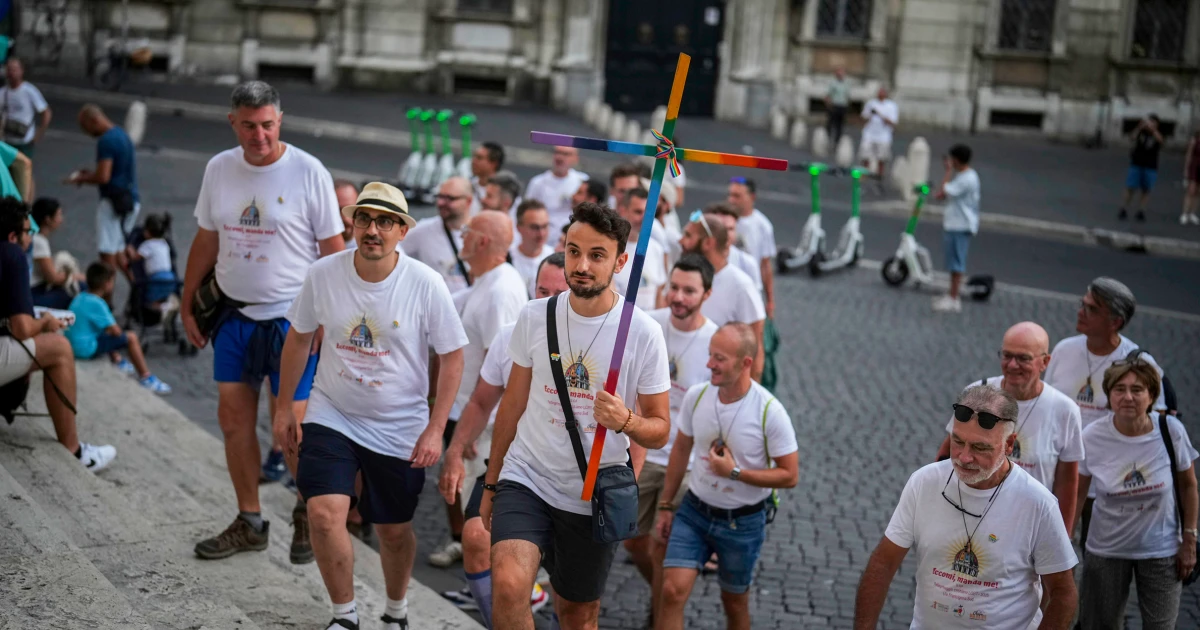
Hundreds of LGBTQ+ Catholics participated in a Holy Year pilgrimage to Rome, celebrating increased acceptance in the Catholic Church, largely attributed to Pope Francis's inclusive stance, despite official church teachings remaining unchanged.
Pope Francis has made a historic change to Vatican policy by allowing priests to bless same-sex couples, bringing hope of healing to LGBTQ Catholics who have faced institutional rejection. Some LGBTQ Catholics see this as a milestone towards inclusion and a way to ease tensions between their relationships and church teachings. However, others feel that the policy change falls short and fails to validate queer people unconditionally. While the announcement has triggered both healing and pain, it is seen as a step in the right direction for LGBTQ Catholics, with the potential for reconciliation and acceptance within their faith communities.
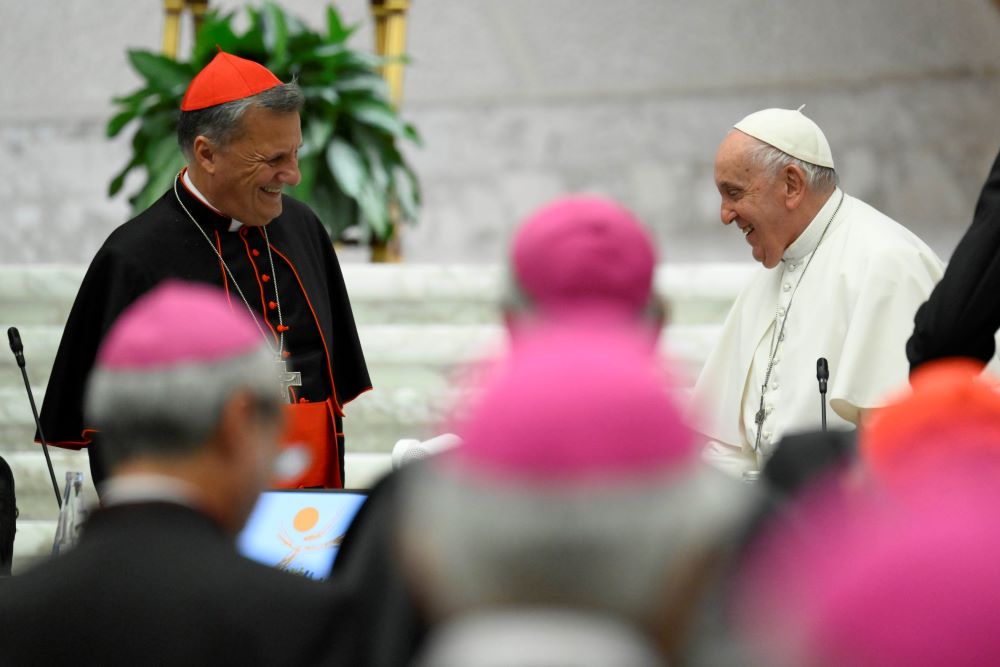
The interim report of the synod of bishops' synod on synodality has sparked debate and speculation about the direction of the Catholic Church. The removal of the term "LGBTQ" from the document and the cautious language regarding women's ordination have disappointed some, while others see it as reflecting the majority's views. The report also includes proposals for structural reforms that have been previously rejected. The synod is seen as a platform for shaping the conversation on progressive reform within the Church, with some advocating for a pastoral approach that prioritizes practice over doctrine. However, concerns have been raised about the focus on issues primarily relevant to affluent countries, rather than addressing the needs of the marginalized and persecuted. The synod's success or failure will be measured against Pope Francis' vision of synodality as a means to evangelize and serve the poor.
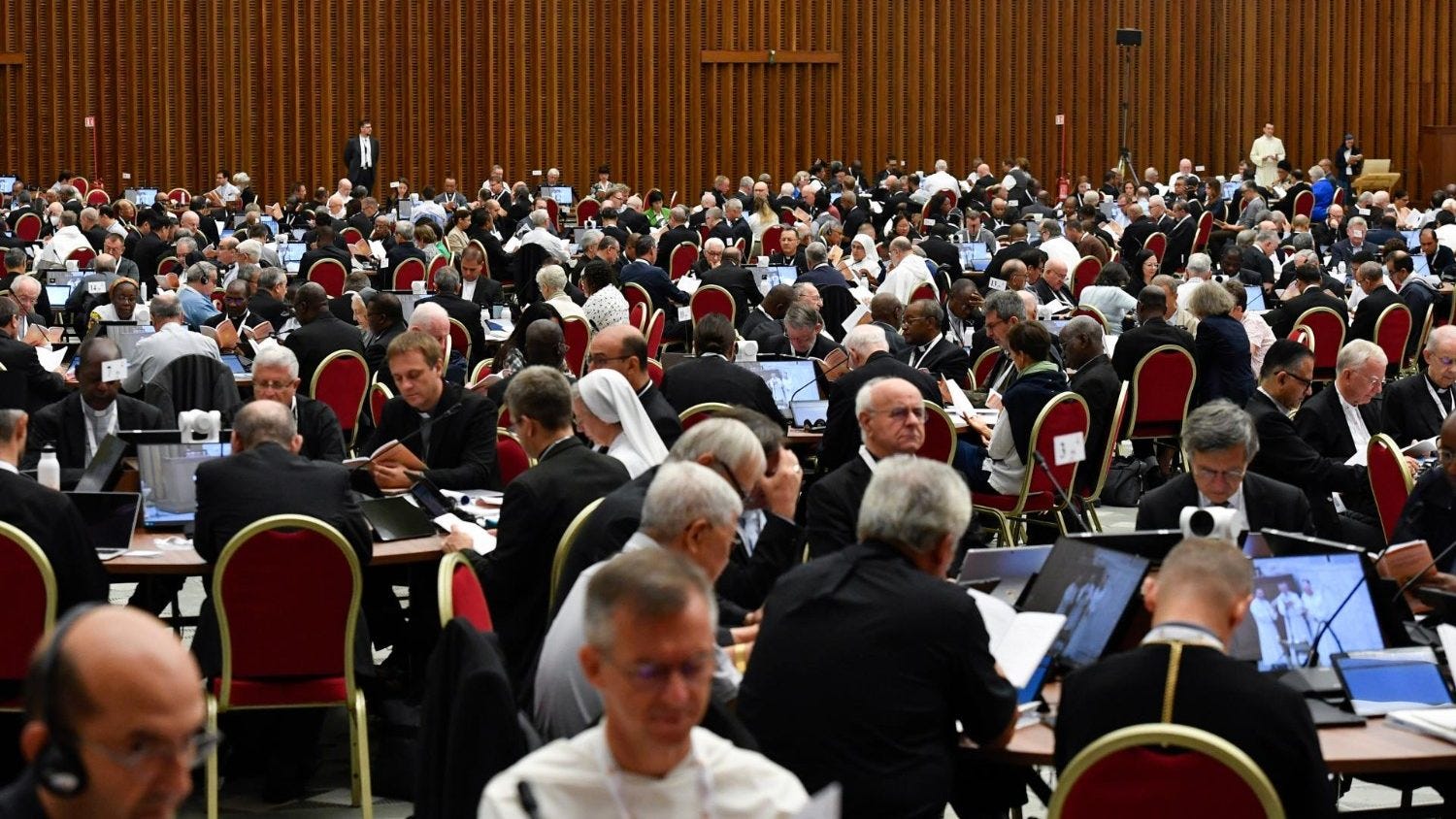
Pope Francis' Vatican summit on the future of the Catholic Church concluded without taking action on the ordination of women as deacons and without addressing the concerns of LGBTQ Catholics. The 41-page report approved at the summit called for further consideration of the possibility of women deacons at the next assembly of the Synod of Bishops in 2024. The report also highlighted the need for better inclusion of women in church leadership and the need to address employment injustices and unfair remuneration for women in the church. However, it did not use the terms "LGBT" or "gay" and did not explicitly address the concerns of LGBTQ Catholics. The report also proposed the creation of new structures to prevent clergy sexual abuse and discussed the issue of clerical celibacy.
Pope Francis has suggested that there could be ways to bless same-sex unions, in response to five conservative cardinals who challenged him to affirm church teaching on homosexuality. In a letter published by the Vatican, Francis stated that such blessings could be studied if they didn't confuse the blessing with sacramental marriage. This marks a reversal from the Vatican's current official position, which states that the church cannot bless gay unions. While Francis reiterated that matrimony is between a man and a woman, he emphasized the importance of pastoral charity, patience, and understanding. The issue of blessing same-sex unions could be dealt with on a case-by-case basis, without the need for fixed norms or protocols. LGBTQ+ advocates welcomed the pope's openness, seeing it as a step towards greater equality and recognition within the Catholic Church.
Pope Francis has suggested that there could be ways to bless same-sex unions, marking a reversal from the Vatican's current official position. In a letter to conservative cardinals who challenged him on church teaching regarding homosexuality, Francis stated that pastoral charity required patience and understanding, and priests should not solely deny, reject, or exclude. While he reiterated that matrimony is between a man and a woman, he acknowledged the need for discernment in forms of benediction that do not transmit a mistaken conception of marriage. LGBTQ+ advocates welcomed the pope's openness, seeing it as a step towards greater equality. The cardinals had published their questions ahead of a synod where LGBTQ+ Catholics and their place in the church are on the agenda.
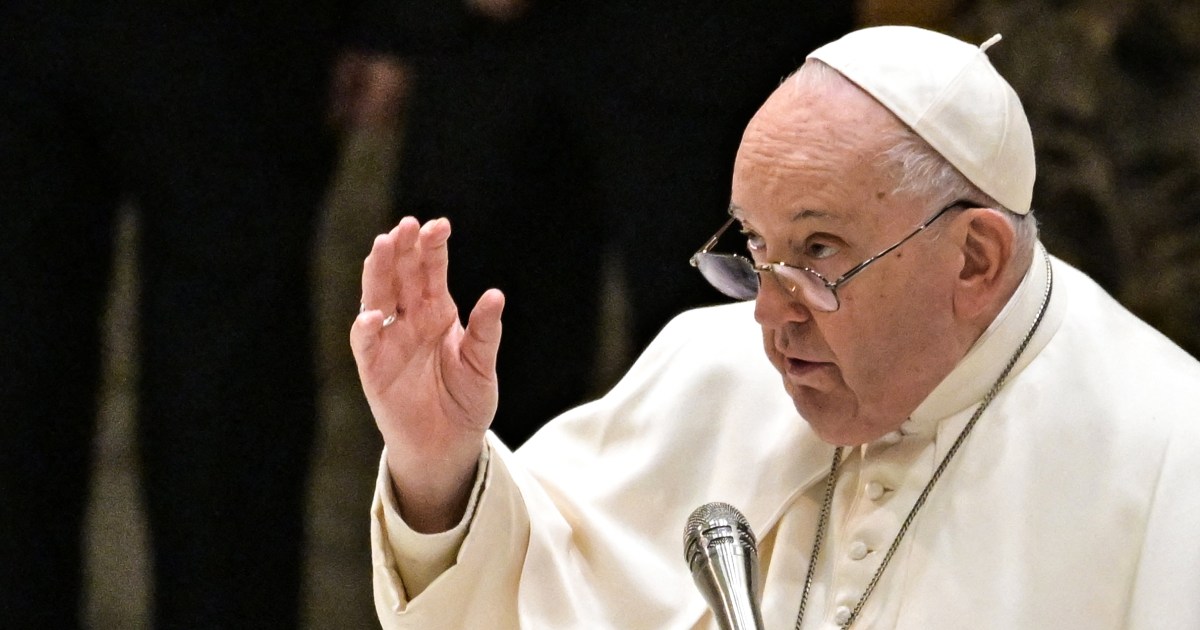
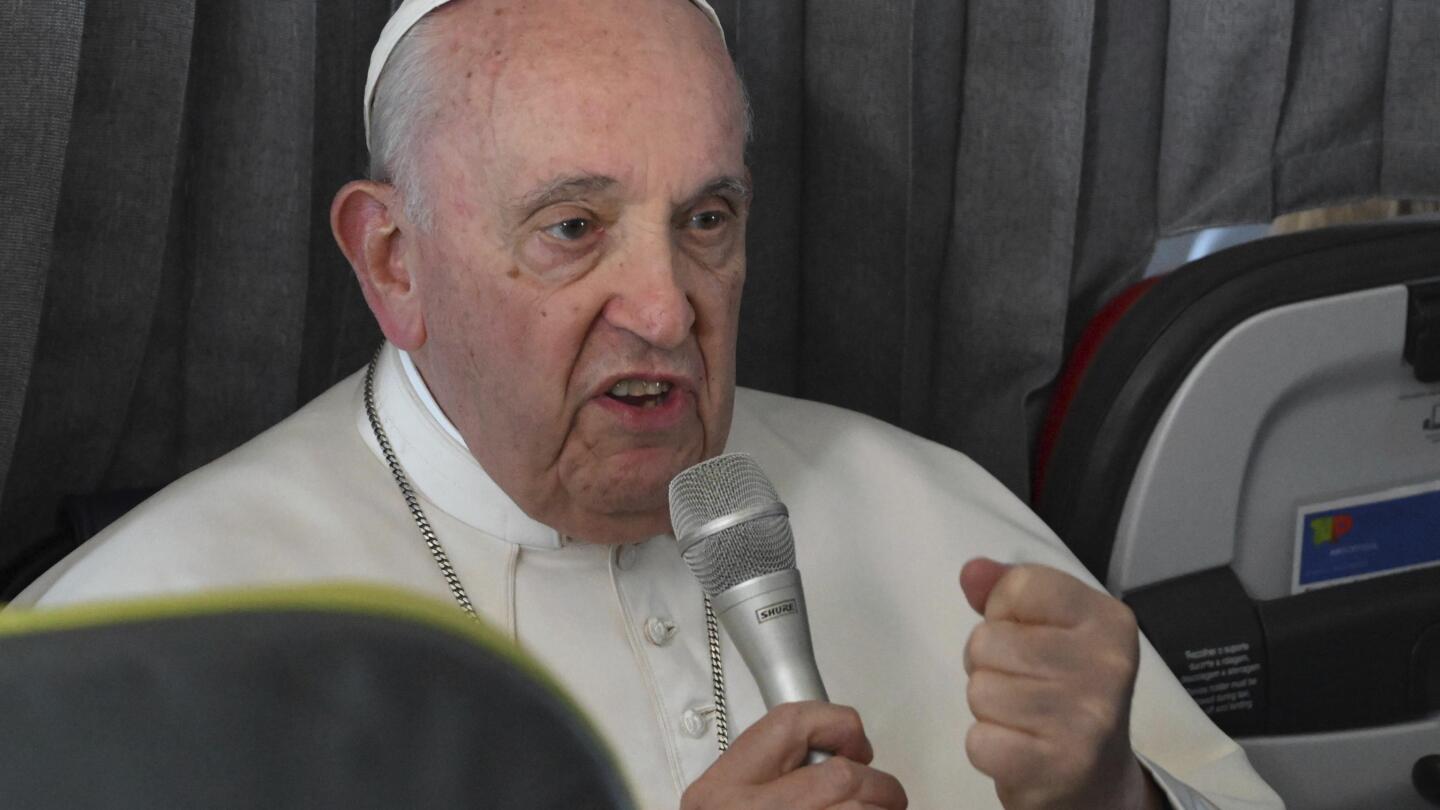
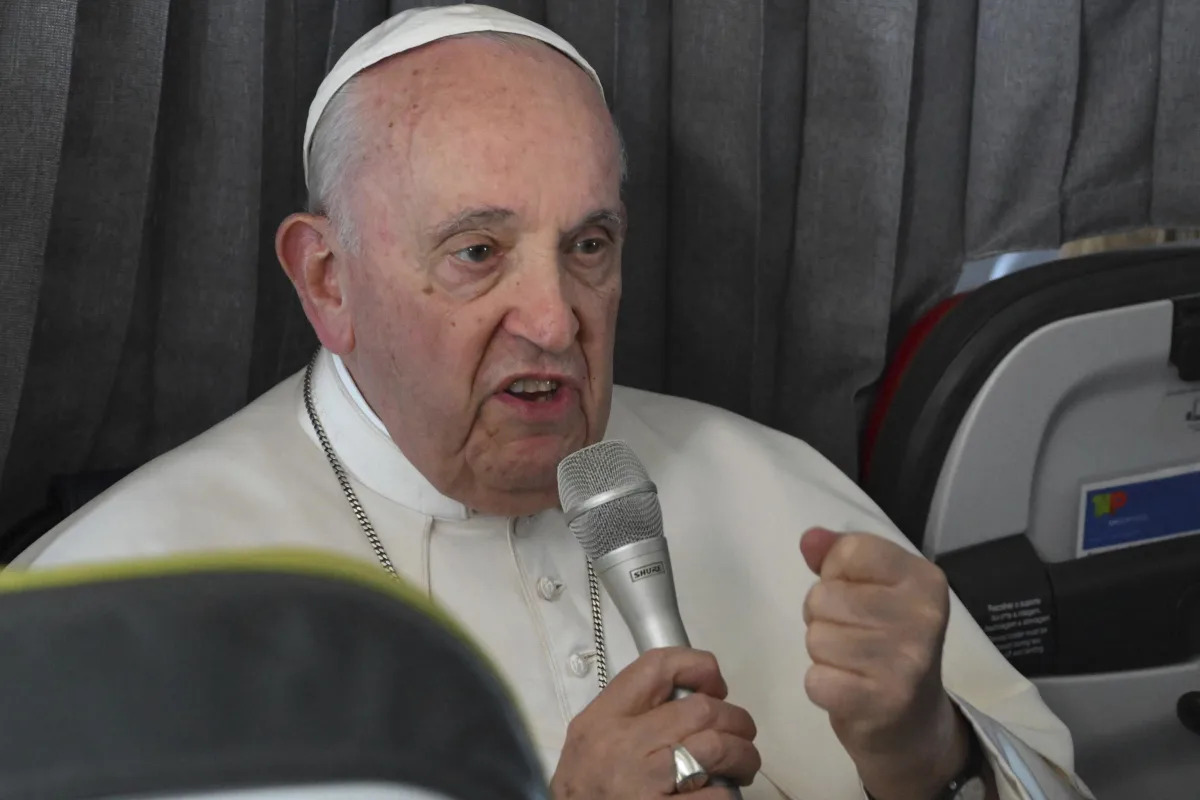
Pope Francis discussed his recovery from abdominal surgery, explaining that he deviated from his prepared speeches during his recent trip to Portugal in order to better communicate with young people. He ad-libbed his speech in Fatima and skipped a planned peace prayer, instead reciting a Hail Mary with young disabled people. The Vatican later posted part of the prayer on social media. Francis emphasized that he had prayed silently for peace but didn't want to give "publicity" to a public prayer. He also mentioned that he included LGBTQ+ Catholics in his vision of an inclusive church.
Pope Francis discussed his recovery from abdominal surgery, stating that he spoke off-the-cuff during his recent trip to Portugal to better communicate with young people, not because of fatigue or illness. He deviated from his prepared speeches and prayers, including a peace prayer in Fatima, opting instead to pray silently and not give "publicity" to a public prayer. Francis emphasized the importance of engaging young people and delivering brief, clear, and loving messages in homilies. He also affirmed the inclusion of LGBTQ+ Catholics in the church, stating that "everyone is welcome." The Pope's health is reported to be good, with the abdominal stitches removed but a protective belt still worn for healing.
The Vatican's synod office has released a 60-page document that will guide the Synod of Bishops in October, which will address issues such as women deacons, access to the priesthood for married men, the integration of LGBTQ+ Catholics, and penance for sexual abuse and the abuse of power, conscience and money. The document is structured around three themes of communion, mission, and participation, and includes over 100 specific questions for synod participants to reflect upon. The primary goal of the first session will be to outline areas of in-depth study that will be carried out in a synodal style in the lead-up to the synod's second session in October 2024.