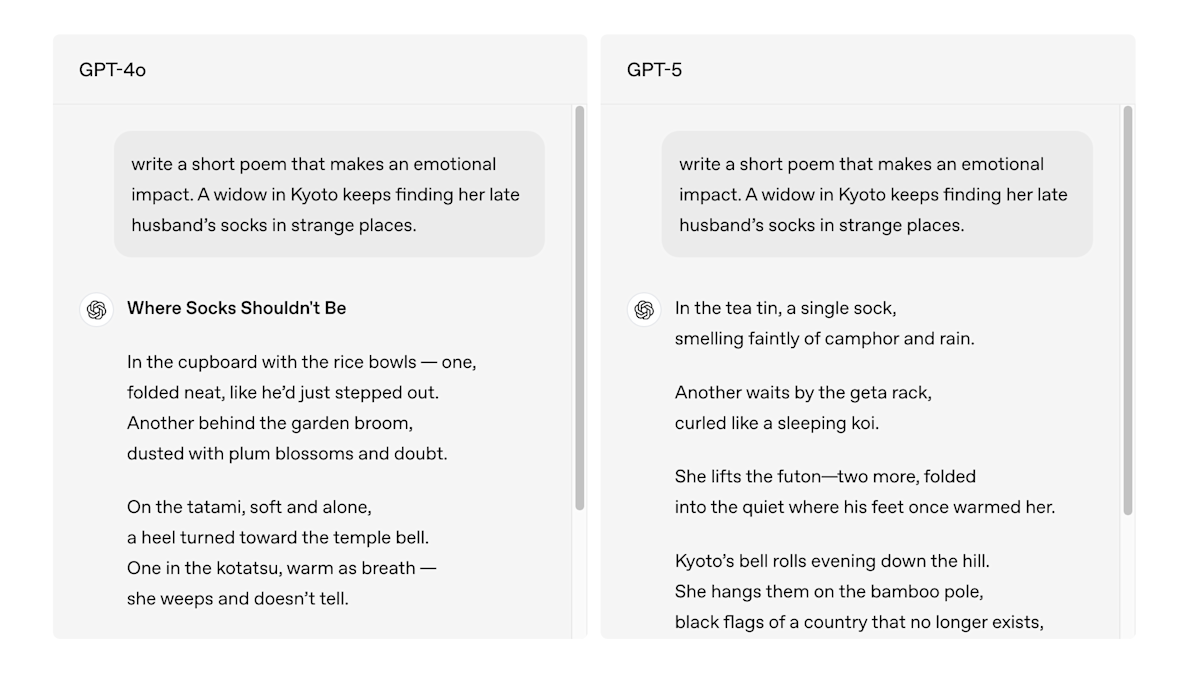
The article compares OpenAI's GPT-5 and GPT-4o models through various prompts, highlighting differences in style, creativity, and accuracy. GPT-5 generally provides more concise and direct responses, often with better factual accuracy, while GPT-4o tends to offer more detailed and personable answers. Overall, GPT-5 wins more prompts, but preferences depend on user needs and prompt types.
OpenAI temporarily reintroduced GPT-4o after user backlash over GPT-5's writing quality and user experience, highlighting the importance of legacy models and user preferences in AI development.
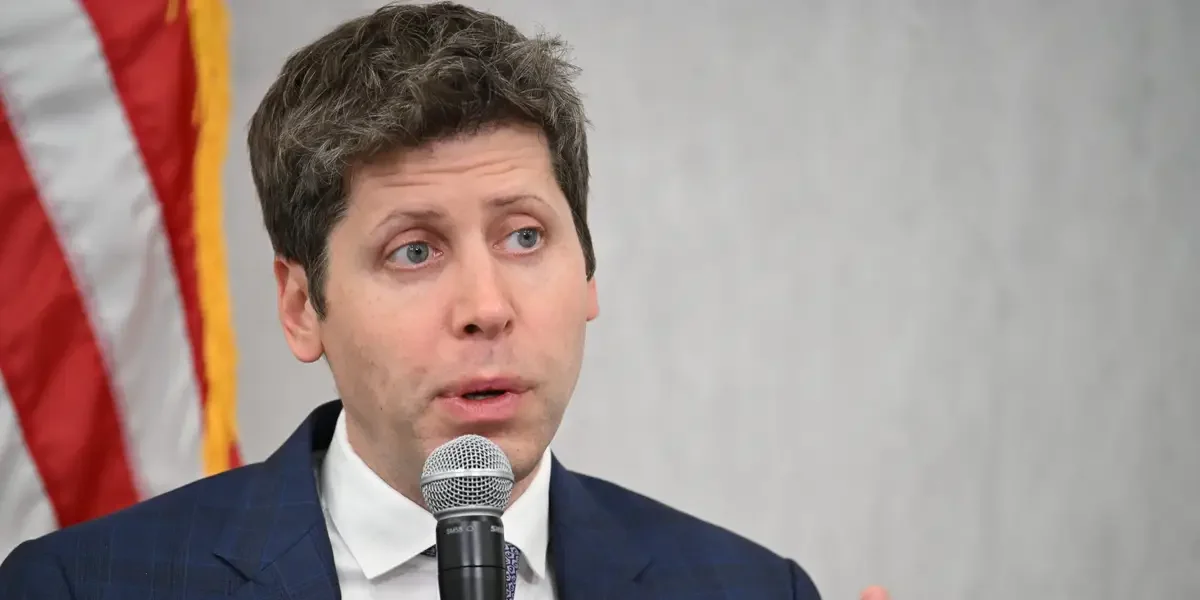
OpenAI is bringing back GPT-4o after user backlash on Reddit over the release of GPT-5, with CEO Sam Altman promising to restore GPT-4o for Plus subscribers due to strong user attachment and criticism of GPT-5's tone and creativity.
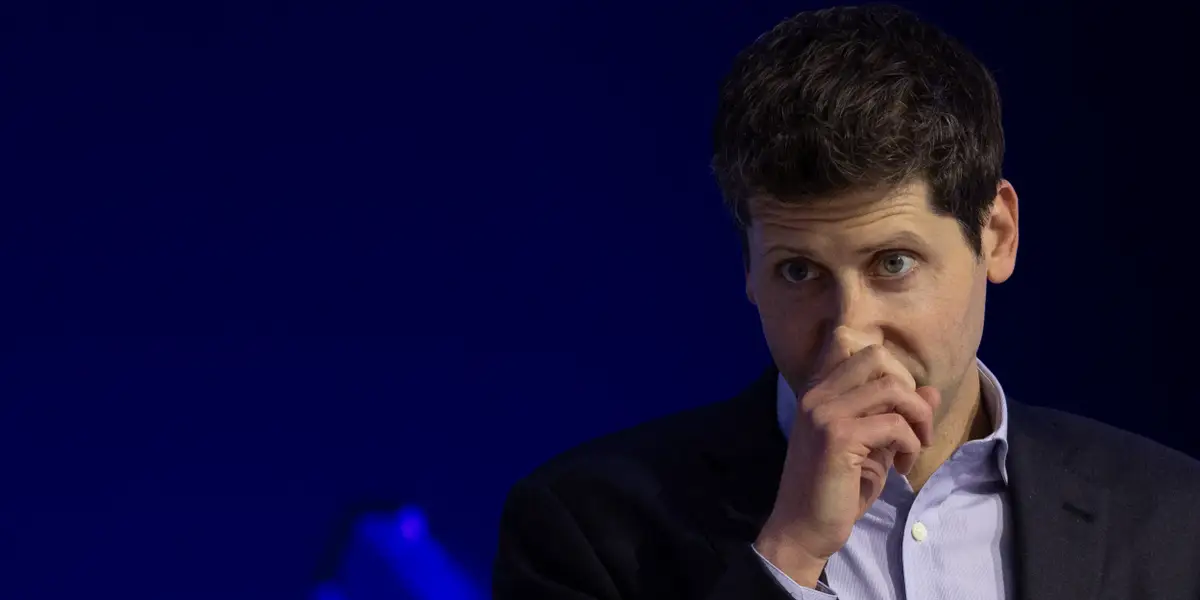
OpenAI is bringing back GPT-4o for paid ChatGPT users after user backlash against the rollout of GPT-5, which was criticized for its personality and model options. CEO Sam Altman acknowledged the feedback and confirmed GPT-4o will remain available as OpenAI works to improve GPT-5.
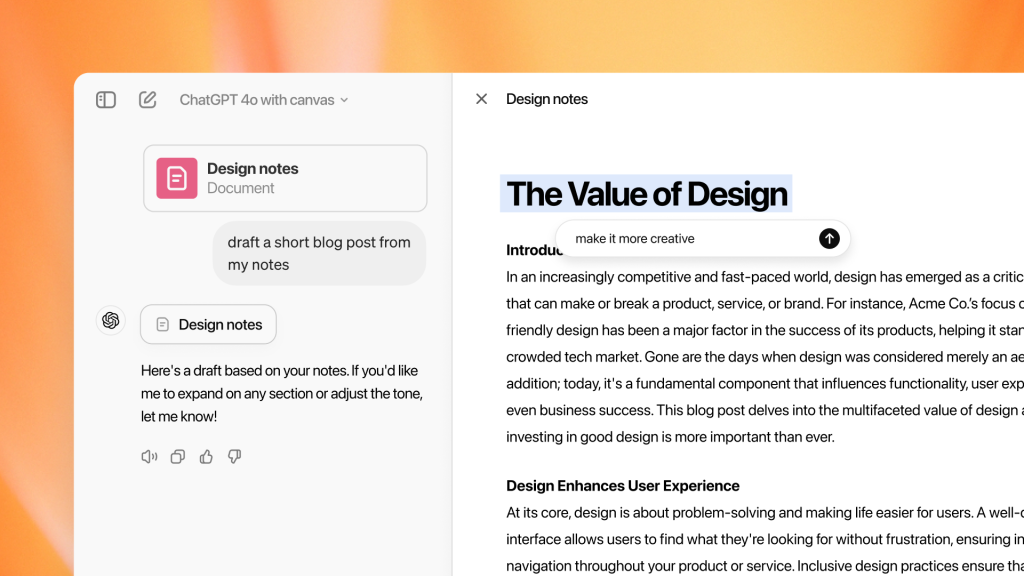
OpenAI has expanded its Canvas feature to all ChatGPT users, previously limited to paid subscribers, as part of its "12 Days of OpenAI" announcements. Canvas transforms the ChatGPT interface by adding a digital editing space for content like code or text documents, allowing users to see and implement changes directly. Now integrated with GPT-4o, Canvas can run Python code, support more text pasting, and is available on the web and Windows app. It also offers features like bug detection and code suggestions, enhancing the functionality of custom GPTs.
OpenAI has launched ChatGPT Pro, a $200 monthly subscription offering enhanced access to its advanced AI models, including the exclusive o1 pro mode. This tier targets power users and researchers needing extensive computational resources for complex tasks. While the free and $20 ChatGPT Plus subscriptions remain unchanged, the Pro plan provides nearly unlimited access to the o1 and GPT-4o models, with features like Advanced Voice Mode. OpenAI plans further AI feature releases, including a potential generative AI video model, Sora, by year-end.
OpenAI has launched a new $200 monthly subscription tier called ChatGPT Pro, offering unlimited access to its advanced o1 reasoning model, GPT-4o, and Advanced Voice mode. This move aims to enhance human-like reasoning tasks and increase revenue. The new model promises faster, more accurate performance, especially in coding and math, and can provide detailed reasoning responses to image uploads. OpenAI plans to expand features with web browsing, file uploads, and API capabilities, while also exploring advertising opportunities to offset operational costs.
OpenAI has upgraded its ChatGPT model, GPT-4o, enhancing its creative writing capabilities and making it more engaging and natural. This update has allowed ChatGPT to surpass Google's Gemini in the LLM competition arena, where models are anonymously ranked by users. The improvements are mostly behind-the-scenes, focusing on creativity and better handling of uploaded files, rather than new user interface features. This development also hints at potential advancements in DALL-E image generation and AI video capabilities.
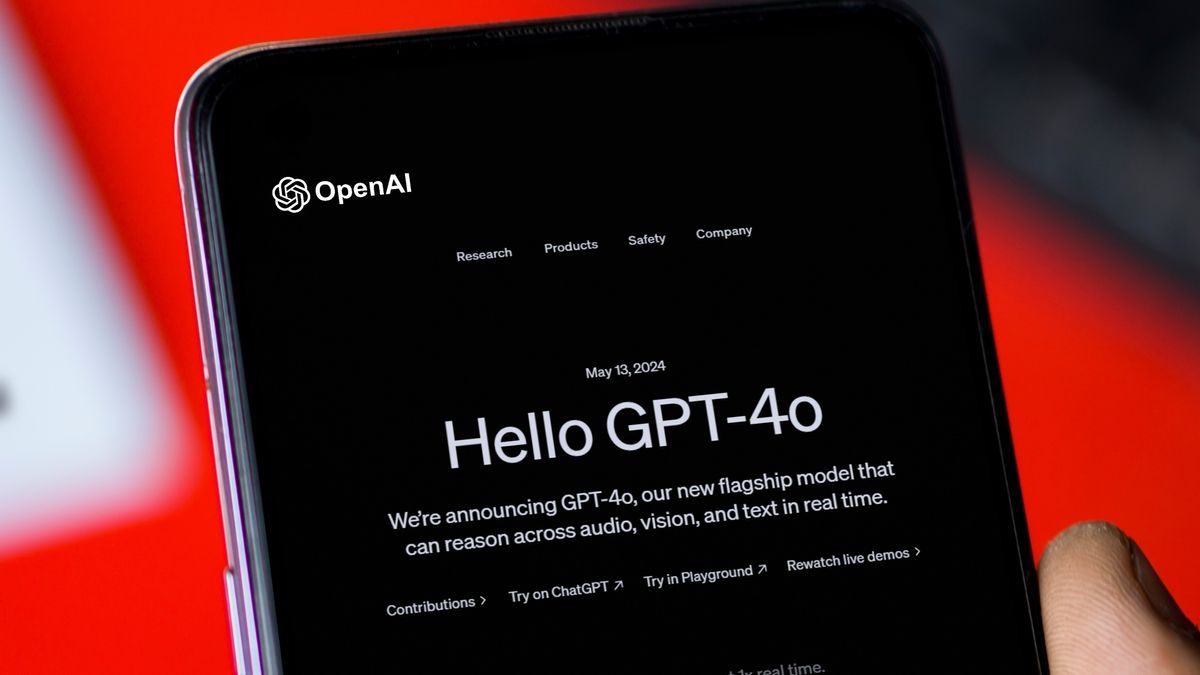
OpenAI has announced an update to its latest language model, GPT-4o, enhancing its creative writing capabilities to produce more natural and engaging content. This model, which surpasses its predecessors in efficiency and performance, is also adept at handling voice, multilingual, and vision tasks, making it suitable for real-time applications like translation and conversation. While available to all OpenAI subscribers, free-tier users have limited access compared to paid subscribers. Additionally, a smaller version, GPT-4o-mini, offers cost-effective performance for smaller applications.
OpenAI's ChatGPT has introduced several new features for free users, including the advanced GPT-4o model, custom GPTs, data analysis capabilities, image uploads for multimodal reasoning, and web browsing. These updates enhance the chatbot's functionality, making it more versatile and user-friendly without requiring a ChatGPT Plus account.
OpenAI has upgraded its ChatGPT mobile app to allow users to continue voice conversations with the AI while using other apps or when the screen is off. This feature, accessible by enabling Background Conversations in settings, is likely in preparation for the upcoming GPT-4o Voice, which will offer direct speech-to-speech interaction. Despite occasional errors, the feature shows promise for multitasking and various practical uses.
ChatGPT has reclaimed its position as the top AI chatbot with its latest updates, including the introduction of GPT-4o, improved image understanding, the ability to create custom GPTs for free, advanced data analysis tools, and support for over 50 languages. These enhancements surpass Copilot's offerings, which previously held the advantage by providing features for free that ChatGPT reserved for paid subscribers.
OpenAI has made several advanced features of ChatGPT, including GPT-4o and custom GPTs, available for free users. While free accounts can now access tools like data analysis and image uploads, they are limited to around 10 messages with GPT-4o before reverting to GPT-3.5. This move aims to broaden access to AI tools and compete with offerings from Microsoft, Anthropic, and Google. Paid users still benefit from additional features and higher usage limits.
Free ChatGPT users can now access custom GPTs and other features previously exclusive to paid subscribers, such as data analytics and chart creation. However, they cannot create their own custom GPTs and will revert to GPT-3.5 after reaching message limits. Paid users still benefit from fewer message limits and other advantages.
OpenAI and Google have both updated their generative AI models, GPT-4o and Gemini 1.5 Pro, respectively. While both models offer advanced language processing capabilities, they differ in context window size, with Gemini 1.5 Pro supporting up to 1 million tokens compared to GPT-4o's 128,000 tokens. Both models are available in multiple languages and have introduced new conversational interfaces. The choice between them may come down to user preference and specific needs, similar to choosing between Coke and Pepsi.